Give us feedback!
Our philosophy is simple. We want to encourage you to dream. BIG! Then we help you plan your trip, get the most out of it while you're traveling and help you share your experience with friends.
Join Now It's FREE
Related Categories
Dreams Still To Do
Checked-Off Dreams
Dreams Still To Do
Checked-Off Dreams
Advertisement
Explore Main UNESCO Sites
-
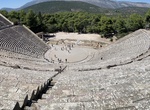
Visit Epidaurus, Greece (UNESCO site)
Epidaurus was a small city in ancient Greece, at the Saronic Gulf. Epidaurus was independent of Argos and not included in Argolis until the time of the Romans. With its supporting territory, it formed the small territory called Epidauria. Reputed to be the birthplace of Apollo's son Asclepius, the healer, Epidaurus was known for its sanctuary situated about five mile... -
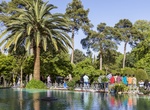
Visit Eram Garden, Shiraz, Iran (UNESCO Site)
Eram Garden is a historic Persian garden in Shiraz, Iran. The garden, and the building within it, are located at the northern shore of the Khoshk River in the Fars province. Since Naser Khosrow has mentioned Bagh-e-Eram in his poetry it means that it was not ilkhanate who made it. rather it goes back to samanide era: Abu Mo’in Hamid ad-Din Nasir ibn Khusraw al-Q... -
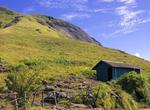
Explore Eravikulam National Park, India (UNESCO site)
Eravikulam National Park is a 97 km² national park located along the Western Ghats in the Idukki district of Kerala in India. The park is administered by the Kerala Department of Forests and Wildlife, Munnar Wildlife Division, together with the nearby Mathikettan Shola National Park, Anamudi Shola National Park, Pambadum Shola National Park, Chinnar Wildlife Sanc... -
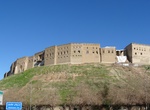
Visit Erbil Citadel, Iraq (UNESCO Site)
The Erbil Citadel, locally called Qelat is a tell or occupied mound, and the historical city centre of Erbil in the Kurdistan Region. The citadel has been inscribed on the World Heritage List since 21 June 2014. The earliest evidence for occupation of the citadel mound dates to the 5th millennium BC, and possibly earlier. It appears for the first time in historical so... -
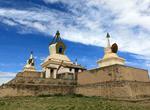
Visit Erdene Zuu Monastery, Mongolia (UNESCO site)
The Erdene Zuu Monastery (Mongolian: Эрдэнэ Зуу) is probably the most ancient surviving Buddhist monastery in Mongolia. It is in Övörkhangai Province, near the town of Kharkhorin and adjacent to the ancient city of Karakorum. It is part of the World Heritage Site entitled Orkhon Valley Cultural Landscape. The Erdene Zuu monastery was built in 1585 by Abtai S... -
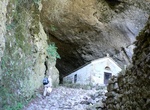
Visit Ermita de San Adrián, Spain (UNESCO site)
Ermita de San Adrián is along one of the Santiago de Compostela in Spain. The entrance to the cave and the remains of the Ermita de San Adrián is part of the pilgrim route over the Sierra de Urquila. It was inscribed to the UNESCO List of World Heritage Sites on July 4, 2015 as part of the Routes of Santiago de Compostela. -
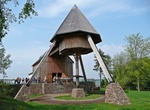
Visit Erzgebirge/Krušnohoří (Ore Mountains), Germany & Czechia (UNESCO site)
The Ore Mountains or Ore Mountain Range in Central Europe have formed a natural border between Saxony and Bohemia for around 800 years, from the 12th to the 20th centuries. Today, the border between Germany and the Czech Republic runs just north of the main crest of the mountain range. The highest peaks are the Klínovec (German:Keilberg), which rises to 1,244 m... -
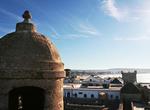
Visit Essaouira (Mogador), Morocco (UNESCO site)
Essaouira is a city in the western Moroccan economic region of Marrakech-Tensift-Al Haouz, on the Atlantic coast. Since the 16th century, the city has also been known by its Portuguese name of Mogador or Mogadore. The Berber name means the wall, a reference to the fortress walls that originally enclosed the city. The Medina of Essaouira is a UNESCO World Heritage List... -
See Etruscan Necropolises of Cerveteri, Italy (UNESCO site)
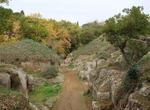
Cerveteri is a town and comune of the northern Lazio, in the province of Rome. Originally known as Caere (also Caisra and Cisra), it is famous for a number of Etruscan necropoleis that include some of the best Etruscan tombs anywhere. The most famous attraction of Cerveteri is the Necropoli della Banditaccia, which has been declared by UNESCO a World Heritage Site tog... -
See Etruscan Necropolises of Tarquinia, Italy (UNESCO site)
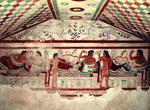
Tarquinia, formerly Corneto and in Antiquity Tarquinii, is an ancient city in the province of Viterbo, Lazio, Italy. The original site of the Etruscan city of Tarquinia, known as the "Civita", is on the long plateau to the north of the current town. The two coexisted for most of the early Middle Ages, with Tarquinia dwindling to a small fortified settlement on the "Ca... -
See Euphrasian Basilica, Croatia (UNESCO site)
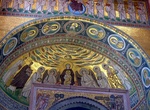
The Euphrasian Basilica is a basilica in Poreč, Croatia. The episcopal complex, including, apart the basilica itself, a sacristy, a baptistery and the bell tower of the nearby archbishop's palace, is one of the best examples of early Byzantine architecture in the Mediterranean region. The Euphrasian basilica has for the most part retained its original shape, but accid... -
Explore Everglades National Park, Florida (UNESCO site)
Everglades National Park is a national park in the U.S. state of Florida that protects the southern 25 percent of the original Everglades. It is the largest subtropical wilderness in the United States, and is visited on average by one million people each year. It is the third-largest national park in the lower 48 states after Death Valley and Yellowstone. It has been ... -
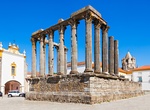
Visit Évora, Portugal (UNESCO site)
Évora is a Portuguese city in the municipality of Évora. The city is composed of the parishes of Santo Antão, São Mamede, and Sé e São Pedro in the historical centre and the urban parishes of Bacelo, Horta das Figueiras, Malagueira, and Senhora da Saúde outside the ancient city walls Évora is ranked number two in... -
Visit Fagus Factory, Germany (UNESCO site)
The Fagus Factory a shoe last factory in Alfeld on the Leine, Lower Saxony, Germany, is an important example of early modern architecture. Commissioned by owner Carl Benscheidt who wanted a radical structure to express the company's break from the past, the factory was designed by Walter Gropius and Adolf Meyer. It was constructed between 1911 and 1913, with additions... -
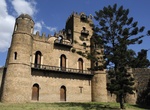
See Fasil Ghebbi, Ethiopia (UNESCO site)
Fasil Ghebbi is a fortress-enclosure located in Gondar, Ethiopia. It served as the home of Ethiopia's emperors in the 17th and 18th centuries. Its unique architecture shows diverse influences including Nubian, Arab, and Baroque styles. The site was inscribed as a UNESCO World Heritage Site in 1979. This complex of buildings includes Fasilides castle, Iyasu's Pala...