Give us feedback!
Our philosophy is simple. We want to encourage you to dream. BIG! Then we help you plan your trip, get the most out of it while you're traveling and help you share your experience with friends.
Join Now It's FREE
Related Categories
Dreams Still To Do
Checked-Off Dreams
Dreams Still To Do
Checked-Off Dreams
Advertisement
Explore Main UNESCO Sites
-
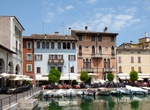
Visit Desenzano del Garda, Italy (UNESCO site)
Desenzano del Garda is a town andcomunein the province of Brescia, in Lombardy, Italy, on the southwestern shore of Lake Garda. It borders the communes of Castiglione delle Stiviere, Lonato, Padenghe sul Garda and Sirmione. It is home to one or more prehistoric pile-dwelling (or stilt house) settlements, which are part of the Prehistoric Pile dwellings around the Alps... -
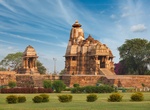
Visit Devi Jagadambi Temple, India (UNESCO site)
Devi Jagadambika temple or Jagadambika temple of a group of about 25 temples at Khajuraho, Madhya Pradesh, India. Khajuraho is a World Heritage site. The temples of Khajuraho were built by the rulers of the Chandella dynasty between the 10th and the 12th centuries. Devi Jagadambika temple, in a group to the north, is one of the most finely decorated temples at Khajura... -
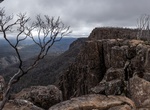
Explore Devils Gullet State Reserve, Tasmania, Australia (UNESCO site)
Devils Gullet is a state reserve in Tasmania, Australia that is part of the UNESCO Tasmanian Wilderness. Visitors unable or unwilling to hike the challenging Walls of Jerusalem National Park can catch a glimpse of the stunning landscape. The viewing platform is located near Mole Creek Karst National Park. -
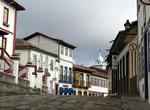
Visit Diamantina, Brazil (UNESCO site)
Diamantina (Adamantine) is a Brazilian city in the state of Minas Gerais. Arraial do Tijuco (as Diamantina was first called) was built during the colonial era in the early 18th century. As its name suggests, Diamantina was a center of diamond mining in the 18th and 19th centuries. A well-preserved example of Brazilian Baroque architecture, Diamantina is a UNESCO World... -
Visit Dilmun Burial Mounds, Bahrain (UNESCO site)
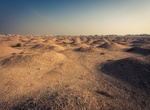
The Dilmun Burial Mounds are a number of necropolis areas on the main island of Bahrain dating back to the Dilmun, the Umm al-Nar culture, and later eras. Known since ancient times as an island with a very large number of burials, the (originally) quite a number of square kilometres of mounds were said to be one of the largest cemeteries in the ancient world. The ceme... -
Visit Diocletian's Palace, Split, Croatia (UNESCO site)
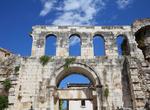
Diocletian's Palace is a building in Split, Croatia, that was built by the Roman emperor Diocletian at the turn of the fourth century AD. Diocletian built the massive palace in preparation for his retirement on 1 May 305 AD. It lies in a bay on the south side of a short peninsula running out from the Dalmatian coast, four miles from Salona, the capital of the Roman pr... -
Explore Discovery Coast Atlantic Forest Reserves, Brazil (UNESCO site)
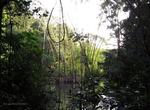
The Atlantic Forest is a region of tropical and subtropical moist forest, tropical dry forest, tropical savanna, semi deciduous forest and mangrove forests which extends along the Atlantic coast of Brazil from Rio Grande do Norte state in the north to Rio Grande do Sul state in the south, and inland as far as Paraguay and the Misiones Province of Argentina. The Atlant... -
Visit Diy-Gid-Biy Sites, Cameroon
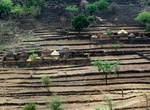
Located in the Far North Region of Cameroon, the property includes sixteen archaeological sites across seven villages. Known as Diy-Gid-Biy (meaning “Ruin of the Chief’s Residence” in the Mafa language), these dry-stone architectural structures were likely built between the 12th and 17th centuries. While their original builders remain unknown, the ar... -
Explore Dja Faunal Reserve, Cameroon (UNESCO site)
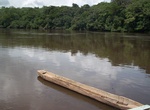
Dja Faunal Reserve in Cameroon, is a UNESCO World Heritage Site inscribed in 1987. Causes of inscription include diversity of species present in the park, the presence of five threatened species, and lack of disturbance within the park. Poaching is a serious threat in the reserver, especially for the gorillas. The boundary that secludes the reserve is the Dja River, ... -
Shop at Djeema El-Fna Souk (Jemaa el-Fnaa), Marrakesh, Morocco (UNESCO site)
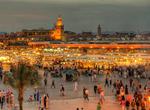
Jamaa el Fna, the vibrant heart of Marrakesh's medina quarter, is a cultural tapestry rich in history and tradition. The largest traditional souk in Morocco is found in Marrakesh, the Djeema El-Fna, inhabited by merchants, dancers, story-tellers, tattoo artists, magicians and musicians by day and then transformed into a huge open air restaurant at night as the food v... -
See Djémila, Algeria (UNESCO site)
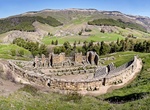
Djémila is a mountain village in Algeria, near the northern coast east of Algiers, where some of the best preserved Berbero-Roman ruins in North Africa are found. It is situated in the region bordering the Constantinois and Petite Kabylie (Basse Kabylie). In 1982, Djémila became a UNESCO World Heritage Site for its unique adaptation of Roman architecture... -
Visit Djenné, Mali (UNESCO site)
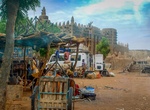
Djenné (also Djénné, Jenné and Jenne) is an Urban Commune and town in the Inland Niger Delta region of central Mali. The history of Djenné is closely linked with that of Timbuktu. Between the 15th and 17th centuries much of the trans-Saharan trade in goods such as salt, gold and slaves that moved in and out of Timbuktu passed through... -
Visit Djerba, Tunisia (UNESCO site)
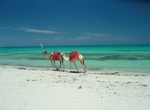
Djerba is a Tunisian island and the largest island of North Africa at 514 square kilometers (198 sq mi), in the Gulf of Gabès, off the coast of Tunisia. Citing the long and unique history of its Jewish minority in Djerba, Tunisia has sought UNESCO World Heritage status protections for the island, and, in 2023, Djerba was officially designated a World Heritage S... -
Birding at Djoudj National Bird Sanctuary, Senegal (UNESCO site)
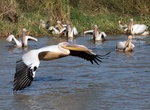
The Djoudj National Bird Sanctuary lies on the southeast bank of the River Senegal in Senegal, in northern Biffeche, north east of St-Louis. It provides a range of wetland habitats which prove very popular with migrating birds, many of which have just crossed the Sahara. Of almost 400 species of birds, the most visible are pelicans and flamingos. Less conspicuous are ... -
Explore Dolomites, Italy (UNESCO site)
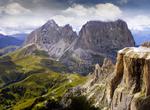
The Dolomites are a mountain range located in north-eastern Italy. It is a part of Southern Limestone Alps and extends from the River Adige in the west to the Piave Valley (Pieve di Cadore) in the east. The northern and southern borders are defined by the Puster Valley and the Sugana Valley (Val Sugana). The Dolomites are nearly equally shared between the provinces of...