Give us feedback!
Our philosophy is simple. We want to encourage you to dream. BIG! Then we help you plan your trip, get the most out of it while you're traveling and help you share your experience with friends.
Join Now It's FREE
Related Categories
Dreams Still To Do
Checked-Off Dreams
Dreams Still To Do
Checked-Off Dreams
Advertisement
Explore Main UNESCO Sites
-
Visit Coro & Medanos De Coro National Park, Venezuela (UNESCO site)
Coro (also known as Santa Ana de Coro) is the capital of Falcón State and the oldest city in the west of Venezuela. Since the 1950s Coro has been conserved as a national monument, and in 1993 Coro and its port were designated by UNESCO as a World Heritage Site. However, in 2005 Coro was inscribed in the List of World Heritage Sites in danger . From historic, co... -
Explore Cradle Mountain-Lake St Clair National Park, Tasmania, Australia (UNESCO site)
Cradle Mountain-Lake St Clair National Park is located in the Central Highlands area of Tasmania (Australia), 165 km northwest of Hobart. The park contains many walking trails, and is where hikes along the well-known Overland Track usually begins. Major features are Cradle Mountain and Barn Bluff in the northern end, Mount Pelion East, Mount Pelion West, Mount Oakleig... -
See Cradle of Humankind Sites, South Africa (UNESCO site)
The Cradle of Humankind is a World Heritage Site first named by UNESCO in 1999, about 50 kilometres northwest of Johannesburg, South Africa in the Gauteng province. This site currently occupies 47,000 hectares (180 sq mi); it contains a complex of limestone caves, including the Sterkfontein Caves, where the 2.3-million year-old fossil Australopithecus africanus (nickn... -
Visit Crespi d'Adda, Italy (UNESCO site)
Crespi d'Adda is a historical settlement in Capriate San Gervasio, Lombardy, northern Italy. It is an outstanding example of the 19th and early 20th-century "company towns" built in Europe and North America by enlightened industrialists to meet the workers' needs. The site is still intact and is partly used for industrial purposes, although changing economic and ... -
Visit Cuba's First Coffee Plantations, Cuba (UNESCO site)
During the 19th and early 20th centuries, eastern Cuba was primarily involved with coffee cultivation. The remnants of the plantations display the techniques used in the difficult terrain, as well as the economic and social significance of the plantation system in Cuba and the Caribbean. Nearly one hundred such farms were built in Santiago de Cuba by the French settl... -
Visit Cuenca, Ecuador, (UNESCO site)
Cuenca (full name Santa Ana de los cuatro ríos de Cuenca) is the third largest city in Ecuador. It is located in the highlands of Ecuador at about 2500 m above sea level. The center of the city is listed as a UNESCO World Heritage Trust site because of its many historical buildings. Most tourists visit the historic area between the river Tomebamba and the stree... -
Visit Cuenca, Spain, (UNESCO site)
Cuenca is a city in central Spain located across a steep spur, whose slopes descend into deep gorges of the Júcar and Huécar rivers. It is divided into two separate settlements: the "new" city is situated south-west to the old one, which is divided by the Huécar course. Cuenca has strongly bet on culture and as a result of this it was declared a W... -
See Cueva de las Manos (Cave of the Hands), Argentina (UNESCO site)
Cueva de las Manos (Cave of the Hands) is a cave or a series of caves located in the province of Santa Cruz, Argentina, 163 km (101 mi) south of the town of Perito Moreno. It is famous (and gets its name) for the paintings of hands, made by the indigenous inhabitants (possibly forefathers of the Tehuelches) some 9,000 years ago. The composition of the inks is mineral,... -
Explore Curonian Spit, Russia & Lithuania (UNESCO site)
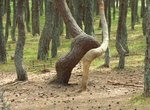
The Curonian Spit is a 98 km long, thin, curved sand-dune spit that separates the Curonian Lagoon from the Baltic Sea coast. Its southern portion lies within Kaliningrad Oblast, Russia and its northern within southwestern Lithuania. The Curonian Spit is home to the highest moving (drifting) sand dunes in Europe. Their average height is 35 meters, but some attain ... -
Visit Cuzco (Cusco), Peru (UNESCO site)
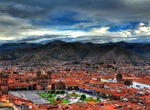
Cuzco is a city in Southeastern Peru and was the site of the historical capital of the Inca Empire. Originally inhabited by the indigenous people of the Killke culture some 900 years ago, the Incas succeeded the Killke in Cuzco about 100 years later. The Spanish explorers devastated the city in 1535 and only a few partially demolished buildings remain as monuments fro... -
Visit Cyrene, Libya (UNESCO site)
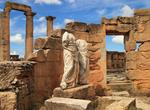
Cyrene was an ancient Greek colony in present-day Shahhat, Libya, the oldest and most important of the five Greek cities in the region. It gave eastern Libya the classical name Cyrenaicathat it has retained to modern times. Cyrene lies in a lush valley in the Jebel Akhdar uplands. The city was named after a spring, Kyre, which the Greeks consecrated to Apollo. It was ... -
See Dacian Fortresses of the Orastie Mountains, Romania (UNESCO site)
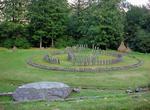
Built in murus dacicus style, the six Dacian Fortresses of the Orăștie Mountains, in Romania, were created in the 1st centuries BC and AD as protection against Roman conquest. Their extensive and well-preserved remains present a picture of a vigorous and innovative ancient civilization. Today, treasure-hunters sometimes search the area, as Romania lacks legislation in... -
Explore Daintree National Park, Queensland, Australia (UNESCO site)
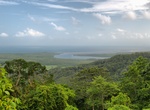
Daintree is a national park in Far North Queensland, Australia, 1,502 km (933 mi) northwest of Brisbane and 100 km (62 mi) northwest of Cairns. It was founded in 1981 and is part of the Wet Tropics of Queensland. In 1988 it was granted listing as a World Heritage List. The park consists of two sections, with a settled agricultural area between them which includes... -
Visit Damascus, Syria (UNESCO site)
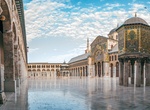
Damascus commonly known in Syria as Al Sham, and as the City of Jasmine, is the capital and the second largest city of Syria. Geographically embedded on the eastern foothills of the Anti-Lebanon mountain range. Inland from the eastern shore of the Mediterranean on a plateau 680 metres (2,230 ft) above sea-level, Damascus experiences a semi-arid climate due to the rain... -
Explore Danube Delta, Romania (UNESCO site)
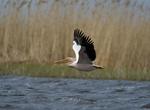
The Danube Delta is the second largest river delta in Europe, after the Volga Delta, and is the best preserved on the continent. The greater part of the Danube Delta lies in Romania (Tulcea county), while its northern part, on the left bank of the Chilia arm, is situated in Ukraine (Odessa Oblast). The approximate surface is 4152 km², of which 3446 km² are i...