Give us feedback!
Our philosophy is simple. We want to encourage you to dream. BIG! Then we help you plan your trip, get the most out of it while you're traveling and help you share your experience with friends.
Join Now It's FREE
Related Categories
Dreams Still To Do
Checked-Off Dreams
Dreams Still To Do
Checked-Off Dreams
Advertisement
Explore Main UNESCO Sites
-
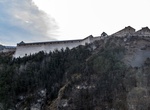
See Citadel of Fort du Randouillet, France (UNESCO site)
The Fort du Randouillet, is a fortification in the vicinity of Briançon in the Dauphiné region of southeastern France. Briançon was surveyed by Vauban in 1700. His master plan for the defenses of the city would result in one of the most heavily fortified locales in France over the next forty years. Constructed to Vauban's plan between 1724 and 173... -
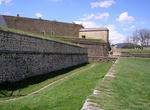
See Citadel of Mont-Louis, France (UNESCO site)
Mont-Louis is a commune in the Pyrénées-Orientales department in southern France. In 2008, the citadel and the city walls of Mont-Louis were listed as a UNESCO World Heritage Sites, as part of the "Fortifications of Vauban" group. -
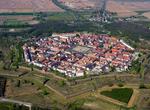
See Citadel of Neuf-Brisach, France (UNESCO site)
Neuf-Brisach is a commune in the Haut-Rhin department in Alsace in north-eastern France. The town's name means New Breisach, referring to the German town Breisach, located on the other side of the Rhine. The aerial photography shows the layout of the town built as fortification. After the peace of Ryswick 1697 and the loss of Breisach to Habsburg, France built this fo... -
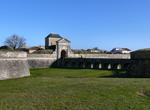
See Citadel of Saint-Martin-de-Ré, France (UNESCO site)
Saint-Martin-de-Ré is a commune in the Charente-Maritime department in southwestern France. Saint-Martin-de-Ré has extensive fortifications, reflecting the strategic importance of the Île de Ré. During the Wars of Religion in the 1620s, Cardinal Richelieu ordered that the island be fortified as a counterweight to the Protestant nearby city o... -
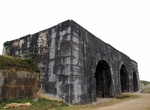
Visit Citadel of the Hồ Dynasty, Vietnam (UNESCO Site)
Citadel of Hồ Dynasty is a citadel in Vietnam, constructed by the Hồ Dynasty (1400-1407). It is located in Tây Giai commune, Vĩnh Lộc District, in Thanh Hóa Province, in Vietnam's North Central Coast region. Tây Đô castle is rectangular in shape. Its north-south side is 870.5 m (2,856 ft) in length and its east-west side is 883.5 m (2,899 ft) ... -
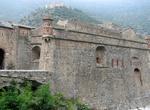
See Citadel of Villefranche-de-Conflent, France (UNESCO site)
Villefranche-de-Conflent is a commune in the Pyrénées-Orientales department in south of France. The original town dates from 1098 and is fortified because of its strategic position in lands that changed hands between French and Spanish occupation. The town is tightly packed within the original castle walls and is bounded on one side by the road running u... -
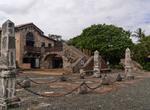
Visit Ciudad Colonial, Santo Domingo, Dominican Republic (UNESCO site)
Ciudad Colonial (Colonial City) is the historic central neighborhood of Santo Domingo and the oldest permanent European settlement of the New World. It has been declared a World Heritage Site by UNESCO. It is colloquially known as "Zona Colonial" (Colonial Zone). The Ciudad Colonial is located on the west bank of the Ozama River, which bisects the city. It covers less... -
See Ciudad Universitaria de Caracas, Venezuela (UNESCO site)
The University City of Caracas (Spanish: Ciudad Universitaria de Caracas) is the main Campus of the Central University of Venezuela. It was designed by the Venezuelan architect Carlos Raúl Villanueva and was declared a World Heritage Site by UNESCO in 2000. The Ciudad Universitaria de Caracas is considered a masterpiece of architecture and urban planning and is... -
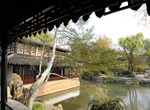
See Classical Gardens of Suzhou, China (UNESCO site)
The Classical Gardens of Suzhou are a group of gardens in Suzhou, Jiangsu province which have been added to the UNESCO World Heritage List. They include many key features of classical Chinese garden design with constructed landscapes mimicking natural scenery of rocks, hills and rivers with strategically located pavilions and pagodas. In Suzhou these landscape ga... -
See Cliffs of Bandiagara (Land of the Dogons), Mali (UNESCO site)
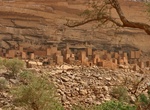
The Bandiagara Escarpment is an escarpment in the Dogon country of Mali. The sandstone cliff rises about 500 meters above the lower sandy flats to the south. It has a length of approximately 150 kilometers. The area of the escarpment is inhabited today by the Dogon people. Before the Dogon, the escarpment was inhabited by the Tellem and Toloy. Many structures remain f... -
Visit Cockatoo Island, New South Wales (UNESCO site)
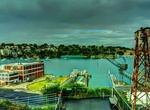
Cockatoo Island, an UNESCO World Heritage Site, is an island located at the junction of the Parramatta and Lane Cove rivers, in Sydney Harbour, Sydney, New South Wales, Australia. At 17.9 hectares (44 acres) it is the largest of several islands that were, in their original state, heavily timbered sandstone knolls. Cockatoo Island rose to 18 metres (59 ft) above sea le... -
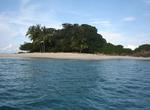
Explore Cocos Island National Park (Isla del Coco), Costa Rica (UNESCO site)
Cocos Island (Isla del Coco) is an uninhabited island (except for the permanent ranger station) located off the shore of Costa Rica (to be distinguished from Cocos Island, Isla de Cocos, Panama in the Pearl Islands). It is one of the National Parks of Costa Rica. It is located in the Pacific Ocean, approximately 550 km (340 mi) from the Pacific shore of Costa Rica. Wi... -
Explore Coffee Cultural Landscape of Colombia (UNESCO Site)
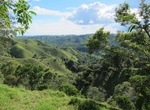
The Colombian coffee growing axis, also known as the Coffee Triangle is a part of the Colombian Paisa region in the rural area of Colombia, famous for growing and production of a majority of the Colombian coffee, considered by some as the best coffee in the world. There are three departments in the area: Caldas, Quindío and Risaralda. The most visited cities ar... -
Explore Coiba National Park, Panama (UNESCO site)
With an area of 503 square kilometers, Coiba is the largest island in Central America, off the Pacific coast of the Panamanian province of Veraguas. Coiba's underwater topography is linked by the underwater Cordilera mountain chain to Coco's and the Galapagos Islands. Scientists from the Smithsonian Tropical Research Institute have proclaimed it an unparalleled destin... -
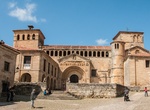
Visit Collégiale de Santa Juliana et son Cloître, Santillana del Mar, Spain (UNESCO site)
Santillana del Mar is a historic town situated in Cantabria, Spain. Its many historic buildings attract thousands of holidaymakers every year. There is an old saying that Santillana del Mar is The Town of Three Lies, since it is neither a Saint (Santo), nor flat (llana), nor is it by the sea (Mar) as implied by its name. However, the name actually derives from Santa J...