Give us feedback!
Our philosophy is simple. We want to encourage you to dream. BIG! Then we help you plan your trip, get the most out of it while you're traveling and help you share your experience with friends.
Join Now It's FREE
Related Categories
Dreams Still To Do
Checked-Off Dreams
Dreams Still To Do
Checked-Off Dreams
Advertisement
Explore Main UNESCO Sites
-
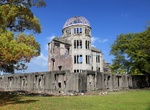
See Hiroshima Peace Memorial (Genbaku Dome), Japan (UNESCO site)
The first atomic bomb to be used was detonated almost directly above the Hiroshima Prefectural Industrial Promotion Hall on August 6,1945 killing 140,000 people. The remains of the only building left standing became known as the Genbaku (Atomic Bomb) Dome and what you see today is exactly how it stood after the explosion. The site was transformed into the Hiroshima Pe... -
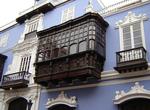
Visit Historic Centre of Lima, Peru (UNESCO site)
Located principally in the city centre or Cercado de Lima and Rímac areas, the Historic Centre of Lima is among the most important tourist destinations in Peru. In 1988, UNESCO declared the historic center of Lima a World Heritage Site for its originality and high concentration of historic monuments constructed in the time of Spanish presence. The city of Lima,... -
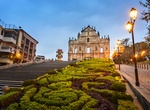
Visit Historic Centre of Macau, Macau, (UNESCO site)
The Historic Centre of Macau is a collection of over twenty locations that witness the unique assimilation and co-existence of Chinese and Portuguese cultures in Macau, a former Portuguese colony. It represents the architectural legacies of the city's cultural heritage, including monuments such as urban squares, streetscapes, churches and temples. In 2005 the His... -
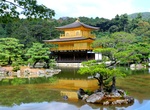
Visit Historic Monuments of Ancient Kyoto , (Kyoto, Uji and Otsu Cities) (UNESCO Sites)
The UNESCO World Heritage Site Historic Monuments of Ancient Kyoto (Kyoto, Uji and Otsu Cities) encompasses 17 locations in Japan, within the city of Kyoto and its immediate vicinity. The locations are in three cities: Kyoto and Uji in Kyoto Prefecture; and Ōtsu in Shiga Prefecture; Uji and Ōtsu border Kyoto to the south and north, respectively. Of the monuments, 13 a... -
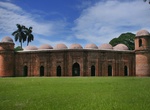
See Historic Mosque City of Bagerhat (Sixty Dome Mosque), Bangladesh (UNESCO site)
The Mosque City of Bagerhat is a formerly lost city, located in the suburbs of Bagerhat city in Bagerhat District, in the Khulna Division of southwest of Bangladesh. Bagerhat is about 15 miles south east of Khulna and 200 miles southwest of Dhaka. Originally known as Khalifatabad and nicknamed the "mint town of the Bengal Sultanate", the city was founded in the 15th c... -
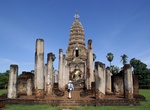
Visit Historic Towns of the Sukhothai Kingdom, Thailand (UNESCO sites)
The Historic Town of Sukhothai and Associated Historic Towns is a Unesco World Heritage site which consists of Sukhothai historical park, Kamphaeng Phet historical park and Si Satchanalai historical park. These historical parks preserve the remains of the three main cities of the Sukhothai Kingdom which had flourished during the 13th and 14th century CE. The Sukhothai... -
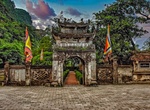
Visit Hoa Lu, Vietnam (UNESCO Site)
Hoa Lư was the capital of Vietnam in the 10th and 11th centuries. It lies in Truong Yen Thuong village, Truong Yen Commune, Hoa Lu District, Ninh Binh Province, Vietnam. The area is one of ricefields broken by picturesque limestone mountains, and is approximately 90 km south of Hanoi. Together with Phat Diem Church, Tam Coc - Bich Dong, Bai Dinh Pagoda, Trang An, and ... -
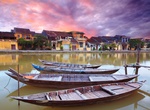
Visit Hội An, Vietnam (UNESCO site)
Hội An is a city on the coast of the South China Sea in the South Central Coast of Vietnam. The city possessed the largest harbour in Southeast Asia in the 1st century and was known as Lâm Ấp Phố (Champa City). Between the seventh and 10th centuries, the Cham (people of Champa) controlled the strategic spice trade and with this came tremendous wealth. The boats ... -
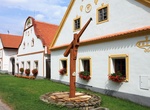
Visit Holašovice, Czech Republic (UNESCO site)
Holašovice (Holaschowitz) is a small historic village located in the south of the Czech Republic, 15 kilometres west of České Budějovice. Village belongs to the municipality Jankov. To the south lies the protected landscape area of Blanský Forest. The village was deserted after the Second World War, allowing its medieval plan and vernacular b... -
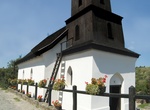
Visit Hollókő, Hungary (UNESCO site)
Hollókő is a Palóc ethnographic village in Hungary, part of the World Heritage. Its name means "Raven-stone" in Hungarian. The village is located in Nógrád county, approximately 91.1 kilometers northeast from Budapest, the capital of Hungary. It lies in a valley of Cserhát Mountains, surrounded by low peaks. The natural environm... -
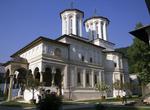
See Horezu Monastery, Romania (UNESCO site)
The Monastery of Horezu was founded in 1690 by Prince Constantin Brâncoveanu in the town of Horezu, Wallachia, Romania. It is considered to be a masterpiece of "Brâncovenesc style", known for its architectural purity and balance, the richness of its sculpted detail, its treatment of religious compositions, its votive portraits, and its painted decorative w... -
Explore Hortobágy National Park, Hungary (UNESCO site)
Hortobágy is both the name of a village in Hajdú-Bihar county and an 800 km² national park in Eastern Hungary, rich with folklore and cultural history. The park, a part of the Alföld (Great Plain), was designated as a national park in 1973 (the first in Hungary), and elected among the World Heritage sites in 1999. The Hortobágy is Hungar... -
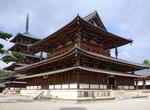
See Hōryū-ji Temples, Japan (UNESCO sites)
The UNESCO World Heritage Site Buddhist Monuments in the Hōryū-ji Area includes a variety of buildings found in Hōryū-ji and Hokki-ji in Nara Prefecture, Japan. They were designated in 1993 along with the surrounding landscape, under several criteria. The structures inscribed are some of the oldest extant wooden buildings in the world, dating from the 7th to 8th centu... -
See Hosios Loukas Monastery, Greece (UNESCO site)
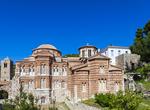
Hosios Loukas is an historic walled monastery situated near the town of Distomo, in Boeotia, Greece. It is one of the most important monuments of Middle Byzantine architecture and art, and has been listed on UNESCO's World Heritage Sites, along with the monasteries of Nea Moni and Daphnion. The Church of the Theotokos, the oldest in the complex, is the only church kno... -
Visit Hősök tere (Heroes' Square), Budapest, Hungary (UNESCO site)
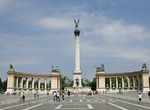
Hősök tere (Heroes' Square), is one of the major squares in Budapest, Hungary, noted for its iconic Millennium Monument with statues featuring the Seven chieftains of the Magyars and other important Hungarian national leaders, as well as the Memorial Stone of Heroes, often erroneously referred as the Tomb of the Unknown Soldier. The square lies at the outbound en...