Give us feedback!
Our philosophy is simple. We want to encourage you to dream. BIG! Then we help you plan your trip, get the most out of it while you're traveling and help you share your experience with friends.
Join Now It's FREE
Related Categories
Dreams Still To Do
Checked-Off Dreams
Dreams Still To Do
Checked-Off Dreams
Advertisement
Explore Main UNESCO Sites
-
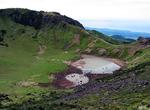
Visit Jeju Volcanic Island, South Korea (UNESCO site)
The Jeju Volcanic Island and Lava Tubes is a World Heritage Site in South Korea. Jejudo is a volcanic island, 130 kilometers from the southern coast of Korea. The largest island and smallest province in Korea, the island has a surface area of 1,846 square kilometers. A central feature of Jeju is Hallasan, the tallest mountain in South Korea and a dormant volcano, whic... -
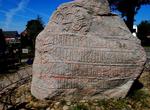
See Jelling Mounds, Runic Stones and Church, Denmark (UNESCO site)
Jelling is the site of a large stone ship and two large burial mounds, the Jelling stones and Jelling Church which are an UNESCO World Heritage Site since 1994. In the North Mound, built between 958 and 959 CE (possibly for King Gorm of Denmark), an empty burial chamber was found. The South Mound was built around 970 and contains no burial. Beneath the two mounds is a... -
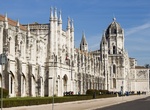
See Jerónimos (Hieronymites) Monastery, Belém, Lisbon, Portugal (UNESCO site)
The Hieronymites Monastery is located near the shore of the parish of Belém, in the municipality of Lisbon, Portugal. The monastery is one of the most prominent monuments of the Manueline-style architecture (Portuguese late-Gothic) in Lisbon, classified in 1983 as a UNESCO World Heritage Site, along with the nearby Tower of Belém. Originally, the home fo... -
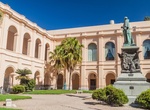
See Jesuit Block and Estancias of Córdoba, Argentina (UNESCO site)
The Jesuit Block and Estancias of Córdoba (Spanish: Manzana Jesuítica y Estancias de Córdoba) are a former Jesuit reduction built by missionaries in Córdoba, Argentina, named a World Heritage Site in 2000. The Manzana Jesuítica contains the University of Córdoba, one of the oldest in South America, the Monserrat Secondary... -
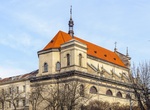
See Jesuit Church, Lviv, Ukraine (UNESCO site)
The Jesuit Church in Lviv is dedicated to Sts. Peter and Paul. When constructed in the 1610 and 1620s, it was one of the largest churches in the Polish-Lithuanian Commonwealth. Sebastian Lachmius, a monk, based his design for the church on that of Il Gesu in Rome. His designs were modified by a professional Italian architect, Jacopo Briano, in 1618–1621. A curio... -
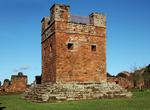
See Jesuit Missions of La Santísima Trinidad & Jesús de Tavarangue, Paraguay (UNESCO site)
La Santisima Trinidad de Paraná, or the Holy Trinity of Paraná is the name of a former Jesuit mission in Paraguay. It is an example of one of the many Jesuit Reductions, small colonies established by the missionaries in various locations in South America throughout the 17th and 18th century. Reducciones were built as miniature city-states that integrated... -
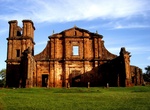
See Jesuit Missions of São Miguel das Missões, Brazil (UNESCO Site)
São Miguel das Missões is a Unesco World Heritage site located in the small town of São Miguel das Missões in the northwestern region of Rio Grande do Sul, a state in southern Brazil. It is also known as São Miguel Arcanjo and by its Spanish language name San Miguel. It was one of the many Jesuit Reductions in Argentina, Brazil,... -
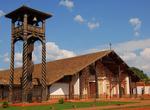
See Jesuit Missions of the Chiquitos, Bolivia (UNESCO site)
The Jesuit Missions of the Chiquitos are in the Santa Cruz department of eastern Bolivia. Six of the missions have been designated a UNESCO World Heritage Site. The missions are distinguished by the fusion of European and American Indian cultural influences. The missions were founded as reductions or reducciones de indios by Jesuits in the 17th and 18th centuries to c... -
Visit Jewish-Medieval Heritage of Erfurt, Erfurt, Germany (UNESCO site)
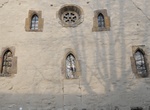
Located in the medieval historic centre of Erfurt, the capital city of Thuringia, the UNESCO site comprises three monuments: the Old Synagogue, the Mikveh, and the Stone House. They illustrate the life of the local Jewish community and its coexistence with a Christian majority in Central Europe during the Middle Ages, between the end of the 11th and the mid-14th centu... -
Explore Jiuzhaigou National Park, China (UNESCO site)
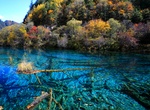
Jiuzhaigou National Park ("Valley of Nine Villages") is a nature reserve in the north of Sichuan, a province in south western China. It is known for its many multi-level waterfalls and colorful lakes, and was declared a UNESCO World Heritage Site in 1992. It belongs to the category V (Protected Landscape) in the IUCN system of protected area categorization. The valley... -
Visit Jodrell Bank Observatory, England (UNESCO site)
The Jodrell Bank Observatory is a British observatory that hosts a number of radio telescopes, and is part of the Jodrell Bank Centre for Astrophysics at the University of Manchester. The observatory was established in 1945 by Sir Bernard Lovell, who wanted to investigate cosmic rays after his work on radar during the Second World War. It has since played an important... -
See Joggins Fossil Cliffs, Nova Scotia, Canada (UNESCO site)
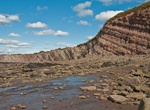
Joggins is a Canadian rural community located in western Cumberland County, Nova Scotia. On July 7, 2008 a 15 km length of the coast comprising the Joggins Fossil Cliffs was officially inscribed on the World Heritage List. Joggins is famous for its record of fossils dating to the Pennsylvanian "Coal Age" of earth history, approximately 310 million years ago. The drama... -
Visit Jomon Prehistoric Sites in Northern Japan (UNESCO Site)
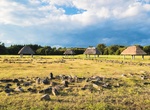
The property consists of 17 archaeological sites in the southern part of Hokkaido Island and northern Tohoku in geographical settings ranging from mountains and hills to plains and lowlands, from inland bays to lakes, and rivers. They bear a unique testimony to the development over some 10,000 years of the pre-agricultural yet sedentary Jomon culture and its complex s... -
See Jongmyo Shrine, South Korea (UNESCO site)
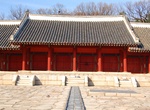
Jongmyo is a Confucian shrine dedicated to the memorial services for the deceased kings and queens of the Korean Joseon Dynasty. According to UNESCO, the shrine is the oldest royal Confucian shrine preserved and the ritual ceremonies continue a tradition established since the 14th century. Such shrines existed during the Three Kingdoms of Korea period but only th... -
Visit Joya de Cerén, El Salvador (UNESCO site)
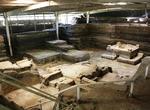
Joya de Cerén (Jewel of Cerén) is an archaeological site in El Salvador featuring a pre-Columbian Maya farming village preserved remarkably intact under layers of volcanic ash. It is often referred to as the "Pompeii of the Americas" in comparison to the famous Ancient Roman ruins. A small farming community inhabited as early as 900 BC, Cerén was ...