Give us feedback!
Our philosophy is simple. We want to encourage you to dream. BIG! Then we help you plan your trip, get the most out of it while you're traveling and help you share your experience with friends.
Join Now It's FREE
Related Categories
Dreams Still To Do
Checked-Off Dreams
Dreams Still To Do
Checked-Off Dreams
Advertisement
Explore Main UNESCO Sites
-
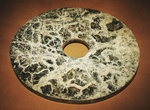
Visit Liangzhu City Ruins, China (UNESCO site)
The Liangzhu culture (3400–2250 BC) was the last Neolithic jade culture in the Yangtze River Delta of China. The culture was highly stratified, as jade, silk, ivory and lacquer artifacts were found exclusively in elite burials, while pottery was more commonly found in the burial plots of poorer individuals. This division of class indicates that the Liangzhu peri... -
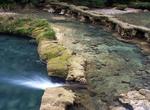
Explore Libo Karst, China (UNESCO sites)
The South China Karst, a UNESCO World Heritage Site since June 2007, spans China's southern provinces of Guangxi, Guizhou, and Yunnan. The region of south China is particularly noted for its karst features and landscapes as well as rich biodiversity. The site comprises three clusters: Libo Karst, Shilin Karst and Wulong Karst. UNESCO describes the South China Karst as... -
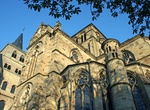
Visit Liebfrauenkirche in Trier, Germany (UNESCO Site)
The Liebfrauenkirche in Trier, is, along with the Cathedral of Magdeburg (reportedly begun in 1209, but finished after the Liebfrauenkirche) the earliest Gothic church in Germany and falls into the architectural tradition of the French Gothic cathedrals. It is located next to the Trier Dom. It is designated as part of the Roman Monuments, Cathedral of St. Peter and Ch... -
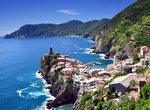
Hike or Drive the Ligurian Coast, Italy (UNESCO site)
The Ligurian coast between Cinque Terre and Portovenere is a cultural landscape of great scenic and cultural value. Included in this UNESCO site is Portovenere, Cinque Terre, and the Islands (Palmaria, Tino and Tinetto). The Cinque Terre is a rugged portion of coast to the west of the city of La Spezia. "The Five Lands" is composed of five villages: Monterosso al Mar... -
Visit Lijiang, China (UNESCO site)
The Old Town of Lijiang is a UNESCO World Heritage Site located in Lijiang City, Yunnan, China. The town has a history going back more than 800 years and was once a confluence for trade along the old tea horse road. The Lijiang old town is famous for its orderly system of waterways and bridges. The old town of Lijiang differs from other ancient Chinese cities in ... -
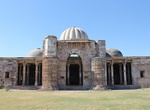
Visit Lila Gumbaj Ki Masjid, Champaner, India (UNESCO site)
Lila Gumbaz Ki Masjid in Champaner, Gujarat state, western India is one of the 114 monuments listed by the Baroda Heritage Trust that are part of the Champaner-Pavagadh Archaeological Park, a UNESCO World Heritage Site. It is located near the east gate of the former city. The Masjid, built on a high plinth, has a frontage with an arched entrance at the centre flanked ... -
Explore Lipari Island, Italy (UNESCO site)
Lipari is the largest of a chain of islands in a volcanic archipelago that straddles the gap between Vesuvius and Etna. The island has a surface area of 37.6 km² and is 30 km from Sicily. Besides the main town, most of the year-round population resides in one of the four main villages: Pianoconte is almost due west across the island, Quattropani in the northwest,... -
See Litomyšl Castle, Czechia (UNESCO site)
Litomyšl is a town and municipality in the Pardubice Region of the Czech Republic. The dominant feature of Litomyšl is the monumental Renaissance castle dating from the years 1568–1581. The buildings of the castle precincts are not only exceptional for their architectural refinement, but have also inscribed themselves in history as the birthplace o... -
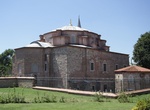
Visit Little Hagia Sophia, Istanbul, Turkey (UNESCO Site)
Little Hagia Sophia (Küçük Ayasofya Camii), formerly the Church of the Saints Sergius and Bacchus, is a former Eastern Orthodox church dedicated to Saints Sergius and Bacchus in Constantinople, converted into a mosque during the Ottoman Empire. This Byzantine building with a central dome plan was erected in the sixth century by Justinian, likely was a... -
Visit Liverpool, England
Liverpool is a city and metropolitan borough of Merseyside, England, along the eastern side of the Mersey Estuary. It was founded as a borough in 1207 and was granted city status in 1880. Historically a part of Lancashire, the urbanisation and expansion of Liverpool were both largely brought about by the city's status as a major port. By the 18th century, trade from t... -
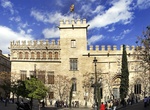
See Llotja de la Seda, Spain (UNESCO site)
The Llotja de la Seda (La Lonja de la Seda de Valencia) is a late Valencian Gothic style civil building in Valencia, Spain, built between 1482 and 1548, and one of the principal tourist attractions in the city. The UNESCO considered it as a World Heritage Site in 1996 since "the site is of outstanding universal value as it is a wholly exceptional example of a sec... -
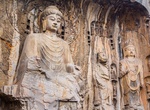
See Longmen Grottoes (Longmen Caves), China (UNESCO site)
The Longmen Grottoes or Longmen Caves are located 12 km south of present day Luòyáng in Hénán province, China. The grottoes, which overwhelmingly depict Buddhist subjects, are densely dotted along the two mountains: Xiangshan (to the east) and Longmenshan (to the west). The Yi River flows northward between them. For this reason, the a... -
See Longobards in Italy, (UNESCO Sites)
Longobards in Italy, Places of Power (568–774 A.D.) is the official name given by UNESCO to seven groups of historic buildings that reflect the achievements of the Germanic tribe of the Lombards (also referred to asLongobards) who settled in Italy from the 6th to the 8th century. The groups comprise monasteries, church buildings and fortresses and became UNESCO ... -
See Lopé National Park, Gabon (UNESCO site)
Lopé National Park is a national park in central Gabon. Although the terrain is mostly rain forest, in the north the park contains the last remnants of grass savannas created in Central Africa during the last Ice Age, 15,000 years ago. It was the first protected area in Gabon when the Lopé-Okanda Wildlife Reserve was created in 1946. In 2007, the Lo... -
Visit Lord Howe Island, Australia (UNESCO site)
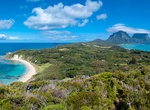
Lord Howe Island is an irregularly crescent-shaped volcanic remnant in the southwest Pacific Ocean. Lying in the Tasman Sea between Australia and New Zealand the island is 600 kilometres (370 mi) directly east of mainland Port Macquarie, 702 kilometres (436 mi) northeast of Sydney, and about 900 kilometres (560 mi) from Norfolk Island to its northeast. As distances to...