Give us feedback!
Our philosophy is simple. We want to encourage you to dream. BIG! Then we help you plan your trip, get the most out of it while you're traveling and help you share your experience with friends.
Join Now It's FREE
Related Categories
Dreams Still To Do
Checked-Off Dreams
Dreams Still To Do
Checked-Off Dreams
Advertisement
Explore Main UNESCO Sites
-
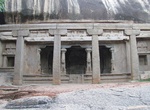
Visit Mahishasuramardini Mandapa, India (UNESCO Site)
Mahishasuramardhini mandapa (Cave Temple; also known as Yampuri) is an example of Indian rock-cut architecture dating from the late 7th century, of the Pallava dynasty. It is a rock-cut cave temple located on a hill, near a lighthouse, along with other caves in Mamallapuram. It is the one of the finest testimonials of ancient Vishwakarma Sthapathis (Vishwakarma sculpt... -
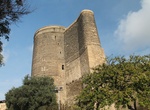
Visit Maiden Tower, Baku, Azerbaijan (UNESCO site)
The Maiden Tower or also known locally as Giz Galasi located in the Old City, Baku in Azerbaijan is an ancient tower with cultural affinity corroborating the presence Zoroastrians, Sassanians, Arabs, Persians, Shirvanis, Ottomans, and Russians. Built in the 12th century, as part of the walled city of Baku, the Maiden Tower, with the Shirvanshahs' Palace dated to the 1... -
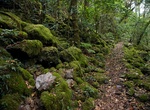
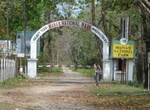
Explore Main Range National Park, Australia (UNESCO site)
Main Range is a mountain range and a national park in Queensland (Australia), 85 km southwest of Brisbane. It is part of the World Heritage Site Gondwana Rainforests of Australia (formerly known as the Central Eastern Rainforest Reserves). It protects the western part of a semicircle of mountains in South East Queensland known as the Scenic Rim. This includes the larg... -
Visit Maison Carrée, Nîmes, France (UNESCO Site)
The Maison carrée is an ancient Roman temple in Nîmes, southern France; it is one of the best-preserved Roman temples to survive in the territory of the former Roman Empire. It is a mid-sized Augustan provincial temple of the Imperial cult, acaesareum. The Maison carrée inspired the neoclassical Église de la Madeleine in Paris, St. Marcellin... -
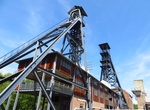
Visit Major Mining Sites of Wallonia, Belgium (UNESCO site)
There are no working coal mines at one of the newest UNESCO World Heritage Sites at Wallonia, Belgium. Instead, early examples of utopian architecture attract visitors to the 4 sites spread over a 170 kilometer (107 mile) strip of land. The sites provide a consolidated window into all aspects of the mining culture that spanned the 19th and 20th centuries including wor... -
See Makli Necropolis, Thatta, Pakistan (UNESCO site)
Makli Necropolis is one of the largest funerary sites in the world, spread over an area of 10 square kilometres near the city of Thatta, in the Pakistani province of Sindh. The site houses approximately 500,000 to 1 million tombs built over the course of a 400 year period. Makli Necropolis features several large funerary monuments belonging to royalty, various Sufi sa... -
Visit Malacca, Malaysia (UNESCO site)
Malacca City is the capital city of the Malaysian state of Malacca. The Seri Negeri, the State Administrative and Development Centre which houses the Chief Minister's Office, the State Secretary's Office and the Legislative Assembly Hall are located in Malacca City. It was listed as a UNESCO World Heritage Site together with George Town of Penang on 7 July 2008. Most ... -
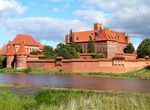
Visit Malbork Castle, Poland (UNESCO site)
The Castle in Malbork is the largest castle in the world by area. It was built in Prussia by the Teutonic Knights, a German Roman Catholic religious order of crusaders, in a form of an Ordensburg fortress. The Order named it Marienburg (Mary's Castle). The town which grew around it was also named Marienburg. The castle is a classic example of a medieval fortress, and ... -
Explore Maloti-Drakensberg Park, South Africa & Lesotho (UNESCO site)
Maloti-Drakensberg Park was established on 11 June 2001 by linking the Sehlabathebe National Park in the Kingdom of Lesotho and the uKhahlamba Drakensberg Park in KwaZulu-Natal, South Africa. The highest peak is Thaba Ntlenyana rising to 3.482 m. The merged park includes Golden Gate Highlands National Park, QwaQwa National Park and Sterkfontein Dam Nature Reserve, (Fr... -
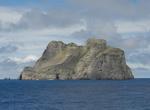
Visit Malpelo Island, Colombia (UNESCO site)
Malpelo Island (Isla de Malpelo) is an island located 235 miles (378 km) from Colombia's Pacific coast, and approximately 225 miles (362 km) from Panama's coast. It has a land area of 0.35 square kilometres (86 acres). It is uninhabited except for a small military post manned by the Colombian Army, which was established in 1986. Visitors need a written permit from the... -
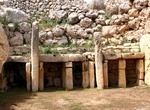
Visit Malta's Megalithic Temples, Malta (UNESCO sites)
The Megalithic Temples of Malta are a series of prehistoric monuments in Malta of which seven are UNESCO World Heritage Sites. Archaeologists believe that these megalithic complexes are the result of local innovations in a process of cultural evolution. This led to the building of several temples of the Ġgantija phase (3600-3000 BC), culminating in the large Tarx... -
Explore Mammoth Cave National Park, Kentucky (UNESCO site)
Mammoth Cave National Park is a U.S. National Park in central Kentucky, encompassing portions of Mammoth Cave, the longest cave system known in the world. The official name of the system is the Mammoth-Flint Ridge Cave System for the ridge under which the cave has formed. The park was established as a national park on July 1, 1941. It became a World Heritage Site on O... -
Explore Mana Pools National Park, Zimbabwe (UNESCO site)
Mana Pools National Park is a 219,600 ha wildlife conservation area and national park in northern Zimbabwe. It is a region of the lower Zambezi River in Zimbabwe where the flood plain turns into a broad expanse of lakes after each rainy season. As the lakes gradually dry up and recede, the region attracts many large animals in search of water, making it one of Africa'... -
Explore Manas Wildlife Sanctuary, India (UNESCO site)
Manas National Park or Manas Wildlife Sanctuary is a Wildlife Sanctuary, UNESCO Natural World Heritage site, a Project Tiger Reserve, an Elephant Reserve and a Biosphere Reserve in Assam, India. Located in the Himalayan foothills, it is contiguous with the Royal Manas National park in Bhutan. The park is known for its rare and endangered endemic wildlife such as the A... -
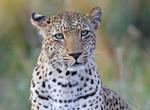
Explore Manovo-Gounda St Floris National Park, Central African Republic (UNESCO site)
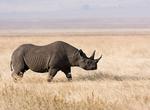
Manovo-Gounda St.Floris National Park is a national park and UNESCO World Heritage Site located in the Central African Republic prefecture Bamingui-Bangoran, near the Chad border. It was inscribed to the list of World Heritage Sites in 1988 as a result of the diversity of life present within it. Notable species include black rhinoceroses, elephants, cheetahs, leopards...