Give us feedback!
Our philosophy is simple. We want to encourage you to dream. BIG! Then we help you plan your trip, get the most out of it while you're traveling and help you share your experience with friends.
Join Now It's FREE
Related Categories
Dreams Still To Do
Checked-Off Dreams
Dreams Still To Do
Checked-Off Dreams
Advertisement
Explore Main UNESCO Sites
-
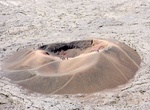
Explore Piton de la Fournaise (Peak of the Furnace), Réunion (UNESCO site)
Piton de la Fournaise ("Peak of the Furnace") is a shield volcano on the eastern side of Réunion island (a French department) in the Indian Ocean. It is currently one of the most active volcanoes in the world, along with Kīlauea in the Hawaiian Islands (Pacific Ocean), Stromboli, Etna (Italy) and Mount Erebus in Antarctica. A previous eruption began in August 2... -
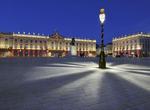
See Place Stanislas, Nancy, France (UNESCO site)
The Place Stanislas, known colloquially as the place Stan', is a large pedestrianized square in Nancy, Lorraine, France. Since 1983, the architectural ensemble comprising the Place Stanislas and the extension of its axis, the Place de la Carrière and Place d'Alliance, has been on the list of UNESCO World Heritage Sites. The Place Stanislas is 125 meters long an... -
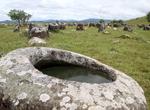
Visit Plain of Jars, Laos (UNESCO site)
The Plain of Jars (Lao: ທົ່ງໄຫຫິນ [tʰōŋ hǎj hǐn]) is a megalithic archaeological landscape in Laos. It consists of thousands of stone jars scattered around the upland valleys and the lower foothills of the central plain of the Xiangkhoang Plateau. The jars are mostly arranged in clusters ranging in number from one to several hundred. The Xieng Khouang Plateau is locat... -
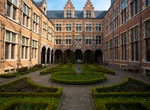
See Plantin-Moretus Museum, Belgium (UNESCO site)
The Plantin-Moretus Museum is a museum in Antwerp, Belgium honouring the famous printers Christoffel Plantijn and Jan Moretus. It is located in their former residence and printing establishment, Plantin Press, at the Friday Market. The printing company was founded in the 16th century by Christoffel Plantijn. After his death it was owned by his son-in-law Jan More... -
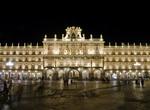
Visit Plaza Mayor, Salamanca, Spain (UNESCO site)
The Plaza Mayor (English Main Plaza) in Salamanca, Spain is a large plaza located in the center of Salamanca, used as a public square. It was built in the traditional Spanish baroque style and is a popular gathering area. It is lined by restaurants, ice cream parlors, tourist shops, jewelry stores and a pharmacy along its perimeter except in front of the city hall. It... -
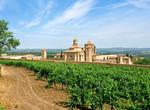
See Poblet Monastery, Spain (UNESCO site)
The Royal Abbey of Santa Maria de Poblet is a Cistercian monastery, founded in 1151, located at the feet of the Prades Mountains, in the comarca of Conca de Barberà, in Catalonia (Spain). It was founded by Cistercian monks from France on lands conquered to the Saracens. The main architect was Arnau Bargués. This monastery was the first of three sister mo... -
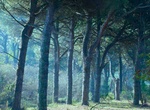
Explore Po Delta Park, Italy (UNESCO site)
Po Delta Park is a protected wetlands region in the Po Delta consisting of four parcels of land on the right bank of the Po and to the south. In 1999 the park was designated a World Heritage Site by UNESCO and was added to "Ferrara, City of the Renaissance, and its Po Delta." The 53,653 ha (132,580 acres) of the park contain wetlands, forest, dunes and salt pans.... -
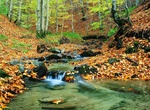
Explore Poloniny National Park, Slovakia (UNESCO site)
Poloniny National Park is a national park in north eastern Slovakia at the Polish and Ukrainian borders, in the Bukovské vrchy mountain range, which belongs to the Eastern Carpathians. It was created on 1 October 1997 with a protected area of 298.05 km² and a buffer zone of 109.73 km². Selected areas of the park are included into Primeval Beech Forest... -
Visit Polonnaruwa, Sri Lanka (UNESCO site)
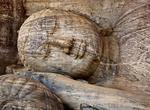
Polonnaruwa is the second most ancient of Sri Lanka's kingdoms was first declared the capital city by King Vijayabahu I, who defeated the Chola invaders in 1070 AD to reunite the country once more under a local leader. Today the ancient city of Polonnaruwa remains one of the best planned archeological relic sites in the country, standing testimony to the discipline a... -
Visit Pompeii, Herculaneum and Torre Annunziata, Italy (UNESCO sites)
The city of Pompeii is a partially buried Roman town-city near modern Naples in the Italian region of Campania, in the territory of the comune of Pompei. Along with Herculaneum, its sister city, Pompeii was destroyed and completely buried during a long catastrophic eruption of the volcano Mount Vesuvius spanning two days in 79 AD. The eruption buried Pompeii under 4 t... -
See Pontcysyllte Aqueduct and Canal, Wales (UNESCO site)
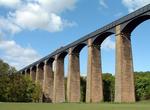
The Pontcysyllte Aqueduct is a navigable aqueduct that carries the Llangollen Canal over the valley of the River Dee in Wrexham in north east Wales. Completed in 1805, it is the longest and highest aqueduct in Britain, a Grade I Listed Building and a World Heritage Site. When the bridge was built it linked the villages of Froncysyllte, at the southern end of the bridg... -
Cross Pont de Brinas sur le Fleuve Ebro, Spain (UNESCO site)
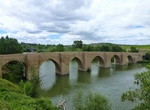
Pont de Brinas sur le Fleuve Ebro (Puente del siglo XIV sobre el Ebro) is a bridge along the Santiago de Compostela in Spain. It was inscribed to the UNESCO List of World Heritage Sites on July 4, 2015 as part of the Routes of Santiago de Compostela. -
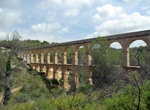
See Pont de les Ferreres (Devil's Bridge), Tarragona, Spain (UNESCO site)
The Pont de les Ferreres, also known as Pont del Diable - Devil's Bridge) is a Roman bridge, part of the Roman aqueduct built to supply water to the ancient city of Tárraco, today Tarragona, in Catalonia, Spain. The aqueduct bridge is located 4 kilometers north of the city. The aqueduct is part of the Archaeological Ensemble of Tarraco, which was added to the U... -
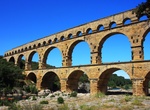
See Pont du Gard, France (UNESCO site)
The Pont du Gard is a notable ancient Roman aqueduct bridge that crosses the Gard River in southern France. It is part of a 50 km (31 mi) long aqueduct that runs between Uzès and Nîmes in the South of France. It is located in Vers-Pont-du-Gard near Remoulins, in the Gard département. The aqueduct was constructed by the Romans in the 1st century AD ... -
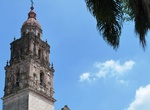
See Popocatépetl Monasteries, Mexico (UNESCO site)
The Monasteries on the slopes of Popocatépetl World Heritage Site is a series of fourteen 16th century monasteries which were built by the Augustinians, the Franciscans and the Dominicans in order to evangelize the areas just south and east of the Popocatépetl volcano in central Mexico. These monasteries received their recognition from UNESCO in 1994, be...