Give us feedback!
Our philosophy is simple. We want to encourage you to dream. BIG! Then we help you plan your trip, get the most out of it while you're traveling and help you share your experience with friends.
Join Now It's FREE
Related Categories
Dreams Still To Do
Checked-Off Dreams
Dreams Still To Do
Checked-Off Dreams
Advertisement
Explore Main UNESCO Sites
-
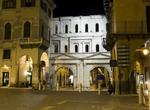
See Porta Borsari, Verona, Italy (UNESCO site)
Porta Borsari is an ancient Roman gate in Verona, northern Italy. It dates to the 1st century AD, though it was most likely built over a pre-existing gate from the 1st century BC. An inscription dating from emperor Gallienus' reign reports another reconstruction in 265 AD. The Via Postumia (which here became thedecumanus maximus) passed through the gate, which was the... -
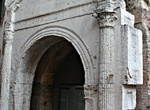
See Porta Leoni, Verona, Italy (UNESCO site)
Porta Leoni is an ancient Roman gate in Verona, Italy. The gate was built during the Roman Republic by P. Valerius, Q. Caecilius, Q. Servilius and P. Cornelius, and restructured in imperial times. It was connected to the road which led to Bologna and Aquileia. The original Roman name is unknown. During the Middle Ages it was calledPorta San Fermo, due to the nearby ch... -
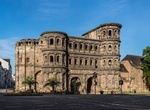
See Porta Nigra, Trier, Germany (UNESCO Site)
The Porta Nigra is a large Roman city gate in Trier, Germany. It is today the largest Roman city gate north of the Alps. It is designated as part of the Roman Monuments, Cathedral of St. Peter and Church of Our Lady in Trier UNESCO World Heritage Site. The name Porta Nigra originated in the Middle Ages due to the darkened colour of its stone; the original Roman name h... -
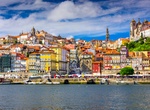
Visit Porto, Portugal (UNESCO site)
Porto (also known as Oporto), is the second largest city in Portugal and one of the major urban areas in the Iberian Peninsula. Located along the Douro river estuary in northern Portugal, Porto is one of the oldest European centres, and registered as a World Heritage Site by UNESCO in 1996. Its settlement dates back many centuries, when it was an outpost of the Roman ... -
Visit Portobelo-San Lorenzo, Panama (UNESCO site)
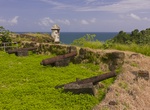
Portobelo is a port city in Colón Province, Panama. It is located on the northern part of the Isthmus of Panama. Portobelo was founded in 1597 by Spanish explorer Francisco Velarde y Mercado. After Francis Drake died of dysentery in 1596 at sea, he was buried in a lead coffin near Portobelo Bay. From the 16th to the 18th centuries, it was an important silver-ex... -
Visit Port Royal Sites, Kingston, Jamaica (UNESCO sites)
Port Royal (Jamaican Patois: Puot Rayal) was a town located at the end of the Palisadoes, at the mouth of Kingston Harbour, in southeastern Jamaica. Founded in 1494 by the Spanish, it was once the largest and most prosperous city in the Caribbean, functioning as the centre of shipping and commerce in the Caribbean Sea by the latter half of the 17th century. It was des... -
Visit Potala Palace, Lhasa, Tibet (UNESCO site)
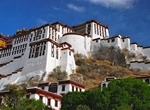
Construction of the Potala Palace complex, the Tibetan winter home of the Dalai Lamas, was begun in the 7th century AD. The Palace is an iconic symbol of Tibetan Buddhism and plays a key role in the administration of Tibet. Built on Red Mountain in the center of the Lhasa Valley (the highest elevation of any ancient palace), Potala Palace is the oldest building in a c... -
Visit Potosí, Bolivia (UNESCO site)
Potosí is a city and the capital of the department of Potosí in Bolivia. It is one of the highest cities in the world and it was the location of the Spanish colonial mint, now the National Mint of Bolivia. Potosí lies beneath the Cerro de Potosí—sometimes referred to as the Cerro Rico ("rich mountain")—a mountain popularly conce... -
Visit Poverty Point National Monument, Louisiana (UNESCO Site)
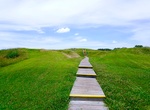
Poverty Point is a prehistoric earthworks of the Poverty Point culture, now a historic monument located in the Southern United States. It is 15.5 miles (24.9 km) from the current Mississippi River, and situated on the edge of Maçon Ridge, near the village of Epps in West Carroll Parish, Louisiana. Poverty Point comprises several earthworks and mounds built betw... -
Visit Prague, Czechia (UNESCO site)
The most populous city of the Czech Republic, Prague is also the country’s capital. Throughout its 1,100 year history Prague has been a cultural, politic and economic center of central Europehaving at one time been the capital of the Holy Roman Empire. Prague was a key city in the Habsburg Monarchy, the Protestant Reformation and the Thirty Years War. When Czech... -
Visit Prambanan Temple, Indonesia (UNESCO site)
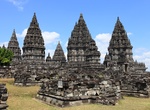
Prambanan is a ninth century Hindu temple compound in Central Java, Indonesia, dedicated to the Trimurti, the expression of God as the Creator (Brahma), the Sustainer (Vishnu) and the Destroyer (Shiva). The temple compound is located approximately 18 km east of Yogyakarta city on the boundary between Yogyakarta and Central Java province. The temple, a UNESCO Worl... -
See Preah Vihear Temple, Cambodia (UNESCO site)
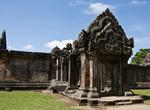
Preah Vihear Temple or Prasat Preah Vihear is a Hindu temple built during the reign of Khmer Empire, that is situated atop a 525-metre (1,722 ft) cliff in the Dângrêk Mountains, in the Preah Vihear province, Cambodia. In 1962, following a lengthy dispute between Thailand and Cambodia over ownership, a majority of the International Court of Justice (ICJ) in... -
See Prehistoric Caves of Yagul and Mitla, Mexico (UNESCO site)
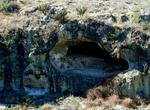
Yagual and Mitla are it the central valley of Oaxaca Mexico. These two locations are known for the pre-Hispanic archaeological sites and a series of pre-historic caves and rock shelters which have paintings and show human habitation for 80,000 years. Some of these shelters provide archaeological and rock-art evidence for the progress of nomadic hunter-gathers to incip... -
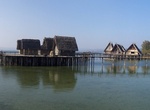
Visit Prehistoric Pile Dwellings around the Alps, (UNESCO Site)
Prehistoric pile dwellings around the Alps is a series of prehistoric pile-dwelling (or stilt house) settlements in and around the Alps built from around 5000 to 500 B.C. on the edges of lakes, rivers or wetlands. 111 sites, located in Austria (5 sites), France (11), Germany (18), Italy (19), Slovenia (2), and Switzerland (56), were added to UNESCO World Heritage Site... -
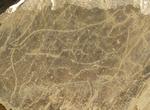
See Prehistoric Rock Art Sites in the Côa Valley, Portugal (UNESCO site)
The Côa Valley Paleolithic Art site is an open air sites of Paleolithic art in northeastern Portugal. In the late 1980s, the engravings were discovered in Vila Nova de Foz Côa. The site in situated in the valley of the Côa River, and comprises thousands of engraved drawings of horses, bovines and other animal, human and abstract figures, dated from 2...