Give us feedback!
Our philosophy is simple. We want to encourage you to dream. BIG! Then we help you plan your trip, get the most out of it while you're traveling and help you share your experience with friends.
Join Now It's FREE
Related Categories
Dreams Still To Do
Checked-Off Dreams
Dreams Still To Do
Checked-Off Dreams
Advertisement
Explore Main UNESCO Sites
-
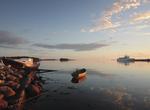
Visit Solovetsky Islands, Russia (UNESCO site)
The Solovetsky Islands or Solovki are an archipelago located in the Onega Bay of the White Sea, Russia. After the October Revolution, the islands attained notoriety as the site of the first Soviet prison camp (gulag). The camp was inaugurated in 1921, while Vladimir Lenin was still at the helm of Soviet Russia. It was closed in 1939, on the eve of theWorld War II. By ... -
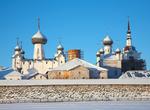
See Solovetsky Monastery, Russia (UNESCO site)
Solovetsky Monastery (Russian: Солове́цкий монасты́рь; IPA: [səlɐˈvʲetskʲɪj mənɐˈstɨrʲ]) was the greatest citadel of Christianity in the Russian North before being turned into a special Soviet prison and labor camp (1926–1939), which served as a prototype for the GULag system. Situated on the Solovetsky Islands in the White Sea, the monastery braved many changes... -
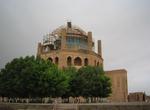
See Soltaniyeh, Iran (UNESCO site)
Soltaniyeh situated in the Zanjan Province of Iran, some 240 km to the north-west from Tehran, used to be the capital of Ilkhanid rulers of Persia in the 14th century. Its name translates as "the Imperial". In 2005, UNESCO listed Soltaniyeh as one of the World Heritage Sites. The central magnet of Soltaniyeh's several ruins is the Mausoleum of Il-khan Öljeitü... -
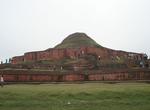
See Somapura Mahavihara, Bangladesh (UNESCO site)
Somapura Mahavihara in Paharpur, Badalgachhi Upazila, Bangladesh is among the best known Buddhist viharas in the Indian Subcontinent and is one of the most important archeological sites in the country. It was designated a UNESCO World Heritage Site in 1985. The quadrangular structure consists of 177 cells and a traditional Buddhist stupa in the center. The rooms were ... -
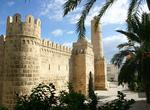
Visit Sousse, Tunisia (UNESCO site)
Sousse is a city in the central-east of Tunisia, on the Gulf of Hammamet, which is a part of the Mediterranean Sea. The name may be of Berber origin: similar names are found in Libya and in the south of Morocco (Bilād al-Sūs). Sousse is an important tourist resort. Hotel complexes with a capacity of 40,000 beds extend 20 km from the old city (Medina) north along the s... -
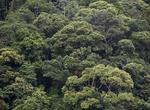
Explore Southeast Atlantic Forest Reserves, Brazil (UNESCO site)
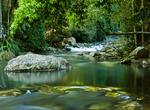
The 25 Atlantic Forest South-East Reserves contain some of the best and most extensive examples of remaining Atlantic forest in Brazil displaying the biological wealth and evolutionary history of the one of the world's richest and most endangered habitats. From mountains covered by dense forests, down to wetlands, coastal islands with isolated mountains and dunes, ... -
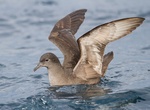
Birding at South East Mutton Bird Islet, Tasmania, Australia (UNESCO site)
South East Mutton Bird Islet is a steep islet, with an area of 0.52 ha, in south-eastern Australia. Its highest point is 22 m asl. It is part of the Mutton Bird Island Group, lying close to the southern end of the south-western coast of Tasmania. Mutton Bird Island is an irregularly shaped island, with an area of 44 ha, in south-eastern Australia. Its highest point is... -
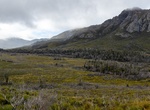
Explore Southwest National Park, Tasmania, Australia (UNESCO site)
The Southwest National Park is a 618,267-hectare (1,527,770-acre) national park located in the south-west of Tasmania, Australia. The park is Tasmania's largest and forms part of the Tasmanian Wilderness World Heritage Area. The eastern boundary is 93 kilometres (58 mi) west of Hobart and the park stretches to the west and south coasts. This park comprises the bulk of... -
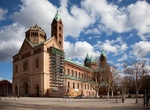
See Speyer Cathedral, Germany (UNESCO site)
The Speyer Cathedral, officially the Imperial Cathedral Basilica of the Assumption and St Stephen, in Latin: Domus sanctae Mariae Spirae in Speyer, Germany, is the seat of the Roman Catholic Bishop of Speyer and is suffragan to the Archdiocese of Bamberg. The cathedral, which is dedicated to St. Mary, patron saint of Speyer ("Patrona Spirensis") and St. Stephen i... -
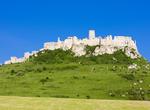
Visit Spiš Castle, Slovakia (UNESCO site)
The ruins of Spiš Castle in eastern Slovakia form one of the largest castle sites in Central Europe. The castle is situated above the town of Spišské Podhradie and the village of Žehra, in the region known as Spiš (Hungarian: Szepes, German: Zips, Polish: Spisz, Latin: Scepusium). It was included in the UNESCO list of World Heritage Sites i... -
Visit Spitz, Greng, Switzerland (UNESCO site)
Greng is a municipality in the district of See in the canton of Fribourg in Switzerland. It is home to the Spitz prehistoric pile-dwelling (or stilt house) settlements that are part of the Prehistoric Pile dwellings around the Alps UNESCO World Heritage Site. The Greng-Spitz site has been studied since the 19th century. It was occupied at least three separate times. T... -
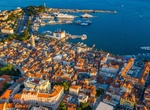
Visit Split, Croatia (UNESCO site)
Split is the largest Dalmatian city, the second-largest urban centre in Croatia, and the seat of Split-Dalmatia County. The city is located on the shores of the Mediterranean, more specifically on the eastern shore of the Adriatic Sea, spreading over a central peninsula and its surroundings, with its metropolitan area including the many surrounding seaside towns ... -
Explore Springbrook National Park, Queensland, Australia (UNESCO site)
Springbrook National Park is a national park at Springbrook on the McPherson Range in the Gold Coast hinterland of Queensland, (Australia), 96 km south of Brisbane. It is part of the Shield Volcano Group of the World Heritage site Gondwana Rainforests of Australia (formerly known as the Central Eastern Rainforest Reserves). In December 1994, the UNESCO World Heritage ... -
Explore Srebarna Nature Reserve, Bulgaria (UNESCO site)
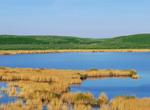
The Srebarna Nature Reserve is a nature reserve in northeastern Bulgaria (Southern Dobruja), near the village of the same name, 18 km west of Silistra and 2 km south of the Danube. It comprises Lake Srebarna and its surroundings and is located on the Via Pontica, a bird migration route between Europe and Africa. The reserve embraces 6 km² of protected area and a ... -
Visit Standing Stones of Stenness, Scotland (UNESCO site)
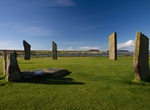
The Standing Stones of Stenness form an impressive Neolithic monument on the mainland of Orkney, Scotland. Various traditions associated with the stones survived into the modern era and they form part of the Heart of Neolithic Orkney World Heritage Site. They are looked after by Historic Scotland. The surviving stones are sited on a promontory at the south bank o...