Give us feedback!
Our philosophy is simple. We want to encourage you to dream. BIG! Then we help you plan your trip, get the most out of it while you're traveling and help you share your experience with friends.
Join Now It's FREE
Related Categories
Dreams Still To Do
Checked-Off Dreams
Dreams Still To Do
Checked-Off Dreams
Advertisement
Explore Main UNESCO Sites
-
Visit Sudanese Mosques in Northern Côte d’Ivoire (UNESCO Ste)
The eight small adobe mosques, at Tengréla, Kouto, Sorobango, Samatiguila, M’Bengué, Kong and Kaouara are characterized by protruding timbers, vertical buttresses crowned by pottery or ostrich eggs, and tapering minarets. They present an interpretation of an architectural style thought to have originated around the 14th century in the town of Djenn... -
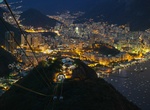
See View from Sugarloaf Mountain, Rio de Janeiro, Brazil (UNESCO site)
Sugarloaf Mountain, is a peak situated in Rio de Janeiro, Brazil, at the mouth of Guanabara Bay on a peninsula that sticks out into the Atlantic Ocean. Rising 396 metres (1,299 ft) above the harbor, its name is said to refer to its resemblance to the traditional shape of concentrated refined loaf sugar. The mountain is only one of several monolithic morros of granite ... -
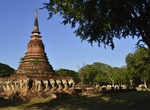
Explore Sukhothai Historical Park, Thailand (UNESCO site)
The Sukhothai Historical Park covers the ruins of Sukhothai, capital of the Sukhothai kingdom in the 13th and 14th centuries, in what is now the north of Thailand. It is located near the modern city of Sukhothai, capital of the province with the same name. The city walls form a rectangle about 2 km east-west by 1.6 km north-south. There are 193 ruins on 70 square kilo... -
See Sukur Cultural Landscape, Nigeria (UNESCO site)
Sukur or Sukur Cultural Landscape is a UNESCO World Heritage Site located in the Northeastern part of Nigeria. It was designated one in 1999 because of its palace, terraced fields, and village, which remain intact. -
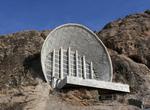
See Sulayman (Sulaiman-Too Sacred) Mountain, Kyrgyzstan (UNESCO site)
The Sulayman Mountain (also known as Taht-I-Suleiman, Sulayman Rock or Sulayman Throne) is the only World Heritage Site in the country of Kyrgyzstan. It is located in the city of Osh and was once a major place of Muslim and pre-Muslim pilgrimage. The rock rises abruptly from the surrounding plains of the Fergana Valley and is a popular place among locals and visitors,... -
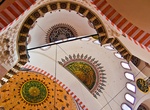
See Süleymaniye Mosque, Istanbul, Turkey (UNESCO Site)
The Süleymaniye Mosque is an Ottoman imperial mosque located on the Third Hill of Istanbul, Turkey. It is the second largest mosque in the city, and one of the best-known sights of Istanbul. As with other imperial mosques in Istanbul, the mosque itself is preceded by a monumental courtyard (avlu) on its west side. The courtyard at the Süleymaniye is of excep... -
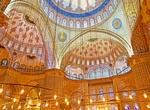
See Sultan Ahmed Mosque (Blue Mosque), Istanbul, Turkey (UNESCO Site)
The Sultan Ahmed Mosque is an historical mosque in Istanbul, the largest city in Turkey and the capital of the Ottoman Empire (from 1453 to 1923). The mosque is popularly known as the Blue Mosque for the blue tiles adorning the walls of its interior. It was built from 1609 to 1616, during the rule of Ahmed I. Like many other mosques, it also comprises a tomb of the fo... -
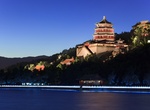
See Summer Palace & Imperial Garden in Beijing, China (UNESCO site)
The Summer Palace n Beijing, China is mainly dominated by Longevity Hill (60 meters high) and the Kunming Lake. It covers an expanse of 2.9 square kilometers, three quarters of which is water. The central Kunming Lake covering 2.2 square kilometers was entirely man made and the excavated soil was used to build Longevity Hill. In the Summer Palace, one finds a var... -
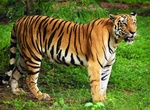
Explore Sundarbans National Park, India (UNESCO site)
The Sundarbans National Park is a National Park, Tiger Reserve, UNESCO World Heritage Site and a Biosphere Reserve located in the Sundarbans delta in the Indian state of West Bengal. This region is densely covered by mangrove forests, and is one of the largest reserves for the Bengal tiger. It is also home to a variety of bird, reptile and invertebrate species, i... -
See Su Nuraxi (Barumini), Sardinia, Italy (UNESCO site)
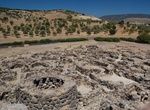
Su Nuraxi is a nuragic archaeological site in Barumini, Sardinia, Italy. It was inscribed on the UNESCO list of World Heritage Sites in 1997 as Su Nuraxi di Barumini. The complex is centered around a three-story tower built around the 16th century BC. At this site Italian archaeologist Giovanni Lilliu discovered a fortified village that at times had been covered by gr... -
Visit Sutz-Lattrigen–Rütte, Switzerland (UNESCO site)
Sutz-Lattrigen is a municipality in the Biel/Bienne administrative district in the canton of Bern in Switzerland. It is home to a number of Neolithic and Bronze Age lake shore archeological sites, including one that is part of a UNESCO World Heritage Site. It is home to the Sutz-Lattrigen–Rütte prehistoric pile-dwelling (or stilt house) settlement that is p... -
Explore Swiss Alps Jungfrau-Aletsch, Switzerland (UNESCO site)
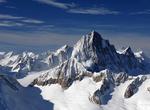
The Jungfrau-Aletsch protected area (officially Swiss Alps Jungfrau-Aletsch) is located in south-western Switzerland between the cantons of Berne and Valais. It is a mountainous region in the easternmost side of the Bernese Alps, containing the northern wall of Jungfrau and Eiger, and the largest glaciated area in western Eurasia, comprising the Aletsch Glacier. The J... -
See Sydney Opera House, Australia (UNESCO site)
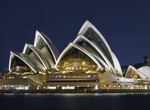
The Sydney Opera House is a multi-venue performing arts centre in the Australian city of Sydney. It was conceived and largely built by Danish architect Jørn Utzon, finally opening in 1973 after a long gestation starting with his competition-winning design in 1957. Utzon received the Pritzker Prize, architecture's highest honour, in 2003. The Pritzker Prize cita... -
Visit Syracuse (Siracusa), Italy (UNESCO site)
Syracuse (Siracusa) is a historic city in southern Italy, the capital of the province of Syracuse. The city is notable for its rich Greek history, culture, amphitheatres, architecture, and as the birthplace of the preeminent mathematician and engineer Archimedes. This 2,700-year-old city played a key role in ancient times, when it was one of the major powers of the Me... -
Explore Table Mountain National Park, South Africa (UNESCO site)
Table Mountain National Park, previously known as the Cape Peninsula National Park, is a national park in Cape Town, South Africa, proclaimed on May 29, 1998, for the purpose of protecting the natural environment of the Table Mountain Chain, and in particular the rare fynbos vegetation. The park is managed by South African National Parks. The park contains two well-kn...