Give us feedback!


 See all
Our philosophy is simple. We want to encourage you to dream. BIG! Then we help you plan your trip, get the most out of it while you're traveling and help you share your experience with friends.
Join Now It's FREE
Dream Packages
Duration: 7 days
Price: $1995.00
Price: $1995.00
Duration: 12 hours 30 minutes
Price: $104.91
Price: $104.91
Duration: 5 days
Price: $918.22
Price: $918.22
Duration: 10 hours 30 minutes
Price: $207.02
Price: $207.02
Dreams Still To Do
Checked-Off Dreams
Dreams Still To Do
Checked-Off Dreams
Advertisement
Explore Man-Made Sites
-
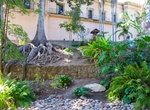
See Zoro Garden, Balboa Park, San Diego, California
Zoro Garden--a sunken stone grotto garden that was designed as a nudist colony during the 1935 California-Pacific Exposition--is now a butterfly garden containing both the larvae and nectar plants needed for the complete life cycle of butterflies. Miniature indentations built into rocks collect small pools of water for the monarch, sulfur, and swallowtail butterflies ... -
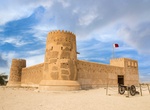
Visit Zubarah, Qatar (UNESCO Site)
Zubarah is a ruined and deserted town located on the north western coast of the Qatar peninsula in the Madinat ash Shamal municipality, about 105 km from the Qatari capital of Doha. Zubarah was once a thriving pearl fishing and trading port positioned midway between the Strait of Hormuz and the west arm of the Persian Gulf. It is one of the largest and best prese... -
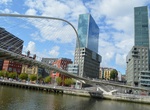
Cross Zubizuri Bridge, Bilbao, Spain
The Zubizuri (Basque for "white bridge"), also called the Campo Volantin Bridge or Puente del Campo Volantin, is a tied arch footbridge across the Nervion River in Bilbao, Spain. Designed by architect Santiago Calatrava, the bridge links theCampo Volantinright bank andUribitarteleft bank of the river. Opened in 1997, the bridge's unusual design consists of a curved wa... -
Visit Zürich Tram Museum, Switzerland
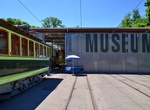
The Zürich Tram Museum is a transport museum in the Swiss city of Zürich, specialising in the history of the Zürich tram system. The main museum site is located at the former tram depotTramdepot Burgwies. The museum also maintains a workshop at the much smaller former tram depot of Wartau. The tram museum is run by an association, the Verein Tram Museum... -
Visit Žuta Tabija (Yellow Bastion), Sarajevo, Bosnia and Herzegovina
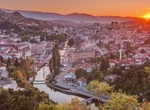
The Yellow Fortress or Yellow Bastion is a cannon fortress at the entrance of the "Walled City of Vratnik". It was built between 1727 and 1739 in area called Jekovac, close to the Jajce Barracks and the Jekovac water reservoir. It served as one of the defense points against the Austro-Hungarian troops in 1878. The fortress was damaged and rebuilt several times. The mo... -
Visit Zvartnots Cathedral, Armenia (UNESCO site)
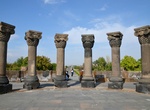
Zvartnots Cathedral are the ruins of a seventh century centrally-planned aisled tetraconch type Armenian cathedral built by order of the Catholicos Nerses the Builder from 641-653. It is located at the edge of the city of Etchmiadzin in the Armavir Province of Armenia. Zvartnots was built at a time when much of Armenia was found under Byzantine control and during the ... -
Visit Zwinger, Dresden, Germany
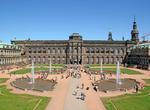
The Zwinger is a palace in Dresden, eastern Germany, built in Rococo style and designed by court architect Matthäus Daniel Pöppelmann. It served as the orangery, exhibition gallery and festival arena of the Dresden Court. The location was formerly part of the Dresden fortress of which the outer wall is conserved. The name derives from the German word Zwinge ... -
See Zzyzx Mineral Springs and Healing Center Ruins, Zzyzx Springs, California
A former utopian healing center created by a huckster and built by derelicts. The site is also the location of Lake Tuendae, originally part of the spa, and now a refuge habitat of the endangered Mohave tui chub. Curtis Howe Springer made up the name Zzyzx and gave it to the area in 1944, claiming it to be the last word in the English language. He established the Zz... -
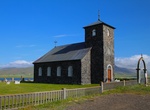
See Þingeyrakirkja, Iceland
Þingeyrakirkja is the first stone built church in Iceland, located in Húnaþing between two waters Hóp and Húnavatn. The congressman Ásgeir Einarsson had the church built and it was consecrated in 1877 Prior to this there was an old turf church the site. Ásgeir decided to build the church with stone, but suitable material ... -
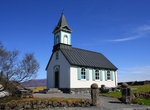
See Þingvallakirkja (Thingvellir Church), Iceland (UNESCO site)
Thingvellir Church is located in the UNESCO World Heritage-listed Þingvellir National Park in Iceland. It built at Thingvellir shortly after the acceptance of Christianity in the year 1000. The park shows evidence of the way the landscape was husbanded over 1,000 years. -
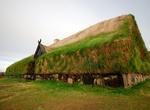
Visit Þjóðveldisbærinn Stöng, Iceland
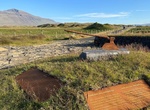
Þjóðveldisbærinn Stöng (Stöng Commonwealth Farm) is a reconstructed viking-era farmstead in Iceland, located in the Þjórsárdalur valley near road 32 in Árnessýsla county. It is a historically accurate reconstruction of the three buildings, including a longhouse, which stood 7 km to the north at Stö... -
See Þrídrangaviti Lighthouse, Iceland
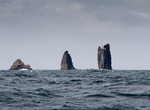
Þrídrangaviti Lighthouse (transliterated as Thridrangaviti) is a lighthouse 4.5 miles (7.2 kilometres) off the southwest coast of Iceland, in the archipelago of Vestmannaeyjar, often described as the most isolated lighthouse in the world. Þrídrangar means "three rock pillars", referring to the three named rocks at that location: Stórid... -
Visit Þrístapar, Húnavatnshreppur, Iceland
Þrístapar lies just off the Ring Road about 20 km south of Blönduós. On 12 January 1830, the last execution in Iceland was staged at three hills called Þrístapar. Sentenced to death for the 14 March 1828 murder of Natan Ketilsson and Pétur Jónsson, Friðrik Sigurðsson and Agnes Magnúsdóttir were... -
Visit Þúfa, Norðurslóð, Reykjavík, Iceland
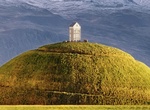
In recent decades, Reykjavik, the Icelandic capital, became packed with an increasing number of exceptional architectural and art works, a testimony to its cultural transformation. Standing out among the dozens of newly built landmarks, Thufa, or Þúfa as it's locally written, is an weirdly shaped hillock in Grandi, one of Reykjavik's trendiest districts.... -
Visit Κourion Ancient Amphitheater, Akrotiri, Cyprus
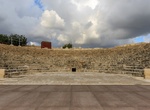
The theatre of Kourion was excavated by the University Museum Expedition of the University of Pennsylvania between 1935 and 1950. The theatre was initially constructed on a smaller scale in the late-second century BCE on the northern slope of the defile ascending from the Amathus Gate. This arrangement thus utilized the slope of the hill to partially support the weigh...
Price: $785.33