Give us feedback!


 See all
Our philosophy is simple. We want to encourage you to dream. BIG! Then we help you plan your trip, get the most out of it while you're traveling and help you share your experience with friends.
Join Now It's FREE
Dream Packages
Duration: 5 days
Price: $726.42
Price: $726.42
Duration: 7 days
Price: $1995.00
Price: $1995.00
Duration: 4 days
Price: $785.33
Price: $785.33
Duration: 10 hours 30 minutes
Price: $207.02
Price: $207.02
Dreams Still To Do
Checked-Off Dreams
Dreams Still To Do
Checked-Off Dreams
Advertisement
Explore Man-Made Sites
-
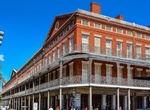
Visit 1850 House, New Orleans, Louisiana
The Louisiana State Museum's 1850 House is an antebellum row house furnished to represent life in mid-nineteenth-century New Orleans. It is located at 523 St. Ann Street on Jackson Square in the French Quarter. The Upper and Lower Pontalba Buildings, which line the St. Ann and St. Peter Street sides of Jackson Square, were built in 1850 by Micaela Almonester, Baroness... -
Visit 1892 Battle of Homestead Site, Homestead, Pennsylvania
The Homestead strike, also known as the Homestead steel strike, Homestead massacre, or Battle of Homestead, was an industrial lockout and strike that began on July 1, 1892, culminating in a battle in which strikers defeated private security agents on July 6, 1892. The governor responded by sending in the National Guard to protect strikebreakers. The dispute occurre... -
See 18 Robinson, Singapore
Designed by internationally-acclaimed Kohn Pedersen Fox, 18 Robinson is a single commercial development that blends corporation function with commercial retail activity. 18 Robinson features 17 floors of high-ceiling, Grade-A office space that rises above a retail podium of 7 floors with an urban shaped plaza at the entrance. A beautiful podium garden flushed with gre... -
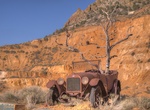
See 1913 Oakland Tree Car at Pit Stop, Virginia City, Nevada
Tree "growing" in old Oakland car in Virginia City, Nevada. -
Cross 1915 Çanakkale Bridge, Turkey
The 1915 Çanakkale Bridge is a road suspension bridge in the province of Çanakkale in northwestern Turkey. Situated just south of the coastal towns of Lapseki and Gelibolu, the bridge spans the Dardanelles, about 10 km (6.2 mi) south of the Sea of Marmara. The bridge was officially opened by President Recep Tayyip Erdoğan on 18 March 2022 ... -
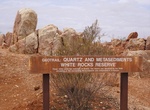
Visit 1915 Picnic Train Attack and White Rocks Reserve, Broken Hill, New South Wales, Australia
1915 Picnic Train Attack and White Rocks Reserve is a heritage-listed former tramway and now visitor attraction at Hynes Street, Broken Hill, City of Broken Hill, New South Wales, Australia. It was the site of the only attack during World War I that occurred on Australian soil (The Battle of Broken Hill). The property is owned by NSW Department of Industry - Lands (St... -
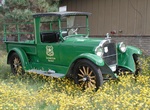
See 1925 Forest Service Dodge Brothers Truck, Arizona & New Mexico
1925 Forest Service Dodge Brothers Truck is the USDA Forest Service’s oldest fleet vehicle. You can find the truck in Arizona and sometimes in New Mexico. It was rusting away for over 30 years in rattlesnake canyon in the Galiuro mountains of southern Arizona. In mid-1960's two Forest Service emplyees - Ceil Sims and Charles Ames - dismantled it a... -
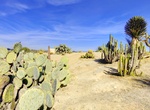
Visit 1935 (Old) Cactus Garden, Balboa Park, San Diego, California
This historic garden was developed under the direction of Kate Sessions for the 1935 California Pacific International Exposition. It contains some of the largest cactus and succulent specimens in the Park and has also been developed to include the exotic African and Australian Protea plants. It is located on the west side of the Balboa Park Club. -
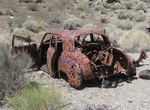
Off-road to 1950s Plymouth, Ownes Valley, California
An early 1950s Plymouth that woud make Bonnie and Clyde proud. -
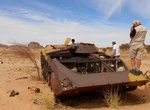
See 1987 War Tank, Ennedi Massif, Chad
Remains of a tank from 1987 war. -
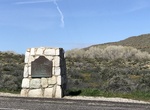
See 19 Miles Vallecito-Butterfield Stage Station (Scissors Crossing), Anza-Borrego Desert State Park, California
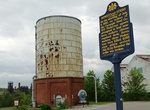
Historical marker at Scissors Crossing. "19 Miles. Vallecito-Butterfield Stage Station. One of the chief remaining landmarks of famous old stage line. Coaches and spring wagons carried passengers and mail. Stations were built at 20-mile intervals. The first stage on the line left St. Louis on September 15, 1858. Historical Landmark No. 304. Department of Public Works ... -
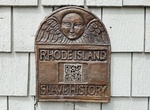
Find 1st Rhode Island Slave History Medallion at Bowen’s Wharf, Newport, Rhode Island
Rhode Island Slave History Medallions, or RISHM, is a statewide non-profit organization based in Newport, Rhode Island. RISHM's mission is to raise public awareness of Rhode Island’s dominant role in the institution of slavery. RISHM marks historic sites and homes with a bronze plaque, or medallion, in communities around the state connected to slavery, to commem... -
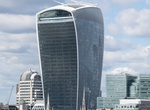
See 20 Fenchurch Street (The Walkie-Talkie), London, England
20 Fenchurch Street is a commercial skyscraper in London that takes its name from its address on Fenchurch Street, in the historic City of London financial district. It has been nicknamed 'The Walkie-Talkie' because of its distinctive shape. Construction was completed in spring 2014, and the three-floor 'sky garden' was opened in January 2015. The 38-story building is... -
See 20 Mule Team Borax Terminus, Mojave, California
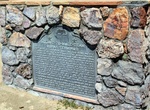
This historical marker designates the terminus of the 20 Mule Team Borax route. The 20 Mule Team Boraxis a brand of cleaner manufactured by the US soap firm Dial Corporatio. The product is named after the 20-mule teams that were used by William Tell Coleman's company to move borax out of Death Valley, California, to the nearest rail spur between 1883 and 1889. -
See 20 Mule Team Wagon Train (Furnace Creek), Death Valley National Park, California
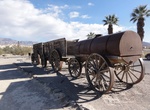
The 20 Mule Team Wagon Train at Furnace Creek was used to haul borax from Death Valley to Majove, a 165 mile, 10 day trip. The borax weighed 24 tones. The entire weight totaled 36.5 tons.


Price: $208.42