Give us feedback!
Our philosophy is simple. We want to encourage you to dream. BIG! Then we help you plan your trip, get the most out of it while you're traveling and help you share your experience with friends.
Join Now It's FREE
Dreams Still To Do
Checked-Off Dreams
Dreams Still To Do
Checked-Off Dreams
Advertisement
Explore New 2020-21 UNESCO Sites
-
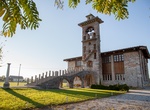
Visit St. Michael's Church (Črna Vas), Slovenia (UNESCO Site)
Church of St. Michael in Črna Vas, Slovenia, also known as the Church of St. Michael in the Marsh (Slovene:Cerkev sv. Mihaela na Barju), is a parish church of the Roman Catholic Church in the Roman Catholic Archdiocese of Ljubljana. Dedicated to Saint Michael, it is one of the prominent works of 20th-century Slovenian architect Jože Plečnik, and is listed in the Regis... -
Visit Sudanese Mosques in Northern Côte d’Ivoire (UNESCO Ste)
The eight small adobe mosques, at Tengréla, Kouto, Sorobango, Samatiguila, M’Bengué, Kong and Kaouara are characterized by protruding timbers, vertical buttresses crowned by pottery or ostrich eggs, and tapering minarets. They present an interpretation of an architectural style thought to have originated around the 14th century in the town of Djenn... -
Visit Tagoyano Shell Mound, Tsugaru, Japan (UNESCO Site)
The Tagoyano Shell Midden (田小屋野貝塚,Tagoyano kaizuka) is an archaeological site in what is now the city of Tsugaru, Aomori Prefecture, in the Tōhoku region of northern Japan with an early Jōmon period shell midden. The site was designated a National Historic Site in 1944 by the Japanese government. It is a rare example of a shell midden to be found near the coast of the... -
Visit Takasago Burial Site, Hokkaidō, Japan (UNESCO Site)
Jomon Prehistoric Site -
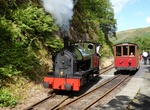
Ride Talyllyn Railway, Wales (UNESCO Site)
The Talyllyn Railway is a narrow-gauge preserved railway in Wales running for 7.25 miles (11.67 km) from Tywyn[a] on the Mid-Wales coast to Nant Gwernol near the village of Abergynolwyn. The line was opened in 1866 to carry slate from the quarries at Bryn Eglwys to Tywyn, and was the first narrow gauge railway in Britain authorised by Act of Parliament to carry passen... -
Explore Thai Prachan National Park, Yang Hak, Thailand
Scenic wildlife-filled national park with tranquil trails for biking & hiking, plus camping areas. -
Explore The Slate Landscape of Northwest Wales (UNESCO Site)
The Slate Landscape of Northwest Wales illustrates the transformation that industrial slate quarrying and mining brought about in the traditional rural environment of the mountains and valleys of the Snowdon massif. The territory, extending from mountain-top to sea-coast, presented opportunities and constraints that were used and challenged by the large-scale industri... -
Visit The works of Jože Plečnik in Ljubljana – Human Centred Urban Design (UNESCO Site), Slovenia
The works of Jože Plečnik in Ljubljana – Human Centred Urban Design is a UNESCO World Heritage Site in Ljubljana, Slovenia, listed in 2021. The site encompasses some of the most prominent works of Slovenian architect Jože Plečnik in Ljubljana. During the interwar period, Plečnik worked to transform Ljubljana from a provincial city to the capital of the Slovenian... -
Ride Trans-Iranian Railway, Iran (UNESCO Site)
The Trans-Iranian Railway (Persian: راهآهن سراسری ایران) was a major railway building project started in Pahlavi Iran in 1927 and completed in 1938, under the direction of the then-Iranian monarch Reza Shah. It was entirely built with indigenous capital, and links the capital Tehran with Bandar Shahpur (now: Bandar-e Emam Khomeyni) on the Persian Gulf in th... -
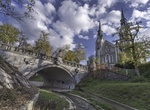
Cross Trnovo Bridge, Slovenia (UNESCO Site)
The Trnovo Bridge (Slovene:Trnovski most) is a bridge crossing the Gradaščica River in Ljubljana, the capital of Slovenia. It is located in front of Trnovo Church at the end of Karun Street (Karunova ulica) to the south of the city centre and is a continuation of Emona Street (Emonska cesta). It connects the neighborhoods of Krakovo and Trnovo, the oldest Ljubl... -
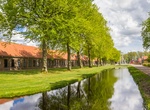
Visit Veenhuizen, Noordenveld (UNESCO Site)
Veenhuizen (Dutch pronunciation: [veːnˈɦœyzən]) is a village with around 800 inhabitants in the province of Drenthe in the Netherlands. In the early 19th century, a reform housing colony for the poor and homeless was established in Veenhuizen. In the late 19th century, the complex was turned into a penal colony. The village became freely accessible in 1984 and h... -
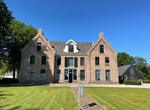
Visit Wilhelminaoord, Netherlands (UNESCO Site)
Wilhelminaoord is a village in the Dutch province of Drenthe. It is a part of the municipality of Westerveld, and lies about 26 km northwest of Hoogeveen. In 2001, the village of Wilhelminaoord had 784 inhabitants. The built-up area of the village was 0.26 km², and contained 334 residences. The statistical area "Wilhelminaoord", which can also include the surroun... -
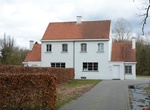
Visit Wortel, Belgium (UNESCO Site)
Wortel is a village in the Belgian municipality of Hoogstraten. As of 2007, it has about 1,700 inhabitants. The toponym means carrot or root in Dutch. -
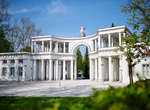
Visit Žale Central Cemetery, Ljubljana (UNESCO Site)
Žale Central Cemetery (Slovene:Centralno pokopališče Žale), often simply Žale, is the largest and the central cemetery in Ljubljana and Slovenia. It is located in the Bežigrad District and operated by the Žale Public Company. The cemetery was built in 1906 behind Holy Cross Church. The first burial was performed in the same year on May 3, when the priest Martin...