Give us feedback!
Our philosophy is simple. We want to encourage you to dream. BIG! Then we help you plan your trip, get the most out of it while you're traveling and help you share your experience with friends.
Join Now It's FREE
Related Categories
- Arizona State Parks
- Australian National Parks & Reserves
- Canada Provincial Parks
- Canadian National Parks
- New Zealand National Parks
- Parks & Reserves
- South African National Parks
- UK National Parks
- UNESCO Parks & Preserves
- US Historical Parks (NHP)
- US National Parks
- US Parks & Landmarks
- US State Parks
Dreams Still To Do
Checked-Off Dreams
Dreams Still To Do
Checked-Off Dreams
Advertisement
Explore Parks
-
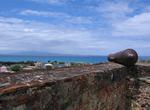
Visit Fuerte de Vieques, Puerto Rico
Fuerte de Vieques, also known as El Fortin Conde de Mirasol, is a fort built in 1845 located in the town of Isabel Segunda in Vieques, an island municipality of Puerto Rico. In 1991, the fort was restored by the Institute of Puerto Rican Culture. The structure houses the Vieques Museum of Art and History and the Vieques Historic Archives, an extensive collection of do... -
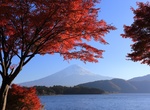
Explore Fuji Five Lakes, Japan
Fuji Five Lakes (Fuji-goko) is the name of the area located at the base of Mount Fuji in the Yamanashi Prefecture of Japan. It has a population of about 100,000. and sits approximately 1,000 meters above sea level. The name Fuji Five Lakes comes from the fact that there are five lakes formed by previous eruptions of Mount Fuji. The principal city in the region, Fujiyo... -
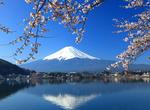
Explore Fuji-Hakone-Izu National Park, Japan
Fuji-Hakone-Izu National Park is a national park in Yamanashi, Shizuoka, and Kanagawa Prefectures, and western Tokyo Metropolis, Japan. It consists of Mount Fuji, Fuji Five Lakes, Hakone, the Izu Peninsula, and the Izu Islands. Fuji-Hakone-Izu National Park covers 1,227 square kilometres (474 sq mi). Rather than being a specific spot, the park is a collection of dispe... -
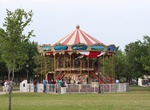
Visit Fundidora Park, Monterrey, Mexico
Fundidora Park is a large urban park that contains old foundry buildings, 120 hectares of natural ambiance, artificial lakes, playgrounds, alternative cinema (Cineteca), museum (Photo Collection, the State Plastic Arts Collection, Exhibits and Spaces), hotel, auditorium and convention center. -
Explore Fundy Biosphere Reserve, New Brunswick, Canada
The Fundy Biosphere Reserve is a biosphere reserve next to the upper Bay of Fundy, covering 442,250 hectares in New Brunswick, Canada. The area was designated as such by the United Nations Educational, Scientific and Cultural Organization (UNESCO) in 2007. Fundy Biosphere Initiative Inc. is an environmental non-profit organization that aims to ensure the conservation ... -
Explore Fundy National Park, New Brunswick, Canada
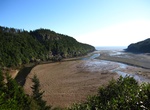
Fundy National Park is located on the Bay of Fundy, near the village of Alma, New Brunswick. The Park showcases both seashore habitats and highland Acadian forests. The Park covers an area of 207 km² along Chignecto Bay, the northeastern branch of the Bay of Fundy, and faces Cape Chignecto Provincial Park across the Bay in Nova Scotia. At low tide, Park visitors ... -
Stay at Fure’s Cabin, Katmai National Park, Alaska
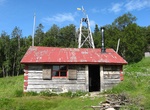
Roy Fure constructed a cabin in the Bay of Islands around 1916. Fure prospected for gold in the area and did occasional work as a caretaker and cannery worker, as well as other odd jobs. He also spent time trapping, hunting, and fishing. Fure’s Cabin and associated structures are listed on the National Register of Historical Places, and the cabin is available b... -
Camp at Furnace Creek Campground, Death Valley National Park
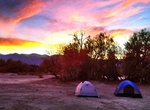
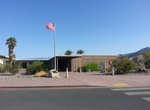
The Visitor Center, Museum, and headquarters of the Death Valley National Park are located at Furnace Creek, California. Furnace Creek is surrounded by a number of Park Service public campgrounds. The elevation of the village is 190 feet (58 m) below sea level. Furnace Creek Campground is in a central location in Death Valley National Park. It is popular for RV and gr... -
Visit Furnace Creek Visitor Center & Museum, Death Valley National Park, California
The Furnace Creek Visitor Center is the main visitor information source for the park. There is a fully staffed information desk with information on all aspects of the park and its operation. The Death Valley Natural History Association maintains a well stocked book sales outlet specifically geared towards the natural and cultural history of the park. -
Visit Fur Seal Lookout, Flinders Chase National Park, South Australia
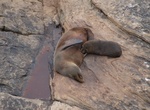
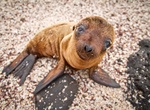
Fur Seal Lookout is a great spot for seeing long-nosed seals. -
Visit Fushimi Port Park, Fushimi Ward, Kyoto, Japan
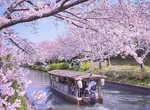
City park between 2 rivers, with play areas, tennis courts & a pool, plus spring cherry blossoms. -
Visit Fuxing Park, Shanghai, China
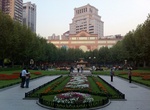
Fuxing Park is located in the former French Concession of Shanghai, China, in Luwan District near Nanchang Road; the main entrance is at the cross street of Fuxingzhong Road and Chongqingnan Road. It was once the largest park in Shanghai. The park was laid out by the French in 1909. The park, about 10 ha. in size, is designed in the French style, with a lake, fountain... -
Visit Galápagos Islands, Ecuador (UNESCO Sites)
The Galapagos Islands, owned by Ecuador, is an archipelago located in the Eastern Pacific Ocean serving as the background for studies by amateur and professional natural historians due to its unusual flora and fauna. The famous naturalist Charles Darwin was inspired by the Galapagos Islands as he developed his Theory of Natural Selection. The islands, volcanic in orig... -
Explore Galápagos National Park, Ecuador (UNESCO Site)
Galápagos National Park, established in 1959 and beginning operations in 1968, is Ecuador's first national park and a UNESCO World Heritage Site. The government of Ecuador has designated 97% of the land area of the Galápagos Islands as the country's first national park. The remaining 3% is distributed between the inhabited areas of Santa Cruz, San C... -
Camp at Galbraith Lake Campground, Alaska
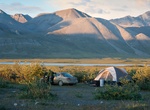
This is all that remains of a large glacial lake that once occupied the entire Atigun Valley. Just downstream from the bridge is the spectacular Atigun Gorge and the western boundary of the Arctic National Wildlife Refuge. Follow the turnoff 4 miles (6.4 km) to the BLM campground which has 30 camp sites.