Give us feedback!


 See all
Our philosophy is simple. We want to encourage you to dream. BIG! Then we help you plan your trip, get the most out of it while you're traveling and help you share your experience with friends.
Join Now It's FREE
Dream Packages
Duration: 8 hours
Price: $204.19
Price: $204.19
Duration: 2 days
Price: $350.00
Price: $350.00
Duration: 8 hours
Price: $246.07
Price: $246.07
Related Categories
Dreams Still To Do
Checked-Off Dreams
Dreams Still To Do
Checked-Off Dreams
Advertisement
Explore Space
-
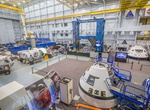
Visit Johnson Space Center, Houston, Texas
The Lyndon B. Johnson Space Center (JSC) is NASA's center for human spaceflight (originally named the Manned Spacecraft Center), where human spaceflight training, research, and flight control are conducted. It was renamed in honor of the late US president and Texas native, Lyndon B. Johnson, by an act of the United States Senate on February 19, 1973. It consists of a ... -
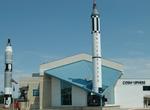
Visit Kansas Cosmosphere and Space Center, Hutchinson, Kansas
The Kansas Cosmosphere and Space Center is a museum and educational facility in Hutchinson, Kansas that is best known for the display and restoration of spaceflight artifacts and educational camps. It is one of only three museums to display flown spacecraft from Mercury, Gemini and Apollo missions. The Kansas Cosmosphere and Space Center grew from a planetarium establ... -
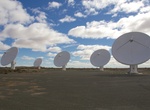
See KAT-7 Radio Telescope, Meerkat National Park, South Africa
KAT-7 is a radio telescope situated in the Meerkat National Park, in the Northern Cape of South Africa. Developed as the precursor engineering test bed to the larger MeerKAT telescope, previously known as Karoo Array Telescope (KAT), it has become a science instrument in its own right. The construction was completed in 2011 and commissioning in 2012. It also served as... -
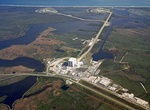
See Kennedy Space Center Launch Complex 39, Florida
Launch Complex 39 (LC-39) is a rocket launch site at the John F. Kennedy Space Center on Merritt Island in Florida, United States. The site and its collection of facilities were originally built for the Apollo program, and later modified for the Space Shuttle program. As of 2017, only Launch Complex 39A is active, launching SpaceX's Falcon 9 and Falcon Heavy. Pad 39B ... -
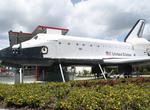
Visit Kennedy Space Center Visitor Complex, Florida
The Kennedy Space Center Visitor Complex is the visitor center at NASA's Kennedy Space Center in Florida. It features exhibits and displays, historic spacecraft and memorabilia, shows, two IMAX theaters, a range of bus tours of the spaceport, and the Shuttle Launch Experience, a simulated ride into space. It also encompasses the separate Apollo/Saturn V Center and Uni... -
Visit La Silla Observatory, Chile
La Silla Observatory is an astronomical observatory in Chile with three telescopes built and operated by the European Southern Observatory (ESO). Several telescopes are located at the site and are partly maintained by ESO. The observatory is one of the largest in the Southern Hemisphere and was the first in Chile to be used by ESO. The La Silla telescopes and instrume... -
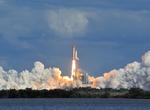
See Launch of a Manned Spacecraft
It is thought that space travel will be possible in the next period of time and available to anyone willing to pay the cost to be a pioneer in a new and exciting form of sub-orbital travel leading up to the true ability for civilians to journey into outer space. In the meantime, we are left to live vicariously through the exploits of the daring astronauts that make th... -
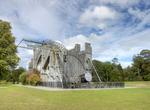
Visit Leviathan of Parsonstown, Birr Castle, Ireland
Leviathan of Parsonstown is the unofficial name of the Rosse six foot telescope. This is a historic reflecting telescope of 72 in (1.8 m) aperture, which was the largest telescope in the world from 1845 until the construction of the 100 in (2.5 m) Hooker Telescope in 1917. The Rosse six foot telescope was built by William Parsons, 3rd Earl of Rosse on his estate, Birr... -
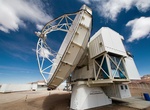
Visit Llano de Chajnantor Observatory, Chile
Llano de Chajnantor Observatory is the name for a group of astronomical observatories located at an altitude of over 4,800 m (15,700 ft) in the Atacama Desert of northern Chile. The site is in the Antofagasta Region approximately 50 kilometres (31 mi) east of the town of San Pedro de Atacama. The exceptionally arid climate of the area is inhospitable to humans, but cr... -
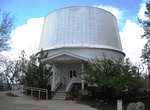
Visit Lowell Observatory, Flagstaff, Arizona
Lowell Observatory is an astronomical observatory in Flagstaff, Arizona. Lowell Observatory was established in 1894, placing it among the oldest observatories in the United States, and was designated a National Historic Landmark in 1965. In 2011, the Observatory was named one of "The World's 100 Most Important Places" by TIME. The Observatory's original 24-inch (0.61 ... -
See Lyrids Meteor Shower
The April Lyrids are a meteor shower lasting from April 16 to April 26 each year. The radiant of the meteor shower is located in the constellation Lyra, near this constellation's brightest star, Alpha Lyrae (proper name Vega). Their peak is typically around April 22 each year. The source of the meteor shower is particles of dust shed by the long-period Comet C/1861 G1... -
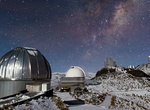
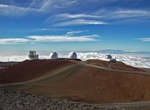
Visit Mauna Kea Observatories, Big Island, Hawaii
The Observatories at Mauna Kea (MKO) are an independent collection of astronomical research facilities located on the summit of Mauna Kea on the Big Island of Hawai'i, USA. The facilities are located in a 500-acre (2.0 km2) special land use zone known as the "Astronomy Precinct," which is located in the Mauna Kea Science Reserve. The Astronomy Precinct was established... -
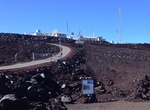
Visit Mauna Loa Observatory, Big Island, Hawaii
Mauna Loa Solar Observatory (MLSO) is a solar observatory located on the slopes of Mauna Loa on the island of Hawaii in the U.S. state of Hawaii. It is operated by the High Altitude Observatory (HAO), a laboratory within the National Center for Atmospheric Research (NCAR). The MLSO sits on property managed by the Mauna Loa Observatory (MLO), which is part of the U.S. ... -
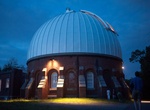
Visit McCormick Observatory, Virginia
The Leander McCormick Observatory is one of the astronomical observatories operated by the Department of Astronomy of the University of Virginia and is situated just outside Charlottesville, Virginia (USA) in Albemarle County on the summit of Mount Jefferson (also known as Observatory Hill). It is named for Leander J. McCormick (1819–1900), who provided the fund... -
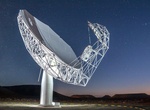
See MeerKAT Radio Telescope, Meerkat National Park, South Africa
MeerKAT, originally the Karoo Array Telescope, is a radio telescope consisting of 64 antennas in the Meerkat National Park, in the Northern Cape of South Africa. In 2003, South Africa submitted an expression of interest to host the Square Kilometre Array (SKA) Radio Telescope in Africa, and the locally designed and built MeerKAT was incorporated into the first phase o...
Price: $571.07