Give us feedback!


 See all
Our philosophy is simple. We want to encourage you to dream. BIG! Then we help you plan your trip, get the most out of it while you're traveling and help you share your experience with friends.
Join Now It's FREE
Dream Packages
Duration: 2 days
Price: $350.00
Price: $350.00
Duration: 15 hours
Price: $571.07
Price: $571.07
Duration: 8 hours
Price: $204.19
Price: $204.19
Related Categories
Dreams Still To Do
Checked-Off Dreams
Dreams Still To Do
Checked-Off Dreams
Advertisement
Explore Space
-
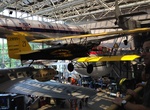
Visit Smithsonian National Air and Space Museum, Washington D.C.
The National Air and Space Museum (NASM) of the Smithsonian Institution holds the largest collection of historic aircraft and spacecraft in the world. It was established in 1976. Located in Washington, D.C., United States, it is a center for research into the history and science of aviation and spaceflight, as well as planetary science and terrestrial geology and geop... -
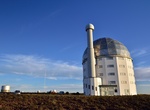
Visit South African Astronomical Observatory, Sutherland, South Africa
South African Astronomical Observatory (SAAO) is the national center for optical and infrared astronomy in South Africa. It was established in 1972. The observatory is run by the National Research Foundation of South Africa. The facility's function is to conduct research in astronomy and astrophysics. The primary telescopes are located in Sutherland, which is 370 kilo... -
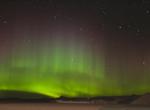
See Southern Lights (Aurora Australis)
An aurora is a natural light display in the sky, particularly in the polar regions, caused by the collision of charged particles directed by the Earth's magnetic field. In the southern latitudes, the aurora australis (or the southern lights) is visible from high southern latitudes in Antarctica, South America, or Australasia. Australis is the Latin word for "of the So... -
Visit Space Center Houston, Houston, Texas
Space Center Houston is the official visitors' center of the Lyndon B. Johnson Space Center—the National Aeronautics and Space Administration's (NASA) center for human spaceflight activities—located in Houston. The facility is operated by the non profit Manned Spaceflight Educational Foundation Incorporated with design input from Walt Disney Imagineering. ... -
See Space Shuttle Atlantis (OV‑104), Kennedy Space Center, Florida
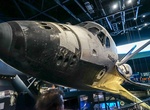
Space Shuttle Atlantis (Orbiter Vehicle Designation: OV‑104) is a Space Shuttle orbiter vehicle belonging to the National Aeronautics and Space Administration (NASA), the spaceflight and space exploration agency of the United States. Constructed by the Rockwell International company in Southern California and delivered to the Kennedy Space Center in Eastern Florida in... -
See Space Shuttle Discovery (OV-103), Steven F. Udvar-Hazy Center, Virginia
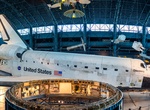
Space Shuttle Discovery (Orbiter Vehicle Designation: OV-103) is one of the orbiters from NASA's Space Shuttle program and the third of five fully operational orbiters to be built. Its first mission, STS-41-D, flew from August 30 to September 5, 1984. Over 27 years of service it launched and landed 39 times, gathering more spaceflights than any other spacecraft to dat... -
See Space Shuttle Endeavour (OV-105), California Science Center, California
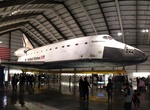
Space Shuttle Endeavour (Orbiter Vehicle Designation: OV-105) is a retired orbiter from NASA's Space Shuttle program and the fifth and final operational Shuttle built. It embarked on its first mission, STS-49, in May 1992 and its 25th and final mission, STS-134, in May 2011. STS-134 was expected to be the final mission of the Space Shuttle program, but with the author... -
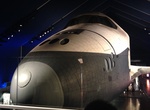
See Space Shuttle Enterprise, USS Intrepid Sea-Air-Space Museum, NYC, New York
(Orbiter Vehicle Designation: OV-101) was the first orbiter of the Space Shuttle system. Rolled out on September 17, 1976, it was built for NASA as part of the Space Shuttle program to perform atmospheric test flights after being launched from a modified Boeing 747. It was constructed without engines or a functional heat shield. As a result, it was not capable of spac... -
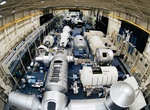
Visit Space Vehicle Mockup Facility, Johnson Space Center, Houston, Texas
The Space Vehicle Mockup Facility (SVMF) is a large open space area located inside Building 9 of Johnson Space Center in Houston. It consists of a 200 meter long room that houses several Space Shuttle mockups, as well as mockups of every major pressurized module on the International Space Station. It is primarily used for astronaut training and systems familiarization... -
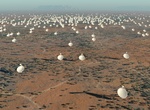
See Square Kilometre Array (SKA), Meerkat National Park, South Africa
The Square Kilometre Array (SKA) is an intergovernmental international radio telescope project being built in Australia (low-frequency) and South Africa (mid-frequency). The combining infrastructure, the Square Kilometre Array Observatory (SKAO), and headquarters, are located at the Jodrell Bank Observatory in the United Kingdom. The SKA cores are being built in the s... -
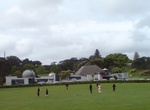
Visit Stardome Observatory, Auckland, New Zealand
Stardome Observatory is a public astronomical observatory situated in Cornwall Park in New Zealand's largest city, Auckland. Founded in 1967, the observatory is administered by the Auckland Observatory and Planetarium Trust Board. The Trust Board was created by the Auckland Astronomical Society (AAS) in 1956. The Stardome Observatory is also home to the AAS. The plane... -
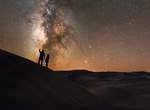
Go Stargazing at Great Sand Dunes National Park, Colorado
Great Sand Dunes National Park is a popular location for amateur astronomy and stargazing. At 8,200 feet (2,490m) in elevation and in a rural corner of the high-mountain San Luis Valley, the park is an easily accessible dark sky viewing location! The park offers weekly night sky programs. A wonderful way to experience and understand the stars, planets, and moon. Chec... -
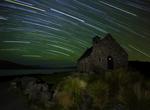
Go Stargazing at Twizel, New Zealand
Twizel is a town in the Mackenzie Basin, part of the Mackenzie District of the Canterbury region of New Zealand's South Island. The area boasts one of the world's cleanest, driest and darkest skies, and has long drawn astronomers to Twizel and the surrounding area, with several existing astro-tourism ventures, such as at Lake Tekapo and Omarama catering to their needs... -
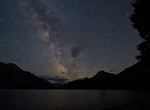
Go Stargazing in Waterton Lakes National Park, Alberta, Canada
Waterton Lakes National Park and Glacier National Park in the United States are recognized by the International Dark-Sky Association (IDA) as a provisional International Dark Sky Park. Waterton and Glacier already share a boundary and three joint international designations: International Peace Park, Biosphere Reserve and World Heritage Site. Now they are the first t... -
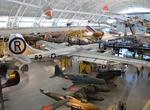
Visit Steven F. Udvar-Hazy Center, Virginia
The Steven F. Udvar-Hazy Center is the Smithsonian National Air and Space Museum (NASM)'s annex at Washington Dulles International Airport in the Chantilly area of Fairfax County, Virginia, United States. The Udvar-Hazy Center displays historic aviation and space artifacts, especially items too large for the National Air and Space Museum's building on the National Mal...
Price: $246.07