Give us feedback!


 See all
Our philosophy is simple. We want to encourage you to dream. BIG! Then we help you plan your trip, get the most out of it while you're traveling and help you share your experience with friends.
Join Now It's FREE
Dream Packages
Duration: 10 hours
Price: $174.00
Price: $174.00
Duration: 5 hours
Price: $635.26
Price: $635.26
Duration: 8 days
Price: $1507.70
Price: $1507.70
Duration: 8 hours
Price: $246.07
Price: $246.07
Related Categories
Dreams Still To Do
Checked-Off Dreams
Dreams Still To Do
Checked-Off Dreams
Advertisement
Explore Volcanoes
-
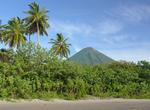
Visit Ometepe Island, Nicaragua
Ometepe is an island formed by two volcanoes rising from Lake Nicaragua in the Republic of Nicaragua. Its name derives from the Nahuatl words ome (two) and tepetl (mountain), meaning two mountains. It is the largest island in Lake Nicaragua as well as the largest volcanic island inside a fresh water lake in the world. The two volcanoes, Concepción and Maderas, ... -
Hike Orosi Volcano, Costa Rica
Orosi Volcano is an inactive volcano in Costa Rica, situated in the Cordillera de Guanacaste near the border with Nicaragua. The area around the volcano is a popular tourist destination, especially for more ecologically minded tourists due to its biodiversity, including the Guanacaste National Park. Volcán Orosí itself has a conical shape as viewed from ... -
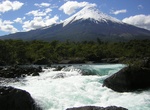
Explore Osorno Volcano, Chile
Osorno Volcano is a 2,652-metre (8,701 ft) tall conical stratovolcano lying between Osorno Province and Llanquihue Province, in Los Lagos Region of Chile. It stands on the southeastern shore of Llanquihue Lake, and also towers over Todos los Santos Lake. Osorno is known worldwide as a symbol of the local landscape, and is noted for its similar appearance to Mount Fuji... -
Visit Ōwakudani (Great Boiling Valley), Japan
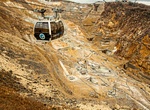
Ōwakudani (Great Boiling Valley) is a volcanic valley with active sulphur vents and hot springs in Hakone, Kanagawa Prefecture, Japan. It is a popular tourist site for its scenic views, volcanic activity, and especially, Kuro-tamago("black egg") — a local specialty of eggs hard-boiled in the hot springs. The boiled eggs turn black and smell slightly sulphuric; c... -
Explore Pacaya Volcano, Guatemala
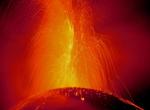
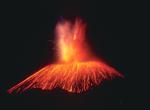
Pacaya is an active complex volcano in Guatemala, which first erupted approximately 23,000 years ago and has erupted at least 23 times since the Spanish conquest of Guatemala. Pacaya rises to an elevation of 2,552 metres (8,373 ft). After being dormant for a century, it erupted violently in 1965 and has been erupting continuously since then. Much of its activity is St... -
Visit Paint Pot Crater, Medicine Lake Volcano Area, California
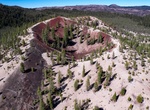
Paint Pot Crater is located just southwest of Little Glass Mounting in Medicine Lake Volcano Area, California. -
Explore Paniri, Chile
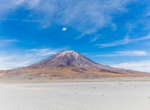
Paniri (Aymara for "he who comes, visits") is a stratovolcano located in El Loa Province, Antofagasta Region, Chile, and near the border with Bolivia. To its northwest lie the twin volcanoes San Pedro and San Pablo, and to its southeast lies Cerro del León, from which it is separated by the huge Chao lava dome. The volcano features lava flows, which are well pr... -
Summit Panum Crater, California
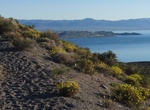
Panum Crater is a volcanic cone that is part of the Mono-Inyo Craters, a chain of recent volcanic cones south of Mono Lake and east of the Sierra Nevada, in California, United States. Panum Crater is between 600 and 700 years old, and it exhibits all of the characteristics of the textbook rhyolitic lava dome. Rhyolitic volcanoes are characterized by having large amoun... -
Explore Parícutin Volcano, Mexico
Parícutin is a cinder cone volcano in the Mexican state of Michoacán, close to a lava-covered village of the same name. It appears on many versions of the Seven Natural Wonders of the World. Paricutín is part of the Michoacán-Guanajuato Volcanic Field, which covers much of west central Mexico. The volcano began as a fissure in a cornfield o... -
Explore Parinacota Volcano, Chile & Bolivia
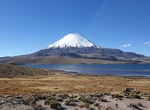
Parinacota (in Hispanicized spelling), Parina Quta or Parinaquta is a dormant stratovolcano on the border of Chile and Bolivia. Together with Pomerape it forms the Nevados de Payachata volcanic chain. Part of the Central Volcanic Zone of the Andes, its summit reaches an elevation of 6,380 metres (20,930 ft) above sea level. The symmetrical cone is capped by a summit c... -
Visit Pentecost Island, Vanuatu
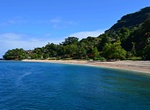
Pentecost Island is one of the 83 islands that make up the South Pacific nation of Vanuatu. It lies 190 kilometres (120 mi) due north of capital Port Vila. Pentecost Island is known asPentecôtein French andPentikosin Bislama. The island was known in its native languages by names such asVanu Aroaroa, although these names are not in common use today. Pentecost has... -
Explore Pico de Fogo, Cape Verde
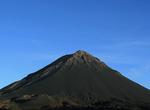
Pico de Fogo - an active volcano on Fogo that has created a unique landscape best explored on foot or horseback. -
Explore Pico del Teide, Tenerife Island, Canary Islands
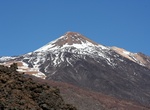
Teide, or Mount Teide, (Spanish:El Teide, Pico del Teide, "Peak of Teide") is a volcano on Tenerife in the Canary Islands, Spain. Its summit (at 3,715 m (12,188 ft))[a] is the highest point in Spain and the highest point above sea level in the islands of the Atlantic. If measured from the ocean floor, its height of 7,500 m (24,600 ft) makes Teide the third-highest vol... -
Summit Pico de Orizaba, Mexico
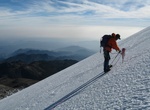
The Pico de Orizaba, or Citlaltépetl, is a stratovolcano, the highest mountain in Mexico and the third highest in North America, after Mount McKinley of the United States, and Mount Logan of Canada. It rises 5,636 metres (18,491 ft) above sea level in the eastern end of the Trans-Mexican Volcanic Belt, on the border between the states of Veracruz and Puebla. Th... -
See Pico Dona Joana, Terceira Island, Azores, Portugal
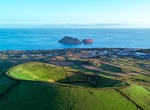
Pico Dona Joana volcano on the Portuguese island of Terceira in the Azores. How utilized for farming.
Price: $135.99