Give us feedback!


 See all
Our philosophy is simple. We want to encourage you to dream. BIG! Then we help you plan your trip, get the most out of it while you're traveling and help you share your experience with friends.
Join Now It's FREE
Dream Packages
Duration: 10 hours
Price: $207.29
Price: $207.29
Duration: 16 hours
Price: $577.69
Price: $577.69
Duration: 11 days
Price: $1534.00
Price: $1534.00
Duration: 10 hours
Price: $174.00
Price: $174.00
Related Categories
Dreams Still To Do
Checked-Off Dreams
Dreams Still To Do
Checked-Off Dreams
Advertisement
Explore Volcanoes
-
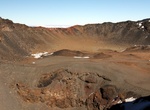
Explore Pico Viejo, Teide National Park, Canary Islands
Pico Viejo is a volcano located on the island of Tenerife (Canary Islands, Spain). It is the second highest peak of Tenerife and the Canary Islands (after the Teide) with a height of 3,135 m above sea level, a huge crater approximately of 720 metres in diameter. The volcano is part of the Teide volcanic complex, which began forming about 200,000 years ago in the centr... -
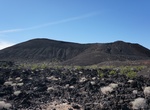
Explore Pisgah Crater & Lava Tubes, Mojave Desert, California
Pisgah Crater, or Pisgah Volcano, is a young volcanic cinder cone rising above a lava plain in the Mojave Desert, between Barstow and Needles, California in San Bernardino County, California. The volcanic peak is around 2.5 miles (4.0 km) south of historic U.S. Route 66-National Old Trails Highway and of Interstate 40, and west of the town of Ludlow. The volcano had a... -
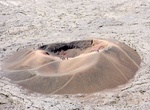
Explore Piton de la Fournaise (Peak of the Furnace), Réunion (UNESCO site)
Piton de la Fournaise ("Peak of the Furnace") is a shield volcano on the eastern side of Réunion island (a French department) in the Indian Ocean. It is currently one of the most active volcanoes in the world, along with Kīlauea in the Hawaiian Islands (Pacific Ocean), Stromboli, Etna (Italy) and Mount Erebus in Antarctica. A previous eruption began in August 2... -
Summit Piton des Neiges, Réunion
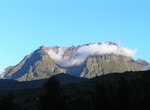
The Piton des Neiges (Snow Peak) is a massive 3,069 m (10,069 ft) shield volcano on Réunion, one of the French volcanic islands in the Mascarene Archipelago in the southwestern Indian Ocean. There are three medium-difficulty tracks leading up to the peak, one from the Cirque de Salazie, one from the Cirque de Cilaos and one from La Plaine des Cafres. They meet ... -
Explore Ponta da Ferraria and Pico das Camarinhas, São Miguel Island, Azores Islands
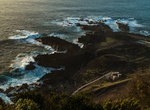
Ponta da Ferraria and Pico das Camarinhas on the west coast of São Miguel Island is part of the UNESCO Azores Geopark. -
Explore Popocatépetl Volcano, Mexico
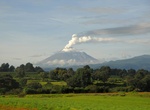
Popocatepetl is an active volcano and, at 5,426 m (17,802 ft), the second highest peak in Mexico after the Pico de Orizaba (5,636 m/18,491 ft). Popocatepetl is linked to the Iztaccihuatl volcano to the north by the high saddle known as the Paso de Cortés, and lies in the eastern half of the Trans-Mexican volcanic belt. Popocatepetl is 70 km (43 mi) southeast of... -
Visit Puebla, Mexico (UNESCO site)
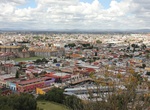
The city of Puebla is the capital of the state of Puebla, and one of the five most important colonial cities in Mexico. Being a planned city, it is located to the east of Mexico City and west of Mexico's main port, Veracruz, on the main route between the two. The city was founded in 1531 in an area called Cuetlaxcoapan, which means “where serpents change their s... -
Explore Puyehue-Cordón Caulle Volvanos, Puyehue National Park, Chile
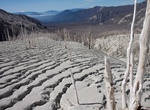
Puyehue and Cordón Caulle are two coalesced volcanic edifices that form a major mountain massif in Puyehue National Park in the Andes of Ranco Province, in the South of Chile. In volcanology this group is known as the Puyehue-Cordón Caulle Volcanic Complex (PCCVC). Four volcanoes constitute the volcanic group or complex, the Cordillera Nevada caldera, th... -
Explore Quilotoa Caldera Lake, Ecuador
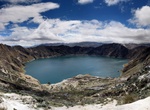
Quilotoa is a water-filled caldera and the most western volcano in the Ecuadorian Andes. The 3-kilometre (2 mi)-wide caldera was formed by the collapse of this dacite volcano following a catastrophic VEI-6 eruption about 800 years ago, which produced pyroclastic flows and lahars that reached the Pacific Ocean, and spread an airborne deposit of volcanic ash throughout ... -
Explore Rano Kau, Easter Island, Chile
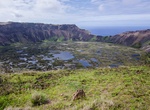
Rano Kau is a 324 m (1,063 ft) tall extinct volcano that forms the southwestern headland of Easter Island, a Chilean island in the Pacific Ocean. It was formed of basaltic lava flows in the Pleistocene with its youngest rocks dated at between 150,000 and 210,000 years ago. Rano Kau has a crater lake which is one of the island's only three natural bodies of fresh water... -
See Moais at Rano Raraku, Easter Island, Chile
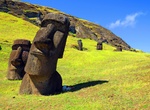
Rano Raraku is a volcanic crater formed of consolidated volcanic ash, or tuff, and located on the lower slopes of Terevaka in the Rapa Nui National Park on Easter Island. It was a quarry for about 500 years until the early eighteenth century, and supplied the stone from which about 95% of the island's known monolithic sculptures (moai) were carved. Rano Raraku is... -
Hike to Red Cones, Mammoth Lakes, California
South of Mammoth Lakes, California are other features related to the dike system responsible for creating the craters, volcanoes and lava flows. These include a north–south trend of fault scarps up to 20 feet (6 m) high and pull-apart cracks or fissures in the earth.These fissures are not technically faults because little or no vertical or horizontal movement ha... -
See Red Hill Cinder Cone (Saltlake Cindercone), Coso Volcanic Field, California
Red Hill Cinder Cone (Saltlake Cindercone) is a striking volcanic cinder cone located near Little Lake, California. It's a prominent feature in the area, showcasing the geological history of the Mojave Desert and the power of past volcanic activity. The area is known for its dramatic landscapes, including the Fantastic Lava Beds and Painted Dunes, which are also assoc... -
Explore Rincón de la Vieja Volcano National Park, Costa Rica (UNESCO site)
Rincón de la Vieja Volcano National Park, in Spanish Parque Nacional Volcán Rincón de la Vieja, part of the Guanacaste Conservation Area and the Area de Conservación Guanacaste World Heritage Site, is a National Park in the northwestern part of Costa Rica which encompasses the Rincón de la Vieja and Santa María volcanoes, as w... -
See Roden Crater, Flagstaff, Arizona
NOTE: The site north of Flagstaff is not open to the public, but entertainers and other supporters have been able to visit. Roden Crater is a cinder cone type of volcanic cone from an extinct volcano, with a remaining interior volcanic crater. It is located approximately 50 miles northeast of the city of Flagstaff in northern Arizona, United States. Artist James Turr...

Price: $135.99