Give us feedback!


 See all
Our philosophy is simple. We want to encourage you to dream. BIG! Then we help you plan your trip, get the most out of it while you're traveling and help you share your experience with friends.
Join Now It's FREE
Dream Packages
Duration: 8 days
Price: $772.57
Price: $772.57
Duration: 11 hours
Price: $208.42
Price: $208.42
Duration: 3 days
Price: $618.62
Price: $618.62
Duration: 6 hours
Price: $180.71
Price: $180.71
Dreams Still To Do
Checked-Off Dreams
Dreams Still To Do
Checked-Off Dreams
Advertisement
Explore Ancient Places & Ruins
-
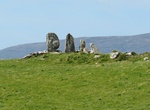
Visit Eightercua Stone Row, Ireland
Eightercua Irish:Íoċtar Ċua (or possibly Íoċtar Ċuan), meaning " "the place or holy place or harbor" that is Íoċ or "below" - the word is a specifically geographical term that does not adequately translate into English which does not designate a "place down below" with categorically geographical differentiation") is a four-stone alignment (stone-r... -
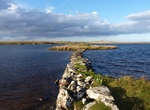
Visit Eilean Dòmhnuill, North Uist, Outer Hebrides, Scotland
Ian Armit identifies the islet of Eilean Dòmhnuill ("The Isle of Donald"), Loch Olabhat, on North Uist, Scotland, as what may be the earliest crannog. Unstan ware pottery found there suggests a Neolithic period date of 3200–2800 BC. A surrounding timber screen and the turf-walled houses seem to have been repeatedly taken down and rebuilt, and in the final... -
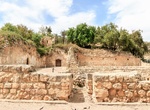
Visit Ein Hemed National Park (Aqua Bella), Israel
Ein Hemed is a national park and nature reserve in the hills seven kilometers west of Jerusalem, Israel. It is also known by its Latin name Aqua Bella, but formerly by its corrupted Arabic rendition of the same name,Iqbalā. The park is located on the path of an old Roman road, also used in later periods, called Emmaus by the Crusaders. The road connected the coastal p... -
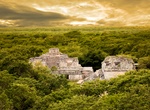
Visit Ekʼ Balam, Yucatán, Mexico
Ekʼ Balam is a Yucatec-Maya archaeological site within the municipality of Temozón, Yucatán, Mexico. It lies in the Northern Maya lowlands, 25 kilometres (16 mi) north of Valladolid and 56 kilometres (35 mi) northeast of Chichen Itza. From the Preclassic until the Postclassic period, it was the seat of a Mayan kingdom. The site is noted for the preservat... -
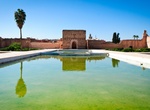
Visit El Badi Palace, Marrakesh, Morocco
El Badi Palace is a ruined palace located in Marrakesh, Morocco. Commissioned by the Arab Saadian sultan Ahmad al-Mansur, sometime shortly after his accession in 1578, its construction was funded by a substantial ransom paid by the Portuguese after the Battle of the Three Kings. The palace is nowadays a well known tourist attraction. The complex contains a museum, wit... -
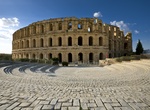
See El Djem (El Jem) Amphitheatre, Tunisa (UNESCO site)
El Djem (El Jem) is famous for its amphitheatre (often incorrectly called "a coliseum"), capable of seating 35,000 spectators. Only Rome's Colosseum (about 45,000 spectators) and the ruined theatre of Capuaare larger. The amphitheatre at El Djem was built by the Romans under proconsul Gordian, who was acclaimed Emperor at Thysdrus, around 238 and was probably[citation... -
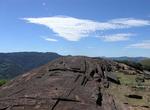
See El Fuerte de Samaipata "El Fuerte", Bolivia (UNESCO site)
El Fuerte de Samaipata (Fort Samaipata), also known simply as 'El Fuerte', is an archaeological site and UNESCO World Heritage Site located in the Santa Cruz Department, Florida Province, Bolivia. It is situated in the eastern foothills of the Bolivian Andes, and is a popular tourist destination for Bolivians and foreigners alike. It is served by the nearby town of Sa... -
Explore El Gour, Morocco
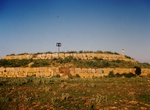
El Gour, or Bazina du Gour, is an ancient archeological site located in the Fès-Meknès region of northern Morocco. Estimates date the site at being constructed some time between the 4th and 2nd centuries BCE. The village (douar)Souk Jemaa El Gouris located south of the A2 motorway about 30 km east of Meknès in an agricultural hilly landscape at th... -
Visit El-Kurru, Sudan
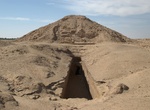
El-Kurru was one of the royal cemeteries used by the Nubian royal family of Kush and Egypt's 25th dynasty. It is now located in Northern state, Sudan. Excavated by George Reisner, most of the royal Nubian pyramids date to the early part of the Kushite period, from Alara of Nubia (795–752 BC) to King Nastasen (335–315 BC). The area is divided into three par... -
Visit Ellora Caves, India (UNESCO site)
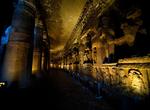
Ellora Caves are an archaeological site, 30 km (19 mi) from the city of Aurangabad in the Indian state of Maharashtra built by the Rashtrakuta rulers. Well-known for its monumental caves, Ellora is a World Heritage Site. Ellora represents the epitome of Indian rock-cut architecture. The 34 "caves" – actually structures excavated out of the vertical face of the C... -
Visit El Mirador, Guatemala
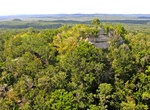
El Mirador is a large pre-Columbian Mayan settlement, located in the north of the modern department of El Petén, Guatemala. El Mirador was first discovered in 1926, and was photographed from the air in 1930, but the remote site deep in the jungle had little more attention paid to it until Ian Graham spent some time there making the first map of the area in 1962... -
See El morro del Tulcán, Popayán, Colombia
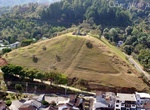
El Morro del Tulcán (lit. The nose of the Tulcán) is an Indian pyramid in Popayán, Colombia. The pyramid dates to at least 1535, as the Spanish found it abandoned when they arrived in that year. Research suggests that the individuals buried there came from the very top of the social classes of their society. The pyramid was constructed in the pre-... -
Visit El Pilar, Belize & Guatemala
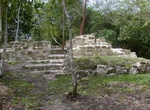
El Pilar is an ancient Maya city center located on the Belize-Guatemala border. The site is located 12 kilometres (7.5 mi) north of San Ignacio, Belize and can be accessed through the San Ignacio and Bullet Tree Falls on the Belize River. The name "El Pilar" is Spanish for "watering basin", reflecting the abundance of streams around the site and below its escarpment, ... -
Visit El Tepozteco, Mexico
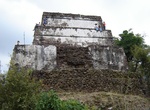
El Tepozteco is an archaeological site in the Mexican state of Morelos. It consists of a small temple to Tepoztecatl, the Aztec god of the alcoholic beveragepulque. In the middle Postclassic Period, various terraces and a small pyramid were built on one of the peaks of the Sierra de Tepoztlan, overlooking the pre-Columbian town of Tepoztlan. The temple became importan... -
Visit Empúries, Catalonia, Spain
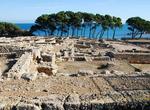
Empúries is a town on the Mediterranean coast of the Catalan comarca of Alt Empordà in Catalonia, Spain. It was founded in 575 BC by Greek colonists from Phocaea with the name of Εμπόριον (Emporion — "market"). It was later occupied by the Romans, but in the Early Middle Ages, when its exposed coastal position left...
Price: $157.00