Give us feedback!


 See all
Our philosophy is simple. We want to encourage you to dream. BIG! Then we help you plan your trip, get the most out of it while you're traveling and help you share your experience with friends.
Join Now It's FREE
Dream Packages
Duration: 10 hours
Price: $102.74
Price: $102.74
Duration: 4 days
Price: $1033.34
Price: $1033.34
Duration: 7 days
Price: $869.00
Price: $869.00
Duration: 10 hours
Price: $133.00
Price: $133.00
Dreams Still To Do
Checked-Off Dreams
Dreams Still To Do
Checked-Off Dreams
Advertisement
Explore Ancient Places & Ruins
-
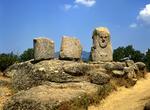
Visit Filitosa, Corsica, France
Filitosa is a megalithic site in southern Corsica, France. The period of occupation spans from the end of the Neolithic era and the beginning of the Bronze Age, until around the Roman times in Corsica. The site was discovered in 1946 by the owner of the land, Charles-Antoine Cesari. Systematic excavations started in 1954 by Roger Grosjean. Finds of arrow heads and pot... -
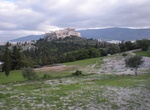
Explore Filopappou Hill, Athens, Greece
Filopappou Hill offers views of Athens & the Acropolis attract hikers to this small peak with an ancient monument. -
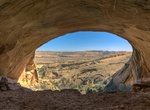
Hike Fishmouth Cave Ruins, Comb Ridge, Utah
Fishmouth Cave Ruins is a deepest alcoves that consist of four different Anasazi cliff dwellings spaced along a small canyon. -
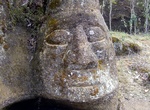
Hike to Floreana Island Rock Statue, Galápagos
Hike the Highlands on Floreana Island to some interesting artwork and a few giant tortoises. -
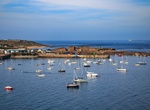
Visit Fort Grosnez, Alderney, Channel Islands
Authorised in 1850, the construction at the base of the breakwater took place from 1851 to 1853. Containing 28 guns in seven batteries. In the bay, Braye Battery was built for 9 guns. Manned by the Royal Garrison Artillery. -
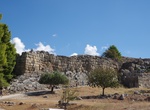
Visit Fortifications of Mycenae, Mycenae, Peloponnese, Greece
Mycenae is a city in the Argolid, in the Peloponnese peninsula of Greece. It was first excavated by Heinrich and Sophia Schliemann in the 1870s and is believed to have flourished in the Mid- to Late Bronze Age. The fortifications of Mycenae were built with the use of Cyclopean masonry. With the citadel built on a cliff, the architects created protection not only for ... -
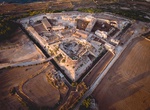
Visit Fort Leonardo, Żabbar, Malta
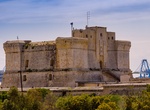
Fort Leonardo (Maltese:Il-Fortizza San Leonardu), also known as Fort San Leonardo or Fort San Anard, is a polygonal fort in Żabbar, Malta. It was built between 1872 and 1878 by the British between the villages of San Leonardo and Żonqor above the shore east of Grand Harbour. Fort Leonardo was built between 1872 and 1878 by the British, as part of a program of improvem... -
Visit Fort San Lucian, Marsaxlokk, Malta
Fort San Lucian (Maltese:Forti San Luċjan), also known as Saint Lucian Tower (Maltese:Torri ta' San Luċjan) or Fort Rohan (Maltese:Forti Rohan), is a large bastioned watchtower and polygonal fort in Marsaxlokk, Malta. The original tower was built by the Order of Saint John between 1610 and 1611, being the second of six Wignacourt towers. An artillery battery was added... -
Visit Frankencense Park of Wadi Dawkah, Oman (UNESCO site)
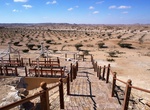
Frankencense Park of Wadi Dawkah is located about 40 km north of Salalah and have many a natural park with many frankincense trees. It is easily accessible the via the road from Salalah-Thumrayt. Wadi Dawkah was selected as a location for the national park due to the high density of frankincense trees and its proximity to Salalah. The Wadi Dawkah natural park stretch... -
See Frontiers of the Roman Empire, Germany (UNESCO site)
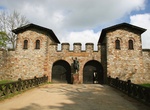
The Limes Germanicus was a line of frontier (limes) fortifications that bounded the ancient Roman provinces of Germania Inferior, Germania Superior and Raetia, dividing the Roman Empire and the unsubdued Germanic tribes from the years 83 to about 260 AD. At its height, the limes stretched from the North Sea outlet of the Rhine to near Regensburg on the Danube. Th... -
Visit Frontiers of the Roman Empire – The Danube Limes (Western Segment), Austria, Germany, Slovakia (UNESCO Site)
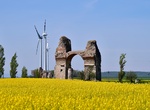
It covers almost 600km of the whole Roman Empire’s Danube frontier. The property formed part of the much large frontier of the Roman Empire that encircled the Mediterranean Sea. The Danube Limes (Western Segment) reflects the specificities of this part of the Roman Frontier through the selection of sites that represent key elements from road, legionary fortresse... -
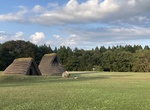
Visit Futatsumori Site, Shichinohe, Japan (UNESCO Site)
The Futatsumori Site, known primarily in Japanese as the Futatsumori Shell Mound (二ツ森貝塚,Futatsumori Kaizuka), is an archaeological site consisting of a series of large shell middens and the remains of an adjacent settlement from the Jōmon period, located in what is now part of the town of Shichinohe in Aomori Prefecture in the Tōhoku region of northern Japan. It has b... -
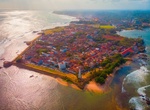
Visit Galle Fort, Sri Lanka
Galle Fort (Sinhala: ගාලු කොටුව Galu Kotuwa; Tamil: காலிக் கோட்டை, romanized: Kālik Kōṭṭai), in the Bay of Galle on the southwest coast of Sri Lanka, was built first in 1588 by the Portuguese, then extensively fortified by the Dutch during the 17th century from 1649 onwards. It is a historical, archaeological and architectural heritage monument, which even after more ... -
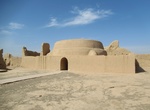
Visit Gaochang, Xinjiang, China (UNESCO Site)
Gaochang also called Qara-hoja or Kara-Khoja, is the site of an ancient oasis city built on the northern rim of the in hospitable Taklamakan Desert in Xinjiang, China. The site is also known in published reports as Chotscho, Khocho, Qocho, or Qočo. During the Yuan and Ming dynasties, Gaochang was referred to as "Halahezhuo" (哈拉和卓) (Qara-khoja) and Huozhou. A busy trad... -
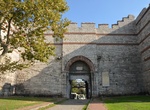
See Gate of Charisius, Istanbul, Turkey (UNESCO site)
The Gate of Char[i]sius (Χαρ[ι]σίου πύλη/πόρτα), named after the nearby early Byzantine monastery founded by a vir illustris of that name, was, after the Golden Gate, the second-most important gate. In Turkish it is known as Edirnekapı ("Adrianople Gate"), and it is here where Mehmed II made his t...
Price: $335.27