Give us feedback!
Our philosophy is simple. We want to encourage you to dream. BIG! Then we help you plan your trip, get the most out of it while you're traveling and help you share your experience with friends.
Join Now It's FREE
Dreams Still To Do
Checked-Off Dreams
Dreams Still To Do
Checked-Off Dreams
Advertisement
Explore Landmarks (Natural)
-
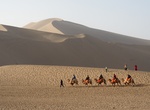
Climb Singing Sand Dunes (Dunhuang), China
The Singing Sand Dunes in Dunhuang, China, are the sand dunes that, when the wind blows, give out a singing or drumming sound. They are part of the Kumtag Desert. The Singing Sand Dunes were originally known as the "Gods' Sand Dunes" (Chinese: 神沙山). In theRecords of the Grand Historian, Sima Qian described the sound "as if listening to music when the weather is fine."... -
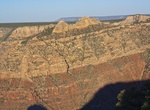
See Sinking Ship, Grand Canyon National Park, Arizona
Sinking Ship is an unique rock formation on the South Rim of Grand Canyon National Park. This section of bedrock rises up above the canyon but sits on a tilted angle like a sinking ship. The best viewpoint to see the ship is at Moran Point. -
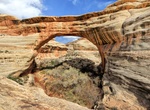
Hike to Sipapu Bridge, Natural Bridges National Monument, Utah
Sipapu Bridge is a natural bridge or arch located in the Natural Bridges National Monument in the U.S. state of Utah. The bridge spans White Canyon. Sipapu Bridge is the largest natural bridge in the park and the second largest in the United States (after Rainbow Bridge National Monument). Admire its 268-foot (82-meter) span up close with a hike to the bridge’s... -
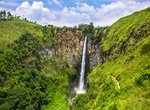
See Sipiso-Piso Waterfall, Sumatra, Indonesia
Sipiso-Piso Waterfall is a plunge waterfall in the Batak highlands of Sumatra, Indonesia. It is formed by a small underground river of the Karo plateau that hurls itself from a cave in the side of the lake Toba caldera some 120 meters (360 feet) down to lake level. Sipisopiso is a well-known tourist attraction and a nearby vantage point offers great vistas of the fall... -
Visit Sipoholon Hot Springs, Sumatra, Indonesia
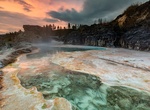
Sipoholon Hot Springs are located in North Sumatra regency. Their waters are blue-green due to its high content of sulphur. The are is surrounded by limestone hills which add hues of yellow, green and orange. Stop by and enjoy the relaxing springs along with the beautiful landscape! -
Explore Siq Um Al Tawaqi, Wadi Rum, Jordon
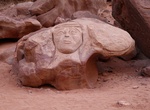
Siq Um al Tawaqi is a narrow canyon at the northern end of the Wadi Rum Protected Area. Tourists primarily visit for the inscriptions of Lawrence of Arabia and Prince Faisal, the famous historic characters popularised by the 1962 film. The inscriptions were created by a local Bedouin artist. He created the film tribute to provide tourists a photo opportunity while vis... -
See Sisters Rocks, Stawell, Victoria, Australia
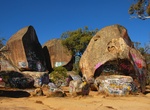
Sisters Rocks are a cluster of large granite boulders alongside the Western Highway, a few kilometres from Victorian gold mining town, Stawell. Stawell is located about 20 minutes from the spectacular Grampians National Park. -
Float in Siwa Oasis Salt Pools, Siwa, Egypt
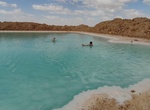
There are hundreds of salt pools/salt lakes spread throughout the Siwa Oasis. Both hot and cold salt pools can be found in Siwa, as well as salty and fresh water springs. You can float on their water just like at the Dead Sea. The pools are actually part of a salt mines. Floating in these pools in the middle of the desert was a once in a lifetime experience. -
Hike to Skaftafellsjökull (Skaftafell) Glacier, Vatnajökull National Park, Iceland
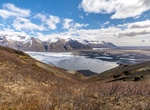
Skaftafell (Skaftafellsjökull) Glacier is part of Vatnajökull National Park in southern Iceland. -
Explore Skaftáreldahraun, Kirkjubæjarklaustur, Iceland
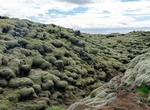
In 1783, a huge lava flow streamed from Lakagígar in what became known as the “Skaftá Fires.” The Skaftá-Fires are one of two of the largest lava flows that have occurred on Earth in recorded history. The molten lava filled the gorges through which the Skaftá and Hverfisfljót rivers flowed, on each side of Kirkjubæ... -
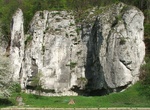
See Skała Krukowskiego (Krukowski Rock), Ojców National Park, Poland
Skala Krukowski is a rock built of limestone on the left slope of the Prądnik Valley in the Ojcowski National Park . It is one of the rocks in the Crown Rocks group located opposite the Krakowska Gate . Together with the nearby rock , Słupek , they are the westernmost rocks in this group of roc... -
Visit Skała Pielgrzym (Pilgrim Rock), Sokole Mountains, Poland
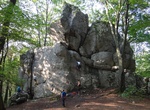
Skała Pielgrzym (Pilgrim Rock) is a rock in the Sokole Mountains between Olsztyn and Biskupice in the Silesian Voivodeship , Częstochowa County, Olsztyn Commune. It is located on the ridge of Sokole Góra in the Mirowsko-Olsztyńska Upland, which is part of the Kraków-Częstochowa Up... -
See Skały Kawalerskie (Knight's Rocks), Ojców National Park, Poland
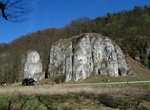
Kawalerskie Rocks is a group of limestone rocks in the Ojcowski National Park . They are located on the eastern slope of the Prądnik Valley , next to the mouth of the Wrześnik Gorge. Formed as a result of water activity. They are steep cliffs with vertical walls rising above the flat and grassy valley floor. Rock climb... -
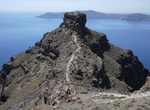
Visit Skaros Rock, Santorini
Skaros Rock, originally the location of medieval fortifications on Santorini. -
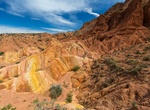
Visit Skazka Canyon (Fairytale Canyon), Kyrgyzstan
Skazka Canyon, also known as Fairytale Canyon, this area is on the southern shore of Lake Issyk-Kul. The canyon was formed as a result of thousands of years of ice, water and wind erosion.