Give us feedback!
Our philosophy is simple. We want to encourage you to dream. BIG! Then we help you plan your trip, get the most out of it while you're traveling and help you share your experience with friends.
Join Now It's FREE
Related Categories
Dreams Still To Do
Checked-Off Dreams
Dreams Still To Do
Checked-Off Dreams
Advertisement
Explore Main UNESCO Sites
-
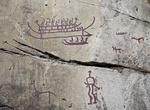
See Rock Carvings in Tanum, Sweden (UNESCO site)
As Rock Carvings in Tanum, the area around Tanumshede has been declared a World Heritage Site by UNESCO because of the high concentration of petroglyphs. One of the larger rocks of Nordic Bronze Age petroglyphs in Scandinavia, the Vitlyckehäll, is located in Tanumshede. In total there are thousands of images Tanum petroglyphs, on about 600 panels within th... -
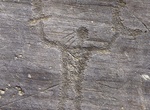
See Rock Drawings in Valcamonica, Italy (UNESCO site)
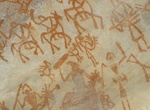
The stone carvings of Val Camonica constitute one of the largest collections of prehistoric petroglyphs in the world. The collection was recognized by Unesco in 1979 and was Italy's first recognized World Heritage Site. Unesco has formally recognized more than 140,000 figures and symbols, but new discoveries have increased the number of catalogued incisions to between... -
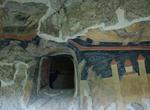
See Rock-Hewn Churches of Ivanovo, Bulgaria (UNESCO site)
The Rock-hewn Churches of Ivanovo are a group of monolithic churches, chapels and monasteries hewn out of solid rock and completely different from other monastery complexes in Bulgaria, located near the village of Ivanovo, 20 km south of Rousse, on the high rocky banks of the Rusenski Lom, 32 m above the river. The complex is noted for its beautiful and well-preserved... -
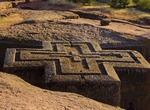
See Rock-Hewn Churches of Lalibela, Ethiopia (UNESCO site)
Lalibela is a town in northern Ethiopia, known for its monolithic churches. Lalibela is one of Ethiopia's holiest cities, second only to Aksum, and is a center of pilgrimage for much of the country. Unlike Aksum, the population of Lalibela is almost completely Ethiopian Orthodox Christian. The layout and names of the major buildings in Lalibela are widely accepted, es... -
Dive Rock Islands of Palau, Palau (UNESCO site)
The Rock Islands of Palau, also called Chelbacheb, are a small collection of limestone or coral uprises, ancient relics of coral reefs that violently surfaced to form Islands in Palau's Southern Lagoon, between Koror and Peleliu, and are now an incorporated part of Koror State. There are between 250 to 300 islands in the group according to different sources, with an a... -
See Rock Shelters of Bhimbetka, India (UNESCO site)
The Bhimbetka rock shelters are an archaeological World Heritage site located in Raisen District in the Indian state of Madhya Pradesh. The Bhimbetka shelters exhibit the earliest traces of human life in India; a number of analyses suggest that at least some of these shelters were inhabited by man for in excess of 100,000 years. Some of the Stone Age rock paintin... -
Dive Rocktail Bay, South Africa (UNESCO site)
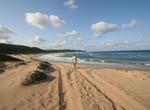
Rocktail Bay is located in northern KwaZulu-Natal, South Africa at the northern end of the World Heritage Site iSimangaliso Wetland Park. The bay combines miles and miles of pristine and undeveloped coastline with pristine forests with wetlands and marine ecology. The string of lakes, marshes, coral reefs and secluded beaches, make this north-eastern corner of South A... -
Visit Rocky Necropolis of Pantalica, Italy (UNESCO site)
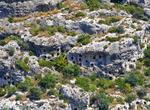
The Necropolis of Pantalica is a large necropolis in Sicily with over 5000 tombs dating from the 13th to the 7th centuries BC. Pantalica is situated in the valleys of the rivers Anapo and Calcinara, between the towns of Ferla and Sortino in south-eastern Sicily. Together with the city of Syracuse, Pantalica is listed as "Syracuse and the Rocky Necropolis of Pantalica"... -
Wine Tasting in Roero, Piedmont, Italy (UNESCO Site)
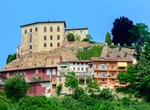
Roero is a geographical area in the north-east corner of the province of Cuneo in Piedmont, north-west Italy. This hilly region is known for its wines and for its fruit production: particularly the peaches of Canale and the local variety of pear known as Madernassa which originated in the late eighteenth century in Guarene. Strawberries are also grown. The name comes ... -
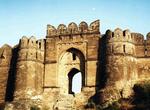
Visit Rohtas Fort, Pakistan (UNESCO site)
Rohtas Fort is a garrison fort built by the great Afghan king Sher Shah Suri. This fort is about 4 km in circumference and the first example of the successful amalgamation of Pashtun and Hindu architecture in the Indian Subcontinent. Qila Rohtas was designated a World Heritage Site in 1997. "Rohtas Fort is an exceptional example of the Muslim military architecture of ... -
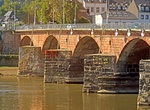
Cross Roman Bridge (Trier), Germany (UNESCO Site)
The Roman Bridge (Römerbrücke) is an ancient structure in Trier, Germany, over the Moselle. It is the oldest standing bridge in the country. The nine bridge pillars date from the 2nd century AD. The upper part was renewed twice, in the early 12th and in the early 18th century, after suffering destruction in war. It is designated as part of the Roman Monument... -
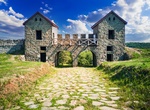
Visit Roman Frontiers of Dacia, Romania (UNESCO sites)
From 500 BCE on, the Roman Empire extended its territory across parts of Europe and North Africa until its frontier totaled some 7,500 kilometres by the 2nd century. The Romanian segment, the Dacian Limes, was operational from 106 to 271 CE. The property comprises 277 component parts and represents the longest, most complex land border of a former Roman province in Eu... -
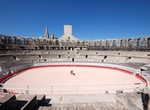
See Roman Monuments of Arles, France (UNESCO site)
Arles, Roman and Romanesque Monuments is a collection of monuments in Arles, France, including the Arles Amphitheatre and the Arles Obelisk. The collection has been listed as a UNESCO World Heritage Site since 1981. It is spread over an area of 65 ha. It is located in Arles and contains the following buildings: Arles Amphitheatre; The Roman theatre; Cryptoporticu... -
See Roman Theatre & The Triumphal Arch of Orange, France (UNESCO site)
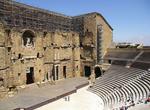
The Théâtre antique d'Orange ("Ancient Theatre of Orange") is an ancient Roman theatre, in Orange, southern France, built early in the 1st century AD. It is owned by the municipality of Orange and is the home of the summer opera festival, the Chorégies d'Orange. It is one of the best preserved of all the Roman theatres in the Roman colony ofArausio... -
Visit Rome, Italy (UNESCO sites)
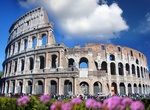
“The Eternal City” as it is lovingly nicknamed, Rome is one of the great cities of the world. Besides its elevated status as the capital of Italy, while also its largest city, Rome has been a center of culture and prestige for most of its more than 2,500 years of existence. The city is replete with splendid palaces, churches and basilicas of great historic...