Give us feedback!
Our philosophy is simple. We want to encourage you to dream. BIG! Then we help you plan your trip, get the most out of it while you're traveling and help you share your experience with friends.
Join Now It's FREE
Related Categories
Dreams Still To Do
Checked-Off Dreams
Dreams Still To Do
Checked-Off Dreams
Advertisement
Explore Main UNESCO Sites
-
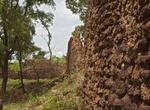
See Ruins of Loropéni, Burkina Faso (UNESCO site)
Loropéni is a market town in southern Burkina Faso, lying west of Gaoua. Local features include pre-European stone ruins, about which little is known. One theory is that they formed the enclosure of the courtyard of a Kaan Iya (king or paramount ruler of the Kaan people) from antiquity. There is a similar, though much-degraded ruin around the current royal cour... -
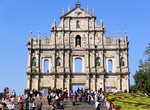
See Ruins of St. Paul's, Macau (UNESCO site)
The Ruins of St. Paul's refers to the ruins of a 16th-century complex in Macau including of what was originally St. Paul's College and the Cathedral of St. Paul also known as "Mater Dei", a 17th-century Portuguese cathedral dedicated to Saint Paul the Apostle. Today, the ruins are one of Macau's most famous landmarks. In 2005, they were officially enlisted as part of ... -
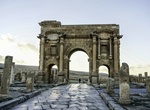
See Ruins of Timgad, Algeria (UNESCO site)
Timgad (Thamugas or Thamugadi) was a Roman colonial town in North Africa founded by the Emperor Trajan around 100 AD. The full name of the town was Colonia Marciana Ulpia Traiana Thamugadi. Trajan commemorated the city after his mother Marcia, father Marcus Ulpius Traianus and his eldest sister Ulpia Marciana. Located in modern-day Algeria, about 35 km east of th... -
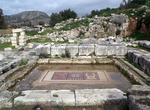
Visit Ruins of Xanthos-Letoon, Turkey (UNESCO site)
Xanthos was the name of a city in ancient Lycia, the site of present day Kınık, Antalya Province, Turkey, and of the river on which the city is situated. In early sources, "Xanthos" is used synonymously for Lycia as a whole. Xanthos was a center of culture and commerce for the Lycians, and later for the Persians, Macedonians, Greeks, and Romans who in turn conquered t... -
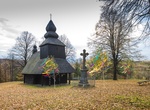
Visit Ruská Bystrá Wooden Church, Slovakia (UNESCO site)
See the wooden church in Ruská Bystrá. -
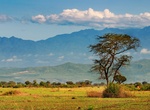
Explore Rwenzori Mountains National Park, Uganda (UNESCO site)
Rwenzori Mountains National Park is a Ugandan national park and UNESCO World Heritage Site located in the Rwenzori Mountains. Almost 1,000 km2 (386 sq mi) in size, the park has Africa's third highest mountain peak and many waterfalls, lakes, and glaciers. The park is known for its beautiful plant life. It lies along Uganda's border with the Democratic Republic of... -
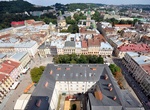
Visit Rynok (Market) Square, Lviv, Ukraine (UNESCO site)
Rynok (Market) Square is a central square of the city of Lviv, Ukraine. It was planned in the second half of the 14th century, following granting city rights by King Casimir III the Great of Poland, who incorporated Red Ruthenia into the Kingdom of Poland in 1349. The king ordered Lviv to be moved more to the south, where a new city was built to the plan of a traditio... -
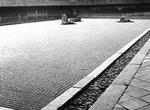
See Ryōan-ji Rock Garden, Kyoto, Japan (UNESCO site)
Ryōan-ji (The Temple of the Dragon at Peace) is a Zen temple located in northwest Kyoto, Japan. It belongs to the Myōshin-ji school of the Rinzai branch of Zen Buddhism. The temple garden is considered to be one of the finest examples of akare-sansui, a Japanese rock garden, or zen garden, in Japan.. The temple and gardens are listed asHistoric Monuments of Ancient Ky... -
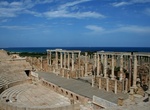
Visit Sabratha, Libya (UNESCO site)
Sabratha, Sabratah or Siburata, in the Az Zawiyah District in the northwestern corner of modern Libya, was the westernmost of the "three cities" of Tripolis. From 2001 to 2007 it was the capital of the former Sabratha Wa Surman District. It lies on the Mediterranean coast about 65 km (40 miles) west of Tripoli (ancient Oea). Besides its magnificent late 3rd centu... -
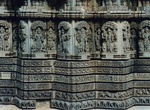
Explore Sacred Ensembles of the Hoysalas, India (UNESCO site)
This serial property encompasses the three most representative examples of Hoysala-style temple complexes in southern India, dating from the 12th to 13th centuries. The Hoysala style was created through careful selection of contemporary temple features and those from the past to create a different identity from neighbouring kingdoms. The shrines are characterized by h... -
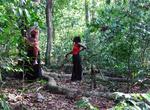
Explore Sacred Mijikenda Kaya Forests, Kenya (UNESCO site)
The Mijikenda ("the nine tribes") are the nine ethnic groups along the coast of Kenya, from the border of Somalia in the north to the border of Tanzania in the south. Archaeologist Chapuruka Kusimba contends that the Mijikenda formerly resided in coastal cities but settled in the hinterlands of the area to avoid submission to dominant Portuguese forces in control... -
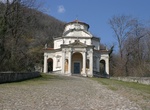
See Sacri Monti of Piedmont and Lombardy, Italy (UNESCO site)
The Sacri Monti (Italian for "Sacred Mountains") of Piedmont and Lombardy are a series of nine groups of chapels and other architectural features created in northern Italy during the seventeenth and late sixteenth century. They are dedicated to various aspects of the Christian faith and are considered of great beauty by virtue of the skill with which they have be... -
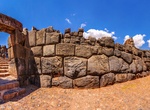
See Sacsayhuamán, Peru (UNESCO site)
Sacsayhuamán (also known as Saksaq Waman, Sacsahuaman or Saxahuaman) is a walled complex on the northern outskirts of the city of Cusco, Peru, the former capital of the Inca empire. The complex is as many other Inca constructions made of large polished dry-stone walls, each boulder carefully cut to fit together tightly without mortar. Located on a steep hill th... -
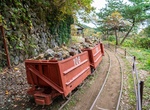
Visit Sado Island Gold Mines, Sado Island, Japan
The Sado Island Gold Mines is a serial property located on Sado Island, some thirty-five kilometres west of the Niigata Prefecture coast. It is formed of three component parts illustrative of different unmechanised mining methods. Sado Island is of volcanic origin and features two parallel mountain ranges stretching from southwest to northeast and separated by one all... -
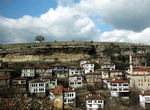
Visit Safranbolu, Turkey (UNESCO site)
Safranbolu is a town and district of Karabük Province in the Black Sea region of Turkey. It is about two hundred kilometers north of Ankara and about a hundred kilometers south of the Black Sea coast, or more precisely about 9 kilometers north of the city of Karabük. Former Turkish names of the town were Zalifre and Taraklıborlu and in Greek Saframpolis...