Give us feedback!
Our philosophy is simple. We want to encourage you to dream. BIG! Then we help you plan your trip, get the most out of it while you're traveling and help you share your experience with friends.
Join Now It's FREE
Related Categories
Dreams Still To Do
Checked-Off Dreams
Dreams Still To Do
Checked-Off Dreams
Advertisement
Explore Main UNESCO Sites
-
Explore Sangha Trinational, Cameroon, Congo & Central African Republic (UNESCO site)
Sangha Trinational is a forest divided between the nations of Central African Republic, Cameroon and Congo-Brazzaville. It was added as a UNESCO World Heritage Site in 2012 because of its outstanding biodiversity and unique biological communities. The site includes 3 contiguous national parks within the humid tropical forests of Central Africa: Nouabalé-Ndoki N... -
Visit San Gimignano, Italy (UNESCO site)
San Gimignano is a small walled medieval hill town in the province of Siena, Tuscany, north-central Italy. It is mainly famous for its medieval architecture, especially its towers, which may be seen from several kilometres outside the town. While in other cities, such as Bologna or Florence, most or all of their towers have been brought down due to wars, catastro... -
See Sangiran Early Man Site, Indonesia (UNESCO site)
Sangiran is an archaeological excavation site on the island of Java in Indonesia. The area comprises about 48 km² and is located in Central Java, about 15 kilometers north of Surakarta in the Solo River valley. In 1996 it was accepted as World Heritage by the UNESCO. In 1934 the anthropologist Gustav Heinrich Ralph von Koenigswald started to examine the area. Dur... -
See San Ignacio Miní, Argentina (UNESCO site)
San Ignacio Miní was one of the many missions founded in 1632 by the Jesuits in the Americas during the Spanish colonial period near present-day San Ignacio valley, some 60km north of Posadas, Misiones Province, Argentina. The original mission was erected near the year 1610 by priests José Cataldino and Simón Maceta in the region called Guayr&aacu... -
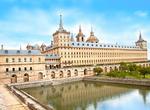
See San Lorenzo de El Escorial Monastery, Spain (UNESCO site)
San Lorenzo de El Escorial, also known as El Escorial de Arriba is a town and municipality in the Community of Madrid, Spain, located to the northwest of the region in the southeastern side of the Sierra de Guadarrama, at the foot of Mount Abantos and Las Machotas, 47 kilometres (29 mi) from Madrid. It is head of the same name judicial party. The settlement is popular... -
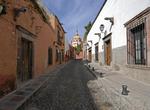
Visit San Miguel de Allende, Mexico (UNESCO site)
The arts thrive in San Miguel De Allende, Mexico. This mountain town in central Mexico has become a magnet for painters, sculptors and musicians since the end of World War II and the many local events and festivals give testament to the vibrant local scene. The city is home to important art and cultural institutes such as the Escuela de Bellas Artes and the Instituto ... -
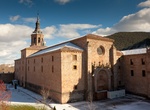
See San Millán Yuso and Suso Monasteries, Spain (UNESCO site)
The monasteries of San Millán de Suso and San Millán de Yuso are two monasteries situated in the village of San Millán de la Cogolla, La Rioja, Spain. They have been designated a World Heritage Site by UNESCO. The two monasteries' names Suso and Yuso mean the "upper" and the "lower" in archaic Castilian , respectively. Suso is the older build... -
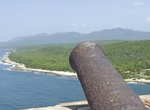
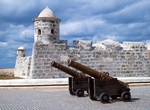
Visit San Pedro de la Roca Castle, Cuba (UNESCO site)
The Castillo de San Pedro de la Roca (also known by the less formal title of Castillo del Morro or as San Pedro de la Roca Castle) is a fortress on the coast of the Cuban city of Santiago de Cuba. About 6 miles (10 km) southwest of the city centre, it overlooks the bay. It was designed in 1637 by Giovanni Battista Antonelli (also known as Juan Battista Antonelli), a m... -
Visit San Salvador de la Punta Fortress, Havana, Cuba (UNESCO site)
San Salvador de la Punta Fortressis a fortress in the bay of Havana, Cuba. La Punta, just like El Morro was designed to protect the entrance to the Havana Bay that became an important and strategic entranceway to the harbor since the settlement of the town. The nonstop landings of corsairs in the area endangered the harbor and the town. That was why in 1559 it was res... -
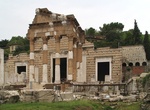
Visit San Salvatore-Santa Giulia, Italy (UNESCO Site)
San Salvatore (or, for most of its existence, Santa Giulia) is a former monastery in Brescia, Lombardy, northern Italy, now turned into a museum. The monastic complex is famous for the diversity of its architecture which includes Roman remains and significant pre-Romanesque, Romanesque and Renaissance buildings. In 2011, it became a UNESCO World Heritage Site as part ... -
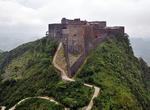
See Sans-Souci Palace, Haiti (UNESCO site)
The Sans-Souci Palace was the royal residence of King Henri I (better known as Henri Christophe) of Haiti, Queen Marie-Louise and their twin daughters. Construction of the palace started in 1810 and was completed in 1813. It is located in the town of Milot, Nord Department. Its name translated from French means "without worry." Close to the Palace is the renowned moun... -
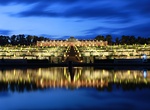
See Sanssouci Palace and Garden, Germany (UNESCO site)
Sanssouci is the name of the former summer palace of Frederick the Great, King of Prussia, in Potsdam, near Berlin. While Sanssouci is in the more intimate Rococo style and is far smaller than its French Baroque counterpart, it too is notable for the numerous temples and follies in the park. The palace was designed by Georg Wenzeslaus von Knobelsdorff between 174... -
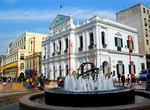
See Santa Casa da Misericórdia, Macau (UNESCO site)
Holy House of Mercy of Macau is an historic white building in Macau's Senado Square. Established as a branch of the Santa Casa da Misericórdia, it was built in 1569 on the orders of the Bishop of Macao. It was a medical clinic and several other social welfare structures in early Macau. It later served as an orphanage and refuge for widows of sailors lost at sea... -
Visit Santa Cruz de Mompox (Mompós), Colombia (UNESCO site)
Mompox or Mompós, officially Santa Cruz de Mompox, is a town and municipality in northern Colombia, in the Bolívar Department, which has preserved its colonial character. Located on an island in the Magdalena River where it joins the Cauca River, 249 kilometers from Cartagena. Mompox depends upon tourism, fishing and some commerce generated by the local ... -
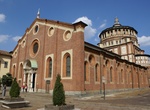
See Santa Maria delle Grazie (Milan), Italy (UNESCO site)
Santa Maria delle grazie ("Holy Mary of Grace") is a church and Dominican convent in Milan, northern Italy, included in the UNESCO World Heritage sites list. The church contains the mural of The Last Supper by Leonardo da Vinci, which is in the refectory of the convent. The Duke of Milan Francesco I Sforza ordered construction of a Dominican convent and a church at th...