Give us feedback!
Our philosophy is simple. We want to encourage you to dream. BIG! Then we help you plan your trip, get the most out of it while you're traveling and help you share your experience with friends.
Join Now It's FREE
Related Categories
Dreams Still To Do
Checked-Off Dreams
Dreams Still To Do
Checked-Off Dreams
Advertisement
Explore Main UNESCO Sites
-
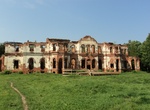
Visit Ropsha, Saint Petersburg (UNESCO Site)
Ropsha is a settlement in Lomonosovsky District of Leningrad Oblast, Russia, situated about 20 kilometres (12 mi) south of Peterhof and 49 kilometres (30 mi) south-west of central Saint Petersburg, at an elevation of 80 metres (260 ft) to 130 metres (430 ft). The palace and park ensemble of Ropsha are included in the World Heritage list as a constituent of Historic Ce... -
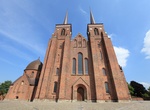
See Roskilde Cathedral, Denmark (UNESCO site)
Roskilde Cathedral in the city of Roskilde on the Island of Zealand (Sjælland) in eastern Denmark, was the first Gothic cathedral to be built of brick and its construction encouraged the spread of this Brick Gothic style throughout Northern Europe. It was built during the 12th and 13th centuries, and incorporates both Gothic and Romanesque architectural fea... -
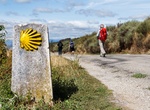
Travel Route of Santiago de Compostela (Way of St. James), Spain & France (UNESCO sites)
The Way of St. James or St. James' Way is the pilgrimage to the Cathedral of Santiago de Compostela in Galicia in northwestern Spain, where tradition has it that the remains of the apostle Saint James are buried. The Way of St James has existed for over a thousand years. It was one of the most important Christian pilgrimages during medieval times, together with Rome a... -
Explore Royal Chitwan National Park, Nepal (UNESCO site)
Chitwan National Park is the first national park in Nepal. Formerly called Royal Chitwan National Park it was established in 1973 and granted the status of a World Heritage Site in 1984. It covers an area of 932 km2 and is located in the subtropical Inner Terai lowlands of south-central Nepal in the Chitwan district. In altitude it ranges from about 100 metres (330 ft... -
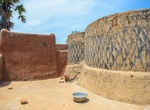
Visit Royal Court of Tiébélé, Burkina Faso
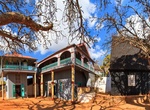
The property is an earthen architectural complex established since the 16th century that bears testimony to the social organization and cultural values of the Kasena people. Enclosed by a protective compound wall, the Royal Court consists of a set of buildings arranged in distinct concessions separated by walls and passageways leading to ceremonial and gathering place... -
See Royal Hill of Ambohimanga, Madagascar (UNESCO site)
The Royal Hill of Ambohimanga is a site of cultural and historical significance located approximately 24 kilometers to the east of the capital city of Antananarivo in Madagascar. The site consists of a walled historic village including residences and burial sites of several key members of the royalty of Imerina, the ethnic community that rose to power in the 19th cent... -
See Royal Monastery of Santa María de Guadalupe, Spain (UNESCO site)
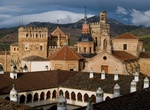
The Royal Monastery of Santa Maria de Guadalupe is a Roman Catholic monastic establishment in Guadalupe, Cáceres province of the Extremadura autonomous community of Spain; it was the most important monastery in the country for more than four centuries. It is protected by the UNESCO as a World Heritage Site. The monastery, whose architecture evolved through... -
Visit Royal Palace at Caserta, Italy (UNESCO site)
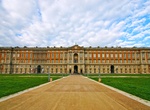
The Royal Palace of Caserta is a former royal residence in Caserta, southern Italy, constructed by the House of Bourbon-Two Sicilies as their main residence as kings of Naples. It is the largest palace erected in Europe during the 18th century. In 1997, the palace was designated a UNESCO World Heritage Site; its nomination described it as "the swan song of the spectac... -
See Royal Palace & Gardens of Aranjuez, Spain (UNESCO site)
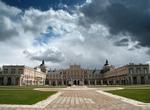
The Royal Palace of Aranjuez is a residence of the King of Spain, located in the town of Aranjuez, Community of Madrid, Spain. The palace is open to the public as one of the Spanish royal sites. It was commissioned by Philip II and designed by Juan Bautista de Toledo and Juan de Herrera, who also designed El Escorial. It was completed during the reign of Ferdinand VI ... -
See Royal Palaces of Abomey, Benin (UNESCO site)
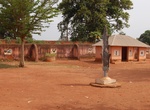
The Royal Palaces of Abomey are 12 palaces spread over a 40 hectares (99 acres) area at the heart of the Abomey town in Benin, formerly the capital of the West African Kingdom of Dahomey. The Kingdom was founded in 1625 by the Fon people who developed it into a powerful military and commercial empire, which dominated trade with European slave traders on the Slave Coas... -
Visit Royal Saltworks at Arc-et-Senans, France (UNESCO site)
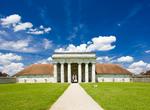
The Saline Royale (Royal Saltworks) is a historical building at Arc-et-Senans in the department of Doubs, eastern France. It is next to the Forest of Chaux and about 35 kilometers from Besançon. The architect was Claude-Nicolas Ledoux (1736–1806), a prominent Parisian architect of the time. The work is an important example of an early Enlightenment projec... -
See Royal Tombs of the Joseon Dynasty, South Korea (UNESCO site)
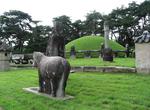
The Royal Tombs of the Joseon Dynasty refers to the 40 tombs of members of the Korean Joseon Dynasty (1392-1910). These tombs are scattered in over 18 locations across South Korea. They were built to honour and respect the ancestors and their achievements, and assert their royal authority. The tombs have been registered as a UNESCO World Heritage site since 2009. The ... -
Visit Ruins of Gedi, Arabuko-Sokoke Forest, Kenya (UNESCO site)
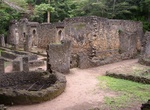
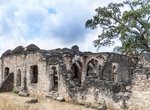
The ruins of Gedi are a UNESCO World Heritage site near the Indian Ocean coast of eastern Kenya. The site is adjacent to the town of Gedi (also known as Gede) in the Kilifi District and within the Arabuko-Sokoke Forest. Gedi is one of many medieval Swahili coastal settlements that stretch from Barawa, Somalia to the Zambezi River in Mozambique. There are 116 known Swa... -
Visit Ruins of Karakorum, Mongolia (UNESCO site)
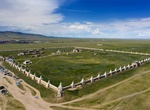
Karakorum was the capital of the Mongol Empire in the 13th century, and of the Northern Yuan in the 14-15th century. Its ruins lie in the northwestern corner of the Övörkhangai Province of Mongolia, near today's town of Kharkhorin, and adjacent to the Erdene Zuu monastery. They are part of the upper part of the World Heritage Site Orkhon Valley Cultural Land... -
See Ruins of Kilwa Kisiwani and Ruins of Songo Mnara, Tanzania (UNESCO site)
Kilwa Kisiwani is a community on an island off the coast of East Africa, in present day Tanzania. A document written around AD 1200 called al-Maqama al Kilwiyya discovered in Oman, gives details of a mission to reconvert Kilwa to Ibadism, as it had recently been effected by the Ghurabiyya Shia doctrine from southern Iraq. In the 11th century, the island of Kilwa ...