Give us feedback!


 See all
Our philosophy is simple. We want to encourage you to dream. BIG! Then we help you plan your trip, get the most out of it while you're traveling and help you share your experience with friends.
Join Now It's FREE
Dream Packages
Duration: 7 days
Price: $1995.00
Price: $1995.00
Duration: 11 hours
Price: $208.42
Price: $208.42
Duration: 3 hours
Price: $118.81
Price: $118.81
Duration: 2 days
Price: $398.24
Price: $398.24
Dreams Still To Do
Checked-Off Dreams
Dreams Still To Do
Checked-Off Dreams
Advertisement
Explore Man-Made Sites
-
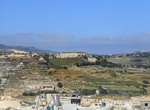
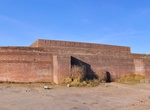
See Fort Mosta, Malta
Fort Mosta (formerly written as Fort Musta, Maltese:Il-Fortizza tal-Mosta) is a polygonal fort in Mosta, Malta. It was built between 1878 and the 1880s by the British as part of the Victoria Lines. It is still in use today by the Armed Forces of Malta as an ammunition depot. Fort Mosta was built by the British as part of the Victoria Lines, a line of fortifications al... -
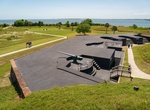
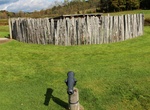
Visit Fort Moultrie, Sullivan's Island, South Carolina
Fort Moultrie is a series of fortifications on Sullivan's Island, South Carolina, built to protect the city of Charleston, South Carolina. The first fort, formerly named Fort Sullivan, built of palmetto logs, inspired the flag and nickname of South Carolina, as "The Palmetto State". The fort was renamed for the U.S. patriot commander in the Battle of Sullivan's Island... -
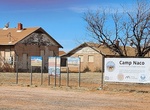
Visit Fort Naco, Naco, Arizona
Fort Naco, Camp Naco, or Fort Newell began as a camp in the Southwest United States, on the outskirts of Naco, Arizona as part of the Mexican Border Project. Over time adobe and wooden buildings were constructed to house the garrison along with other permanent structures. Fort Naco, others call it Camp Naco or Fort Newell, was one of the last forts built by the United... -
Visit Fort Napoleon, Ostend, Belgium
Fort Napoleon in Ostend is a polygonal fort built in the Napoleonic era. It has recently been restored and is open to the public. France had occupied the Austrian Netherlands (a territory roughly corresponding to the borders of modern Belgium) during 1792 and 1793 in the Flanders Campaign of the French Revolutionary Wars. During the War of the Fifth Coalition, Napoleo... -
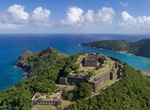
Visit Fort Napoléon des Saintes, Îles des Saintes, Guadeloupe
Fort Napoléon is located on Terre-de-Haut Island, in the Îles des Saintes, Guadeloupe. Built on themorne (Caribbean French word for "bluff") called Mire, it was originally named Fort Louis. There are great views of Les Saintes from the fort ans it has been well preserved. The fort and museum has interesting artifacts, pictures, stories and displays. It wa... -
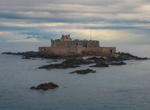
See Fort National, Saint-Malo, France
Fort National is a fort on a tidal island a few hundred metres off the walled city of Saint-Malo. The great military architect Vauban had it built in 1689 to protect Saint-Malo's port. The fort was originally called Fort Royal. In 1789 the fort's name became Fort d'Îlette or Républicain, then Fort Impérial and, after 1870, Fort National. The fort s... -
Visit Fort Necessity National Battlefield, Pennsylvania
Fort Necessity National Battlefield is a National Battlefield Site in Fayette County, Pennsylvania, United States, which preserves the site of the Battle of Fort Necessity. The battle, which took place on July 3, 1754, was an early battle of the French and Indian War, and resulted in the surrender of British colonial forces under Colonel George Washington, to the Fren... -
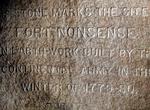
Visit Fort Nonsense, Morristown, New Jersey
Fort Nonsense is one of three sites comprising the Morristown National Historical Park, in Morristown, Morris County, New Jersey, United States. The other two sites are the Ford Mansion and Jockey Hollow. Fort Nonsense occupies a high hilltop overlooking Morristown, and is believed to have been the site of a signal fire or smoke signal, along with earthworks. It was o... -
See Fortnum & Mason Clock, London, England
In April 1951, the Canadian businessman W. Garfield Weston acquired the store and became its chairman following a boardroom coup. In 1964, he commissioned a four-ton clock to be installed above the main entrance of the store as a tribute to its founders. Every hour, 4-foot-high (1.2 m) models of William Fortnum and Hugh Mason emerge and bow to each other, with chimes ... -
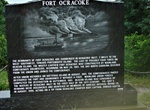
Visit Fort Ocracoke Monument, Ocracoke Island, North Carolina
Fort Ocracoke, a Confederate fortification constructed at the beginning of the American Civil War, was situated on Beacon Island in Ocracoke Inlet, two miles to the west-southwest of Ocracoke village. The octagon-shaped fort was built on a previous War of 1812 site. At one point nearly 500 Confederate troops were stationed in and around Ocracoke and the fort. The Co... -
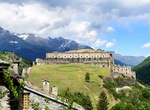
Visit Fort of Exilles, Susa Valley, Italy
The Exilles Fort (Italian:Forte di Exilles) is a fortified complex in the Susa Valley, Metropolitan City of Turin, Piedmont, northern Italy. Together with the nearby Fort of Fenestrelle and the Forte Albertino (at Vinadio, in the province of Cuneo) it was part of the defensive line between the House of Savoy lands (later of the Kingdom of Italy) and France: both these... -
Visit Fort of Komiža, Croatia
The 16th century Fort of Komiža is located on the Komiža harbor in on the island of Vic in Croatia. -
Visit Fort of Negrito, Terceira Island, Azores Islands
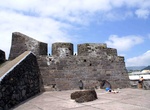
The Fort of Negrito (Portuguese:Forte de Negrito) is a 16th century maritime fort situated in the civil parish of São Mateus da Calheta, in the municipality of Angra do Heroísmo on the island of Terceira, Azores, Portugal. The fort was constructed in 1581, to support the defense of the island from an eminent Spanish invasion, brought on by the succession... -
Visit Fort of Our Lady of the Conception, Hormuz Island, Iran
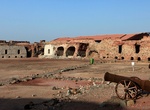
The Fort of Our Lady of the Conception, also known as the Portuguese Castle, is a red stone fortress on Hormuz Island, Iran. It is one of the last surviving monuments of Portuguese colonial rule in the Persian Gulf. Ormuz (or Hormuz) was an important maritime city and a small kingdom near the entrance to the Persian Gulf. The original site of the city was on the north... -
Visit Fort of Qaitbey, Alexandria, Egypt
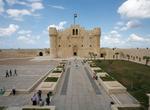
The Citadel of Qaitbay (Fort of Qaitbay) is a 15th century defensive fortress located on the Mediterranean sea coast, built upon/from the ruins of the Lighthouse of Alexandria, in Alexandria, Egypt. It was established in 1477 AD by Sultan Al-Ashraf Sayf al-Din Qa'it Bay. The Qaitbay Citadel in Alexandria is considered one of the most important defensive strongholds, n...

Price: $785.33