Give us feedback!


 See all
Our philosophy is simple. We want to encourage you to dream. BIG! Then we help you plan your trip, get the most out of it while you're traveling and help you share your experience with friends.
Join Now It's FREE
Dream Packages
Duration: 12 hours 30 minutes
Price: $104.91
Price: $104.91
Duration: 11 hours
Price: $208.42
Price: $208.42
Duration: 12 hours
Price: $160.26
Price: $160.26
Duration: 3 hours
Price: $131.66
Price: $131.66
Dreams Still To Do
Checked-Off Dreams
Dreams Still To Do
Checked-Off Dreams
Advertisement
Explore Man-Made Sites
-
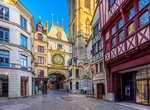
See Gros Horloge, Rouen, Normandy, France
The Gros-Horloge (English: Great-Clock) is a 14th century astronomical clock in Rouen, Normandy. The clock is installed in a Renaissance arch crossing the Rue du Gros-Horloge. The mechanism is one of the oldest in France, the movement having been made in 1389. Construction of the clock was started by Jourdain del Leche who lacked the necessary expertise to finish the ... -
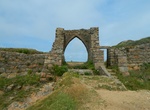
Visit Grosnez Castle, Jersey, Channel Islands
Grosnez Castle is a ruined 14th-century castle in Saint Ouen, situated in Grosnez in the north-west corner of the island of Jersey in the Channel Islands. Philippe de Carteret held it against the French when they held half of Jersey between 1461 and 1467, but it has been a ruin since the mid-16th century. Today, the ruins are open to the public. Furthermore, there are... -
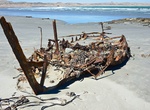
Visit Grosse Bucht Shipwreck, Namibia
See the old Grosse Bucht shipwreck along the southern Namibia coast. -
See Großer Stern, Tiergarten, Berlin, Germany
Der Große Stern (The Great Star) is the central square of the Großer Tiergarten park in Berlin; the Berlin Victory Column is sited in it. It is crossed by the Straße des 17. Juni, at its half. The other 3 streets junctionning are: Hofjägerallee Altonaer Straße Spreeweg . -
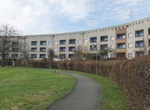
See Großsiedlung Britz (Hufeisensiedlung), Berlin, Germany (UNESCO site)
The horseshoe settlement arose from 1925 to 1933 in Berlin-Britz, designed by Bruno Taut and Martin Wagner. She is one of the first projects of social housing and part of the large settlement of Britz / Fritz-Reuter-city, the second part designed by the architect Paul Engelmann and Emil Meyer was catching. Since 2008 she has been a UNESCO World Heritage site. The site... -
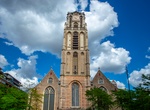
Visit Grote of Sint-Laurenskerk, Rotterdam, Netherlands
Grote of Sint-Laurenskerk is a Protestant church in Rotterdam. It is the only remnant of the medieval city of Rotterdam. The church was built between 1449 and 1525. In 1621 a wooden spire was added to the tower, designed by Hendrick de Keyser. Poor quality of its wood caused the spire to be demolished in 1645. A stone cube was added to the tower, which proved too heav... -
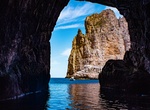
Visit Grotta del Cammello, Isola di Marettimo, Sicily, Italy
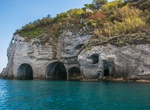
Grotta del Cammello is a must of Marettimo's marine cave. It is accessed by boat. -
Visit Grotta del Genovese, Isola di Levanzo, Sicily, Italy
Levanzo is famous for the "Grotta del Genovese" with Neolithic cave paintings and Palaeolithic graffitoes. -
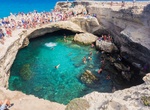
Swim in Grotta della Poesia (Cave of Poetry), Melendugno, Italy
Grotta della Poesia (Cave of Poetry) is a stunningly beautiful cave, but if you want to swim it's difficult to get in and out. See how the local do it. -
Visit Grotta Mangiapane, Sicily, Italy
Large prehistoric cave featuring rock paintings, flint tools & a living nativity at Christmas. In the Mangiapane cave, the largest, about 70 meters high, 13 wide and 50 deep, is also called Grotta degli Uffizi. Among the numerous prehistoric findings, were found teeth and bones of animals, worked flints, obsidian and rock paintings still preserved at the Pepoli mu... -
See Grotte di Pilato, Isola di Ponza, Italy
The Grotte di Pilato (Italian: "Grottoes of Pilate") are a complex system of tunnels and pools in the island of Ponza, Italy. Dug to sea level, they are from the Roman period. Many locals believe they were used to raise moray eels. In 1997 a Roman statue was discovered submerged in one of the tunnels. -
Explore Grotte im Schlossgarten, Schwerin Castle, Schwerin, Germany
Located within the castle gardens of Schwerin Castle, Grotte im Schlossgarten is a historic structure that has stood for over a century. -
Visit Grotto Camping Ground Comfort Stations, Zion National Park, Utah
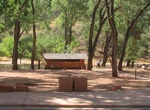
The Grotto Camping Ground Comfort Stations were built in the same style and material as the Grotto Residence. The south station was built in 1925, while the north station was built in 1930-31 to a design by Harry Langley. The walls are massive stepped sandstone in 15-to-18-inch courses with board-and-batten infill at the gables and 24-inch (61 cm) roof overhangs at th... -
Visit Grottoes of Catullus, Lake Garda, Italy
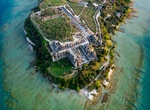
Grottoes of Catullus is the name given to the ruins of a Roman villa which was built at the end of the 1st century BC and the beginning of the 1st century AD at the northern most end of the peninsula of Sirmione on the southern shore of Lake Garda. The archaeological complex, still partially unearthed today, covers an area of about two hectares. The villa has a rectan... -
See Grotto Wall at Sparky Park, Austin, Texas
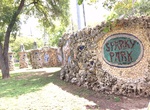
The “Grotto Wall” at Sparky Park is a display of intricate and touchable designs of trees, a globe, and the words “Sparky Park” all made from various materials including karst stones, aggregates, mirror balls, slag glass, broken dishes, ammonites, and other shells. It also includes painted stucco, petrified wood, molded cement frieze, marbles, ...


Price: $208.42