Give us feedback!


 See all
Our philosophy is simple. We want to encourage you to dream. BIG! Then we help you plan your trip, get the most out of it while you're traveling and help you share your experience with friends.
Join Now It's FREE
Dream Packages
Duration: 11 hours
Price: $110.50
Price: $110.50
Duration: 12 hours 30 minutes
Price: $104.91
Price: $104.91
Duration: 14 hours
Price: $450.00
Price: $450.00
Duration: 1 hour 30 minutes
Price: $116.91
Price: $116.91
Dreams Still To Do
Checked-Off Dreams
Dreams Still To Do
Checked-Off Dreams
Advertisement
Explore Man-Made Sites
-
Visit Ayutthaya Historical Park, Thailand (UNESCO site)
The Ayutthaya historical park covers the ruins of the old city of Ayutthaya, Thailand, which was founded by King Ramathibodi I in 1350 and was the capital of the country until its destruction by the Burmese army in 1767. In 1969 the Fine Arts Department began with renovations of the ruins, which became more serious after it was declared a historical park in 1976. The ... -
See Azeville Battery, Normandy
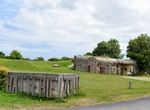
The Azeville battery was a World War II German artillery battery constructed close to the French village of Azeville in the Manche department in the Normandy region in northwestern France. It formed a part of Germany's Atlantic Wall coastal fortifications and was involved in the Normandy landings and shelled the US landing beach UTAH (15 km (9.3 mi) away) for three da... -
Shop at Azrieli Center, Tel Aviv, Israel
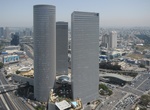
Azrieli Center is a complex of skyscrapers in Tel Aviv. At the base of the center lies a large shopping mall. The center was originally designed by Israeli-American architect Eli Attia, and after he fell out with the developer of the center David Azrieli (after whom it is named), completion of the design was passed on to the Tel Aviv firm of Moore Yaski Sivan Architec... -
See Aztec Hotel, Monrovia, California
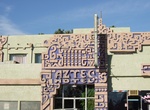
The Aztec Hotel is a historical landmark building in Monrovia, in the San Gabriel Valley, California. The hotel is an example of Mayan Revival architecture still in existence. It was designed by architect Robert Stacy-Judd, and built on U.S. Route 66 in 1924. The hotel was closed for renovations in 2012. The hotel has a revivalist style that mixes an abstraction from ... -
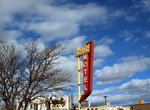
See Aztec Motel Sign, Albuquerque, New Mexico
The Aztec Motel, also known as the Aztec Auto Court or Aztec Lodge, was a historic motel located on former U.S. Route 66 in the Upper Nob Hill neighborhood of Albuquerque, New Mexico, United States. It was demolished in 2011 despite being the oldest continuously-operating Route 66 motel in New Mexico and "one of the five most important motels left" in Albuquerque. The... -
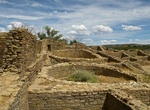
Explore Aztec Ruins National Monument, New Mexico (UNESCO Site)
The Aztec Ruins National Monument preserves ancestral Pueblo structures in north-western New Mexico, United States, located close to the town of Aztec and northeast of Farmington, near the Animas River. Salmon Ruins and Heritage Park, with more ancestral Pueblo structures, lies a short distance to the south, just west of Bloomfield near the San Juan River. The buildin... -
See Aztec Sun Stone (Piedra del Sol), National Museum of Anthropology, Mexico City, Mexico
The Aztec sun stone (Spanish:Piedra del Sol) is a late post-classic Mexica sculpture housed in the National Anthropology Museum in Mexico City, and is perhaps the most famous work of Mexica sculpture. It measures 3.6 metres (12 ft) in diameter and 98 centimetres (39 in) thick, and weighs 24,590 kg (54,210 lb). Shortly after the Spanish conquest, the monolithic sculptu... -
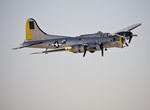
Fly in a B-17
The Boeing B-17, nicknamed the “Flying Fortress”, is a four-engine heavy bomber aircraft developed in the 1930′s for the United States Air Force. From its introduction in 1938, the B-17 Flying Fortress evolved through numerous design advances. The B-17 was primarily employed by the U.S.A.F. and was given the task of destroying enemy war facilities th... -
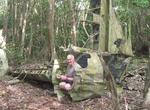
Visit B17 Bomber Wreck, Espiritu Santo, Vanuatu
Espiritu Santo is the largest of Vanuatu's many islands and the site of the biggest U.S. base in the South Pacific during World War II. One of the WWII sites is pieces of a B-17 Flying Fortress strewn in the jungle. Located not far from Luganville. It's too badly corroded to be restored or displayed, the wreck remains on the site where it crashed around 70 years ago. -
Hike to B-24 Liberator Crash Site at Fairy Lochs, Scotland
The Fairy Lochs is a recent English name forNa Lochan Sgeireachand are a small group of freshwater lochans approximately 2 mi (3.2 km) south-east of the village of Badachro, near Gairloch in Wester Ross, Scottish Highlands. The lochans have become known as the 'Fairy Lochs' due to their proximity to 'Sìthean Mòr' which translates as 'Big Fairy Hill'. Alt... -
Hike to B24 Liberator Crash Site (Guadalupe Peak), Guadalupe Mountains National Park, Texas
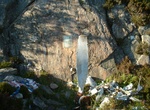
On the last day of 1943, a Consolidated B-24D left Biggs Field in El Paso, Texas, on an instrument training mission, and struck a hill west of Pine Top. The accident was attributed to icing, and all five members of the crew were killed. Extensive wreckage exists at the site today The B-24 is located in a remote location off the Bush Mountain Trail in the park's high ... -
See B-24 Liberators Crash Sites, Death Valley, Caifornia
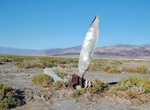
On August 1, 1944, six B-24 Liberators took off from Muroc Army Air Field for training in gunnery and formation flying. One B-24J collided with, and sheared off the tail of, a B-24D which immediately plummeted. Gunnery student Private Newton J. Steven was thrown from the B-24J and was able to parachute successfully. All the other eight aviators in the B-24J perished a... -
Fly in a B-25
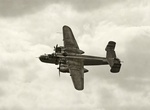
Our B-25 Mitchell, nicknamed the “Yankee Warrior”, is an American twin-engine medium bomber manufactured by North American Aviation. It was used by many Allied air forces, in every theater of World War II, as well as many other air forces after the war ended, and was utilized in service across four decades. The B-25 was named in honor of General Billy Mit... -
Visit B-29 Bleaklow Bomber (Over Exposed) Crash Site, Bleaklow, England
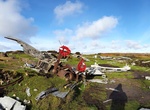
The Bleaklow Bomber was a US Air Force (USAF) Boeing RB-29A Superfortress which crashed near Higher Shelf Stones on Bleaklow in the Peak District in 1948. It was modified as a reconnaissance aircraft, rather than as a B-29 bomber. Boeing 'RB-29A 44-61999 was part of the 16th Photographic Reconnaissance Squadron, 91st Reconnaissance Group, 311th Air Division in the Str... -
Visit B-52 Lake (Huu Tiep Lake), Hanoi, Vietnam
"B-52 lake" (Hồ B-52) or Huu Tiep Lake which appears to contain part of the undercarriage section of the B-52 at the Museum. A plaque at the lake states that the aircraft was a B-52G shot down by a Surface-to-air missile (SAM) fired by the 72nd Battalion, 285th Air Defence Missile Regiment on 27 December 1972, however the only B-52s lost that day were two B-52Ds.




Price: $785.33