Give us feedback!


 See all
Our philosophy is simple. We want to encourage you to dream. BIG! Then we help you plan your trip, get the most out of it while you're traveling and help you share your experience with friends.
Join Now It's FREE
Dream Packages
Duration: 14 hours
Price: $450.00
Price: $450.00
Duration: 5 days
Price: $918.22
Price: $918.22
Duration: 4 days
Price: $663.61
Price: $663.61
Duration: 3 hours
Price: $131.66
Price: $131.66
Dreams Still To Do
Checked-Off Dreams
Dreams Still To Do
Checked-Off Dreams
Advertisement
Explore Man-Made Sites
-
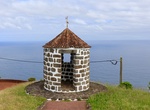
See Miradouro da Vigia das Baleias, São Miguel Island, Azores
Beautiful viewpoint on the north side of São Miguel. Nice grilling places with fireplace, running water, round benches and tables protected by a roof. -
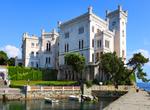
Visit Miramare Castle, Trieste, Italy
Miramare Castle is a 19th-century castle on the Gulf of Trieste near Trieste, northeastern Italy. It was built from 1856 to 1860 for Austrian Archduke Ferdinand Maximilian and his wife, Charlotte of Belgium, later Emperor Maximilian I and Empress Carlota of Mexico, based on a design by Carl Junker. The castle's grounds include an extensive cliff and seashore park of 2... -
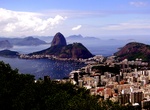
Visit Mirante Dona Marta, Rio de Janeiro, Brazil
Mirante Dona Marta is located within Parque Nacional da Tijuca in Rio de Janeiro, Brazil. The spot does not have very interesting to see and is not as high as sugar loaf or corcovado. Take a taxi to here and spend 1 minutes (have the taxi wait) - that's all you need. -
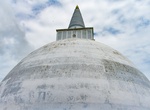
Visit Mirisawetiya Vihara, Anuradhapura, Sri Lanka
The Mirisaweti Stupa is situated in the ancient city of Anuradhapura, Sri Lanka. King Dutugamunu (161 BC to 137 BC) built the Mirisaveti Stupa after defeating King Elara. After placing the Buddha relics in the sceptre, he had gone to Tissa Wewa for a bath leaving the sceptre. After the bath he returned to the place where the sceptre was placed, and it is said that it ... -
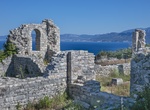
Visit Mirje, Brač Island, Croatia
Mirje (Mergi) is an archaeological site near the town of Bustier on the island of Brac, where the remains of the Benedictine monastery mentioned in the Povlianska Document can be found. -
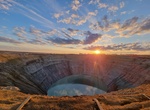
See Mir Mine, Siberia, Russia
The Mir mine, also called the Mirny mine, is an open pit diamond mine located in Mirny, Sakha Republic, in the Siberian region of eastern Russia. The mine is more than 525 meters (1,722 ft) deep (4th in the world), has a diameter of 1,200 m (3,900 ft), and is one of the largest excavated holes in the world. Open-pit mining began in 1957 and was discontinued in 2001. S... -
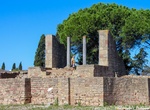
Visit Miróbriga, Santiago do Cacém, Portugal
MirobrigaorMirobriga of the Celtswas an ancient town in the westernmost part of Lusitania during the Iron Age and Roman Times that was mentioned by Pliny the Elder and Ptolemy. Despite some debate, the city is generally associated with the archaeological site ofCastelo Velho de Santiago do Cacém(Herdade dos Chão Salgados) located near the village and civ... -
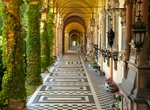
Visit Mirogoj Cemetery, Zagreb, Croatia
The Mirogoj Cemetery is a cemetery park that is considered to be among the more noteworthy landmarks in the City of Zagreb. The cemetery inters members of all religious groups: Catholic, Orthodox, Muslim, Jewish, Protestant, Latter Day Saints and irreligious graves can all be found. In the arcades are the last resting places of many famous Croatians. The cemetery was ... -
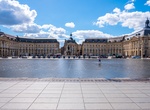
See Miroir D’Eau, Bordeaux, France
The Miroir d'eau (Water Mirror) or Miroir des Quais (Quay Mirror) in Bordeaux is the world's largest reflecting pool, covering 3,450 square metres (37,100 sq ft). Located on the quay of the Garonne in front of the Place de la Bourse, it was built in 2006. It is made of granite slabs covered by 2 cm of water. In summer, a system allows it to create fog every 15 minutes... -
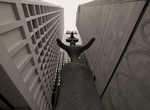
See Miró's Chicago, Chicago, Illinois
Miró's Chicago (originally called The Sun, the Moon and One Star) is a sculpture by Joan Miró. It is 39 feet (12 m) tall, and is made of steel, wire mesh, concrete, bronze, and ceramic tile. In 1969 the Brunswick Corporation commissioned a design from Miró for this sculpture, but they decided not to proceed due to the costs. This bronze model of M... -
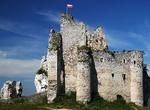
See Mirów Castle Ruins, Poland
Mirów Castle is a 14th-century castle, now ruined, located in the Mirów village, Silesian Voivodeship, Poland. It changed owners multiple times, and was finally abandoned in 1787. -
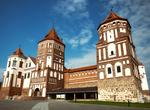
See Mirsky Castle, Belarus (UNESCO site)
The Mirsky Castle Complex, is a UNESCO World Heritage site in Belarus located in the town of Mir 29 km to the north-west from another World Heritage site, Nesvizh Castle. The construction of the castle began at the end of the 15th century, in the Gothic architecture style. Building of the castle was completed by Duke Ilinich in the early 16th century near village Mir ... -
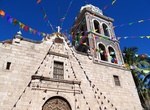
See Misión de Nuestra Señora de Loreto Conchó, Baja California, Mexico
Misión de Nuestra Señora de Loreto Conchó, or Mission Loreto, was founded on October 25, 1697 at the Monqui settlement of Conchó in the present city of Loreto, Baja California Sur, Mexico. Established by the Jesuit missionary Juan María de Salvatierra, this earliest successful mission in Baja California is sometimes considered "head ... -
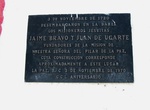
Visit Misión de Nuestra Señora del Pilar de La Paz Airapí Site, La Paz, Baja California Sur, Mexico
The seventh California mission was founded by two Jesuit padres: Jaime Bravo and Juan de Ugarte. The site was near the shore of La Paz Bay and locally known as Airapí. The journey to La Paz began at Loreto on the Jesuit ship ‘El Triunfo de la Cruz’ built in Mulegé from lumber cut in the mountains to the west. Padres Bravo and Ugarte were join... -
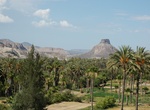
Visit Misión La Purísima Concepción de Cadegomó Ruins, Baja California Sur
Mission La Purísima, was founded west of Loreto in Baja California Sur, by the Jesuit missionary Nicolás Tamaral in 1720. By 1735 it had been moved to a new location at the Cochimí ranchería known as Cadegomó, meaning "arroyo of the carrizos", about 30 kilometers south of the original site. The mission was abandoned in 1822. In the e...
Price: $88.47