Give us feedback!


 See all
Our philosophy is simple. We want to encourage you to dream. BIG! Then we help you plan your trip, get the most out of it while you're traveling and help you share your experience with friends.
Join Now It's FREE
Dream Packages
Duration: 12 hours 30 minutes
Price: $104.91
Price: $104.91
Duration: 2 days
Price: $398.24
Price: $398.24
Duration: 3 hours
Price: $118.81
Price: $118.81
Duration: 5 days
Price: $726.42
Price: $726.42
Dreams Still To Do
Checked-Off Dreams
Dreams Still To Do
Checked-Off Dreams
Advertisement
Explore Man-Made Sites
-
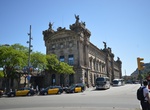
Visit Palacio de la Aduana, Málaga, Spain
Palacio de la Aduana ("Customs Palace") is a building in Málaga, Andalusia, Spain, originally a customs house for the Port of Málaga. The building was proposed by Manuel Martín Rodríguez in 1787 and approved by Charles III of Spain. Work began in 1791 under the direction of administrador general of Customs Pedro Ortega Monroy and architects... -
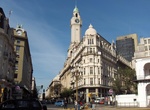
Visit Palacio de la Legislatura de la Ciudad de Buenos Aires, Buenos Aires, Argentina
The Palacio de la Legislatura de la Ciudad de Buenos Aires (Palace of the Buenos Aires City Legislature) houses the Government of the City of Buenos Aires, Argentina. It is an architectural landmark in the city's Monserrat district, situated in a triangular block bounded by the streets Calle Hipólito Yrigoyen, Avenida Presidente Julio Argentino Roca and Calle P... -
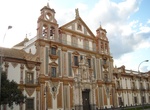
Visit Palacio de la Merced, Córdoba, Spain
The Palacio de la Merced is a historical building in Córdoba, Andalusia, southern Spain. Once home to the convent of La Merced Calzada, it is now home to the Provincial Deputy of Córdoba, a sovra-municipal services institution of the province of Córdoba. Excavations in the site have revealed the presence of ancient Roman ashlars. Later findings in... -
See Palacio de la Real Audiencia de Santiago, Santiago, Chile
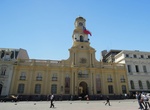
ThePalacio de la Real Audiencia de Santiago(English:Royal Court Palace or Palace of the Boxes) is a building located in the north central village of the Plaza de Armas in Santiago, Chile. The building dates back to 1808 and houses, since 1982, the National History Museum of Chile. The building was built between 1804 and 1807 to serve as the home for the royal courts o... -
See Palacio de las Garzas, Panama City, Panama
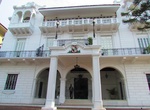
ThePalacio de las Garzas(Herons' Palace) is the governmental office and residence of the President of Panama. It receives its name because of herons roamming freely in the courtyard. The herons were first brought to the building in 1922 by former president Belisario Porras, at the suggestion of friend and famed Panamanian poet Ricardo Miro. TheSalón Amarillo(Ye... -
Visit Palacio del Gobernador, Luzon, Philippines
Palacio del Gobernador is a government building located in Intramuros, Manila, Philippines. Located across from Plaza de Roma and built in its current form in 1976. At present, the building houses the Intramuros Administration, the Commission on Elections and the Home Development Mutual Fund National Capital Region Office. It also previously housed the Bureau of the T... -
See Palacio de los López, Asunción, Paraguay
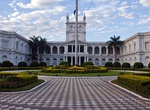
Palacio de López (Spanish for Palace of the Lopez) is a palace in Asuncion, Paraguay, that serves as workplace for the President of Paraguay, and is also the seat of the government of Paraguay. It was the home of the president Carlos Antonio Lopez the president of Paraguay, who then passed the job to his son, Francisco Solano Lopez Located in the center of Asun... -
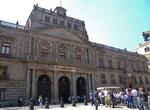
Visit Palacio de Minería, Mexico City
The Palace of Mining, also Palace of Mines, in Mexico City is one of the masterpieces of Neoclassical architecture in the Americas. It was designed and built between 1797 and 1813 by Valencian Spanish sculptor and architect Manuel Tolsá. It was built to house the Royal School of Mines and Mining of the Royal Court at the request of its director, Fausto Elhuyar,... -
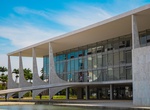
See Palácio do Planalto, Brasília, Brazil (UNESCO Site)
The Palácio do Planalto (Portuguese pronunciation: [paˈlasju du plaˈnawtu]) in Brasília is the official workplace of the president of Brazil. The building was designed by architect Oscar Niemeyer in 1958 and inaugurated on April 21, 1960. It has been the workplace of every Brazilian president since Juscelino Kubitschek. It is located at the Praça ... -
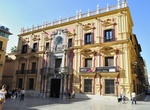
Visit Palacio Episcopal de Málaga, Málaga, Spain
Palacio Episcopal de Málaga is located in the Plaza del Obispo , very close to the Cathedral of Malaga . It was built under the patronage of Archbishop José Francisco Lasso de Castilla from the year 1762 . His traces are due to the architect Antonio Ramos , who on the death of José de Bada in 1756 continues with the works he was doing for the cath... -
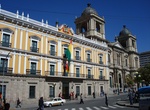
See Palacio Quemado, La Paz, Bolivia
The Bolivian Palace of Government, better known as Palacio Quemado (Spanish: [paˈlasjo keˈmaðo],Burnt Palace), was the official residence of the President of Bolivia from 1853 to 2018 and again briefly from 2019 to 2020. It is located in downtown La Paz on Plaza Murillo, next to the La Paz Cathedral and across from the Bolivian legislature. On 9 August 2018, it wa... -
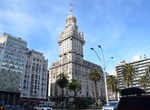
See Palacio Salvo, Montevideo, Uruguay
Palacio Salvo (Salvo Palace) is a building in Montevideo, Uruguay, located at the intersection of 18 de Julio Avenue and Plaza Independencia. It was designed by the architect Mario Palanti, an Italian immigrant living in Buenos Aires, who used a similar design for his Palacio Barolo in Buenos Aires, Argentina. Finished in 1928, Palacio Salvo stands 100 m (330&nbs... -
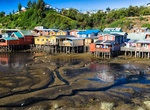
See Palafitos de Castro, Chiloé Island, Chile
Castro is famous for its palafitos, traditional wooden stilt houses which were common in many places in Chiloé. Some of them are preserved in the town district Gamboa in the west of the town in a bay called Fiordo de Castro. Boats are built in a traditional way in a wharf between the town center and Gamboa. In Gamboa there is an interesting wooden chapel as wel... -
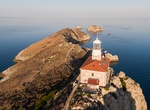
See Palagruža Lighthouse, Palagruža Island, Croatia
Palagruža Lighthouse was built in 1875 on Palagruža Island, Croatia. It's 23 m (75 ft) tall and has a range of 26 nmi (48 km). -
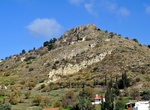
Visit Palaiochora of Aegina, Aegina Island, Saronic Islands, Greece
The ruins of Palaiochora. Walls, houses, and castle have been destroyed, only the chapels were restored. Paleochora (also Paliachora) is a medieval village of Aegina built in the 9th century; it was the capital of the island until 1826. It is located behind and above the hill of Agios Nektarios, at 7 km from the port of Aegina towards the center of the island.
Price: $131.66