Give us feedback!


 See all
Our philosophy is simple. We want to encourage you to dream. BIG! Then we help you plan your trip, get the most out of it while you're traveling and help you share your experience with friends.
Join Now It's FREE
Dream Packages
Duration: 1 hour 30 minutes
Price: $116.91
Price: $116.91
Duration: 4 days
Price: $785.33
Price: $785.33
Duration: 11 hours
Price: $208.42
Price: $208.42
Duration: 10 hours 30 minutes
Price: $207.02
Price: $207.02
Dreams Still To Do
Checked-Off Dreams
Dreams Still To Do
Checked-Off Dreams
Advertisement
Explore Man-Made Sites
-
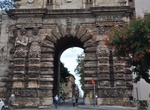
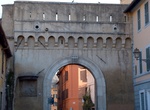
Visit Porta Nuova (Palermo), Sicily, Italy
Porta Nuova is a monumental city gate of Palermo. It represents the entrance of the Cassaro (the main and most ancient street of the city) from Corso Calatafimi (the way to Monreale) and is located beside Palazzo dei Normanni, royal palace of Palermo. The gate was built to celebrate the Charles V's conquest of Tunis (1535) and his visit to the capital of the Kingdom o... -
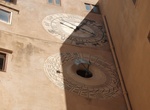
See Porta Oscura e Torre Dell'orologio, Trapani, Sicily, Italy
The old gate of the original fortified area is crowned with the astronomic clock. -
Visit Porta Pescara, Cefalù, Sicily, Italy
Porta Pescara is the only remaining of the four gates once spreading along the city’s walls. It is named after the viceroy, who had the gate restored in 1570. It is located in the old part of the city, near the beach and the old harbour. -
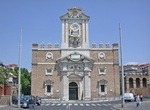
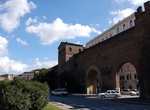
See Porta Pia, Rome, Italy
Porta Pia is a gate in the Aurelian Walls of Rome, Italy. One of Pope Pius IV's civic improvements to the city, it is named after him. Situated at the end of a new street, the Via Pia, it was designed by Michelangelo in replacement for the Porta Nomentana situated several hundred meters southwards, which was closed up at the same time. Construction began in 1561 and e... -
See Porta Pinciana, Rome, Italy
Porta Pinciana is a gate of the Aurelian Walls in Rome. The name derives from thegensPincia, who owned the eponymous hill (Pincian Hill). In ancient times it was also calledPorta Turata("Plugged Gate", for it was partially closed) andPorta Salaria vetus, as the oldest Via Salaria passed under it (theVia Salaria novapassed under the Porta Salaria). The gate was built u... -
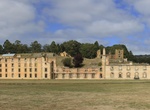
Visit Port Arthur, Tasmania, Australia (UNESCO site)
Port Arthur is a small town and former convict settlement on the Tasman Peninsula, in Tasmania, Australia. Port Arthur is one of Australia's most significant heritage areas and an open-air museum. The site forms part of the Australian Convict Sites, a World Heritage property consisting of 11 remnant penal sites originally built within the British Empire during the 18t... -
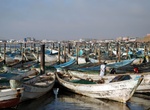
See Port Artisanal, Nouadhibou, Mauritania
Port Artisanal in Nouadhibou, Mauritania is full of fishing boats. -
See Porta San Giovanni (Rome), Italy
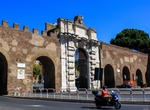
Porta San Giovanni is a gate in the Aurelian Wall of Rome, Italy, named after the nearby Basilica di San Giovanni in Laterano. It is made up of a single grand arch built for pope Gregory XIII in "opera forse" by Giacomo della Porta or, it is argued, Giacomo del Duca, who had collaborated with Michelangelo on the Porta Pia. The confusion is because the chronology of th... -
Visit Porta San Paolo (Museo della Via Ostiense), Rome, Italy
The Porta San Paolo (San Paolo Gate) is one of the southern gates in the 3rd-century Aurelian Walls of Rome, Italy. The Via Ostiense Museum (museo della Via Ostiense) is housed within the gatehouse. It is in the Ostiense quarter; just to the west is the Pyramid of Cestius, an Egyptian-style pyramid, and beyond that is the Protestant Cemetery. The original name of the ... -
Visit Porta San Sebastiano (Museum of the Walls), Rome, Italy
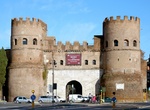
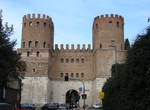
The Porta San Sebastiano is the largest and one of the best-preserved gates passing through the Aurelian Walls in Rome (Italy). Originally known as thePorta Appia, the gate sat astride the Appian Way, theregina viarum, which originated at the Porta Capena in the Servian Wall. During the Middle Ages probably it was also calledAccia(orDazzaorDatia), a name whose etymolo... -
View Lisbon from Portas do Sol, Lisbon, Portugal
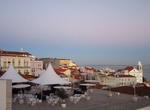
Portas do Sol is a bar and a viewpoint with outstanding view over Lisbon. Relax in the puffs provided with a tasty drink and enjoy the sunset. -
See Porta Settimiana, Rome, Italy
Porta Settimiana is one of the gates of the Aurelian walls in Rome (Italy). It rises at the northern vertex of the rough triangle traced by the town walls - built by Emperor Aurelian in the 3rd century - in the area of Trastevere an up through the Janiculum. The gate marks the beginning of Via della Lungara and is the only gate, on the right bank of the Tiber (the oth... -
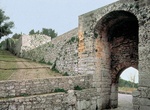
See Porta Spada, Erice, Sicily, Italy
Porta Spada, a gateway in the town's ancient defensive walls, dating from the 8th century BC. The massive stones at the base are part of the original structure. -
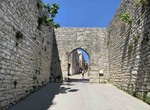
See Porta Trapani, Erice, Sicily, Italy
Porta Trapani is the main entrance gate leading to the old town. Although Erice is no longer surrounded by a wall and has several "access" streets, Porta Trapani sets a prestigious, historic entry point. -
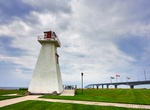
See Port Borden Front Range Lighthouse, Prince Edward Island, Canada
Port Borden Back Range Lighthouse is next to the Confederation Bridge in Prince Edward Island, Canada.
Price: $124.49