Give us feedback!


 See all
Our philosophy is simple. We want to encourage you to dream. BIG! Then we help you plan your trip, get the most out of it while you're traveling and help you share your experience with friends.
Join Now It's FREE
Dream Packages
Duration: 12 hours
Price: $124.49
Price: $124.49
Duration: 1 hour 30 minutes
Price: $116.91
Price: $116.91
Duration: 3 hours
Price: $118.81
Price: $118.81
Duration: 9 hours
Price: $135.68
Price: $135.68
Dreams Still To Do
Checked-Off Dreams
Dreams Still To Do
Checked-Off Dreams
Advertisement
Explore Man-Made Sites
-
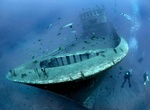
Wreck Dive Puerto del Carmen Shipwrecks, Lanzarote, Canary Islands, Spain
Off the harbour in Puerto del Carmen are the remains of six boats that can be explored. The top part of the first wreck is at a depth of about 12 metres while the bottom part which has the propeller is at a depth of about 40 metres from the surface. -
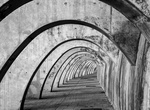
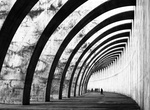
See Puerto de Málaga Arches, Málaga, Spain
The Puerto de Málaga Arches is used for boat storage but there are sections that offer a nice photo op. -
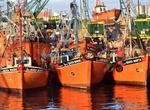
Explore Puerto de Mar del Plata, Mar del Plata, Argentina
Walk around Puerto de Mar del Plata to see fishing boats, shipwrecks, sea lions and statues. -
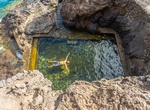
Take a Dip at Puerto de Puntagorda, La Palma Island, Canary Islands
Hike down the path to Puntagorda beach with cacti, La Palma, Canary Islands, Spain. -
Visit Puerto de Tazacorte, La Palma Island, Canary Islands
Walk the interior of the breakwater structure at Puerto de Tazacorte, La Palma, Canary islands, Spain. -
Visit Puerto Hambre, Chile
Port Famine (Puerto Hambre) is arguably Chile's oldest ghost town. It was founded in the Strait of Magellan in 1584 by Pedro Sarmiento de Gamboa. Starvation and the cold climate killed all of the inhabitants. The Englishnavigator Sir Thomas Cavendish landed at the site in 1587. He found only ruins of the settlement, and renamed the place Port Famine. Puerto Hambre, or... -
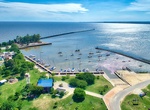
Visit Puerto Jose Carbajal (Puerto Sauce), Juan Lacaze, Uruguay
Puerto Jose Carbajal is a marina located in the port city of Juan Lacaze, Uruguay. The marina was previously known as Puerto Sauce. The reason? The existence of a large willow tree that was used to moor boats that sought refuge from great storms. It's located 35 kilometers from the city of Colonia and on the waters of the Río de la Plata. -
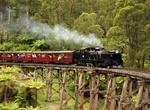
Ride Puffing Billy Railway, Dandenong Ranges, Australia
The Puffing Billy Railway is a 2 ft 6 in (762 mm) narrow gauge heritage railway in the Dandenong Ranges near Melbourne, Australia. The primary starting point, operations and administration centre, main refreshment room (also selling souvenirs) and ticket purchasing are located at Belgrave station. Journeys may also be commenced at out-stations of which some have limit... -
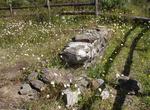
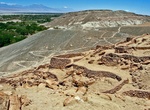
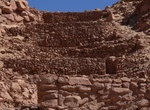
Visit Pukará de Quitor, Chile
Pukará de Quitor (also spelled Pucará de Quitor) (Quechuapukarafortress) is a pre-Columbian archaeological site in northern Chile. This stone fortress is located 3 km northwest of the town of San Pedro de Atacama, overlooking the valley of the river San Pedro. It was designated a national monument in 1982. -
Visit Pukará de Quitor, San Pedro de Atacama, Chile
Hillside archaeological site with ruins of a 12th-century stone fortress & sweeping valley views. Pukará de Quitor (also spelled Pucará de Quitor) (Quechua pukara fortress) is a pre-Columbian archaeological site in northern Chile. This stone fortress is located 3 km northwest of the town of San Pedro de Atacama, overlooking the valley of the river Sa... -
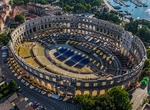
See Pula Arena, Pula, Croatia
The Pula Arena is the name of the amphitheatre located in Pula, Croatia. The Arena is the only remaining Roman amphitheatre to have four side towers and with all three Roman architectural orders entirely preserved. It was constructed in 27 BC - 68 AD and is among the six largest surviving Roman arenas in the World. A rare example among the 200 Roman surviving amphithe... -
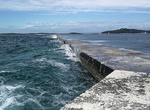
Visit Pula Breakwater (Lukobran Pula), Pula, Croatia
The Pula breakwater was built by Austria-Hungary between 1910 and 1914 with the aim of defending against enemy shipping and protecting the coast and the city from the onslaught of larger waves. It is estimated that hundreds of thousands of cubic meters of stone and tens of thousands of cubic meters ... -
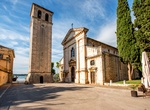
Visit Pula Cathedral, Pula
The Pula Cathedral or fully the Cathedral of the Assumption of the Blessed Virgin Mary (Croatian:Katedrala uznesenja Blažene Djevice Marije) is a co-cathedral in Pula, Croatia. Along with the Euphrasian Basilica it is one of the two official seats of the Roman Catholic Diocese of Poreč and Pula. The church is located on the south side of the Pula bay at the foot of th... -
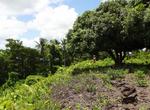
Visit Pulemelei Mound, Samoa
The Pulemelei mound (also known as Tia Seu Ancient Mound) is the largest and most ancient structure in Polynesia. It is situated in Letolo Plantation in the Palauli district, at the east end of Savai'i island in Samoa. The stone mound is a pyramid constructed of natural basalt stones and at its base measures 65m x 60m and has a height of about 12m. Excavations have r... -
Visit Pulkovo Observatory, St. Petersburg (UNESCO Site)
The Pulkovo Astronomical Observatory, the principal astronomical observatory of the Russian Academy of Sciences, located 19 km south of Saint Petersburg on Pulkovo Heights 75 metres (246 ft) above sea level. It is part of the UNESCO World Heritage Site Historic Centre of Saint Petersburg and Related Groups of Monuments. The observatory was opened in 1839. Originally, ...

Price: $450.00