Give us feedback!


 See all
Our philosophy is simple. We want to encourage you to dream. BIG! Then we help you plan your trip, get the most out of it while you're traveling and help you share your experience with friends.
Join Now It's FREE
Dream Packages
Duration: 7 days
Price: $1995.00
Price: $1995.00
Duration: 4 days
Price: $785.33
Price: $785.33
Duration: 3 hours
Price: $118.81
Price: $118.81
Duration: 11 hours
Price: $208.42
Price: $208.42
Dreams Still To Do
Checked-Off Dreams
Dreams Still To Do
Checked-Off Dreams
Advertisement
Explore Man-Made Sites
-
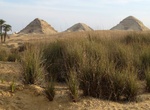
See Abu Mena, Egypt (UNESCO site)
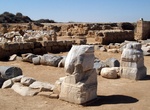
Abu Mena was a town, monastery complex and Christian pilgrimage center in Late Antique Egypt, about 45 km southwest of Alexandria. Its remains were designated a World Heritage Site in 1979. There are very few standing remains, but the foundations of most major buildings, such as the great basilica, are easily discernible. Recent agricultural efforts in the area have l... -
Visit Abu Rawash Pyramid Boat Pit, Kerdasa, Egypt
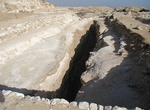
The boat pit contained red quartzite statuary fragments, including three painted heads from statues of Djedefre, one of which is believed to be the earliest known royal sphinx. -
See Abu Simbel Temple, Egypt (UNESCO site)
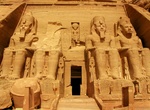
Abu Simbel temples refers to two massive rock temples in Abu Simbel in Nubia, southern Egypt on the western bank of Lake Nasser about 230 km southwest of Aswan (about 300 km by road). The complex is part of the UNESCO World Heritage Site known as the "Nubian Monuments," which run from Abu Simbel downriver to Philae (near Aswan). The twin temples were originally c... -
Visit Abusir, Egypt
Abusir is the name given to an Egyptian archaeological locality – specifically, an extensive necropolis of the Old Kingdom period, together with later additions – in the vicinity of the modern capital Cairo. The name is also that of a neighbouring village in the Nile Valley, whence the site takes its name. Abusir is located several kilometres north of Saqq... -
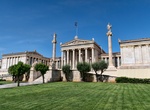
Visit Academy of Athens, Greece
The main building of the Academy of Athens was designed in a neoclassical style in 1859 CE by the Danish architect Theophil Hansen (1813-1891 CE). Construction was not completed until 1885 CE, however. Athena and Apollo stand atop the two pillars while Plato—who founded his own Academy in Athens around 387 BCE—and Socrates sit on either side of the stairwa... -
Visit Acadian Landing Site, Maine
The Acadian Landing Site, also known as the Acadian Cross Historic Shrine, is a site historically significant to the French-American Acadian population of far northern Maine. Located on the southern bank of the Saint John River east of Madawaska and marked by a large marble cross, it is the site traditionally recorded as the landing point of the first Acadians to... -
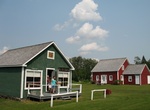
Visit Acadian Village, Van Buren, Maine
The Acadian Village is a museum of Acadian heritage on United States Route 1 in Van Buren, Maine. The museum includes a complex of six historic buildings (five authentic 19th-century structures, one a careful modern reproduction) in which the life and work of 19th-century French-Americans is showcased; this complex has been listed on the National Register of Historic ... -
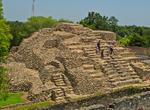
Visit Acanceh, Mexico
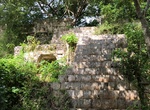
Acanceh is an ancient Maya archaeological site located in Mexico's Yucatán state. The modern town of Acanceh, where the ruins are located, is 21 kilometers from Mérida, the capital of Yucatán. Acanceh means "groan of the deer" in the Yucatec Maya language. Acanceh was founded sometime between 200 and 300, during the Early Classic period. The ancie... -
See Acanmul, Campeche, Mexico
Acanmul is a Maya archaeological site in the Mexican state of Campeche. It is located 25 km (16 mi) northeast of Campeche city. -
See Acceptance Street Sign, Greenwich Village, NYC
In honor of Pride Month, the street sign at the historic intersection of Gay and Christopher Streets in New York City’s Greenwich Village has been changed to “Acceptance Street” as part of an art installation to reflect the evolving identities of LGBTQ people. -
Visit Achilleion, Corfu, Greece
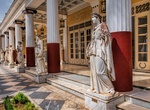
Achilleion (Greek: Αχίλλειο or Αχίλλειον) is a palace built in Gastouri (Γαστούρι) on the Island of Corfu for the Empress (German:Kaiserin) Elisabeth of Austria, also known as Sisi, after a suggestion by the Austrian consul Alexander von ... -
Visit Achzivland Az-Zeeb, Israel
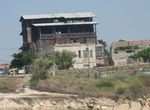
Achzivland is a one man "country" in northern Israel. Since 1971 Eli Avivi ("president") has created this tiny self declared hippy "state" with a flag (of a mermaid), a national "anthem" (the sound of the sea) and a constitution declaring the president democratically elected by his own vote (never actually cast). Az-Zeeb or al-Zib was a Palestinian Arab village locate... -
See Acid Ball, Wayfront Park, Bellingham, Washington
The Acid Ball was built in 1938 and used by Georgia-Pacific to hold liquid and gas from broken-down wood chips. The Acid Ball, weighing over 430,000 pounds and measuring over 32 feet in diameter. -
See Ackers Cottage, Stewart Island, New Zealand
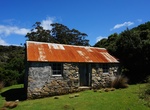
Lewis Acker's stone house in Harrold Bay is the oldest European building on Stewart Island / Rakiura and was built around 1836. -
See Ackers Point Lighthouse, Stewart Island, New Zealand
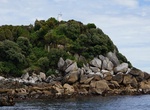
Ackers Point Lighthouse has views of Foveaux Strait and the chance to see blue penguins and a titi (muttonbird) colony.



Price: $450.00