Give us feedback!


 See all
Our philosophy is simple. We want to encourage you to dream. BIG! Then we help you plan your trip, get the most out of it while you're traveling and help you share your experience with friends.
Join Now It's FREE
Dream Packages
Duration: 10 hours 30 minutes
Price: $207.02
Price: $207.02
Duration: 3 hours
Price: $131.66
Price: $131.66
Duration: 12 hours 30 minutes
Price: $104.91
Price: $104.91
Duration: 7 days
Price: $1995.00
Price: $1995.00
Dreams Still To Do
Checked-Off Dreams
Dreams Still To Do
Checked-Off Dreams
Advertisement
Explore Man-Made Sites
-
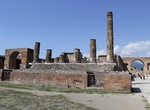
Visit Temple of Jupiter (Pompeii), Italy
The Temple of Jupiter, Capitolium, or Temple of the Capitoline Triad, was a temple in Roman Pompeii, at the north end of its forum. Initially dedicated to Jupiter alone, it was built in the mid-2nd century BC at the same time as the temple of Apollo was being renovated - this was the area at which Roman influence over Pompeii increased and so Roman Jupiter superseded ... -
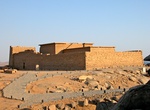
Visit Temple of Kalabsha, Egypt
The Temple of Kalabsha (also Temple of Mandulis) is an Ancient Egyptian temple that was originally located at Bab al-Kalabsha (Gate of Kalabsha), approximately 50 km south of Aswan. The temple was situated on the west bank of the Nile River, in Nubia, and was originally built around 30 BC during the early Roman era. While the temple was constructed in Augustus's reign... -
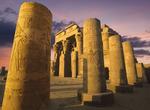
Visit Temple of Kom Ombo, Egypt
The Temple of Kom Ombo is an unusual double temple built during the Ptolemaic dynasty in the Egyptian town of Kom Ombo. Some additions to it were later made during the Roman period. The building is unique because its 'double' design meant that there were courts, halls, sanctuaries and rooms duplicated for two sets of gods. The southern half of the temple was dedicated... -
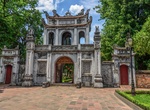
Visit Temple of Literature, Hanoi, Viet Nam
The Temple of Literature is a Temple of Confucius in Hanoi, northern Vietnam. The temple hosts the Imperial Academy (Quốc Tử Giám, 國子監), Vietnam's first national university. The temple was built in 1070 at the time of Emperor Lý Thánh Tông. It is one of several temples in Vietnam which is dedicated to Confucius, sages and scholars. The templ... -
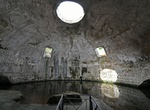
Visit Temple of Mercury, Baiae, Naples, Italy
The so-called "Temple of Mercury" contains a large 21.5 m (71 ft) diameter dome, the largest in the world prior to the construction of Rome's Pantheon in 128 AD. The dome has a central hole or oculus, four square skylights, was made with large tuff blocks, and is the oldest known surviving dome made of concrete. Built in the 1st century BC during the late Roman Republ... -
Visit Temple of Mercury (Puy de Dôme), France
The Temple of Mercury was a Roman sanctuary in Puy de Dôme, dedicated to Mercury. The temple was founded during the 1st century and active until at least the 3rd century. Since 1875, substantial excavations has been made on the site. -
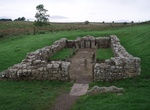
Visit Temple of Mithras, Carrawburgh (Hadrian's Wall), Simonburn, Hexham, UK
Carrawburgh is a settlement in Northumberland. In Roman times, it was the site of a 3+1⁄2-acre (1.5 ha) auxiliary fort on Hadrian's Wall called Brocolitia, Procolita, or Brocolita. This name is probably based on the Celtic name for the place, and one possible translation put forward is 'badger holes'. The fort there was a mile or so west of the Wall's nor... -
Visit Temple of Montu (Medamud), Luxor, Egypt
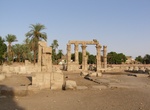
The Temple of Montu (also Temple of Monthu, Montju, or Menthu) is an Egyptian temple dedicated to the worship of Montu. The site is located 5 kilometres (3.1 mi) northeast of Karnak, which is located within Luxor. Medamud was excavated by French archaeologist Fernand Bisson de la Roque from 1925 to the post-war, and revealed many buildings including a temple dedicated... -
See Temple of Olympian Zeus, Agrigento, Sicily, Italy
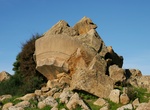
The Temple of Olympian Zeus (or Olympeion; known in Italian as the Tempio di Giove Olimpico) in Agrigento, Sicily was the largest Doric temple ever constructed, although it was never completed and now lies in ruins. It stands in the Valle dei Templi with a number of other major Greek temples. The history of the temple is unclear, but it was probably founded to commemo... -
Visit Temple of Poseidon, Greece
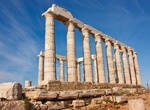
Cape Sounion is a promontory located 69 kilometres (43 mi) SSE of Athens, at the southernmost tip of the Attica peninsula in Greece. The cape is noted as the site of ruins of an ancient Greek temple of Poseidon, the god of the sea in classical mythology. The remains are perched on the headland, surrounded on three sides by the sea. The ruins bear the deeply engraved n... -
See Temple of San Felipe Neri "La Profesa", Mexico City
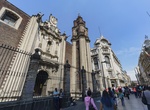
The Temple of San Felipe Neri, commonly known as "La Profesa" (English: the Professed house), is a Roman Catholic parish church that was established by the Society of Jesus late in the 16th century as the church of a community of professed Jesuits. The church is considered to be an important transitional work between the more sober or moderate Baroque style of the 17t... -
Visit Temple of Sangri (Demeter), Naxos, Greece
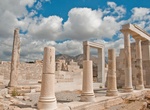
The Temple of Sangri is a Late Archaic Greek temple on the Cycladic island of Naxos in the area of Gyroulas, about 1.5 km south of Ano Sangri. The temple was built around 530 BC and is one of the earliest Ionic temples. It was built completely from Naxian marble. The temple was built around 530 BC. Based on the finds, the sanctuary was probably dedicated to Demeter or... -
Visit Temple of Seti I, Abydos
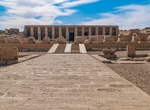
The temple of Seti I also known as the Great Temple of Abydos is one of the main historical sites in Abydos. The temple was built by pharaoh Seti I. At the rear of the temple there is the Osireion. The temple is also notable for the Abydos graffiti, ancient Phoenician and Aramaic graffiti found on the temple walls. The temple was described by pioneer archaeologist Fli... -
See Temple of the Condor, Machu Picchu, Peru
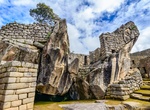
The Temple of The Condor is one of the most iconic temples located within the Inca city. It's a breathtaking example of Inca stonemasonry. On the floor of the temple is a rock carved in the shape of the condor's head and neck feathers, completing the figure of a three-dimensional bird. Historians speculate that the head of the condor was used as a sacrificial altar. ... -
Visit Temple of the Feathered Serpent (Temple of Quetzalcoatl), Teotihuacán, Mexico
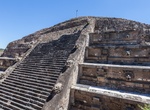
The Temple of the Feathered Serpent is the third largest pyramid at Teotihuacan, a pre-Columbian site in central Mexico (the termTeotihuacan, orTeotihuacano, is also used for the whole civilization and cultural complex associated with the site). This structure is notable partly due to the discovery in the 1980s of more than a hundred possibly sacrificial victims found...
Price: $116.91