Give us feedback!
Our philosophy is simple. We want to encourage you to dream. BIG! Then we help you plan your trip, get the most out of it while you're traveling and help you share your experience with friends.
Join Now It's FREE
Dream Packages
See all
Related Categories
- Birding Hot Spots
- Bureau of Land Management (BLM)
- Other US Parks & Sites
- Safari Destinations
- Top Camping Sites
- United States Fish and Wildlife Service (USFWS)
- United States Forest Service (USFS)
- US Historical Parks (NHP)
- US Historic Sites (NHS)
- US National Monuments
- US National Parks
- US National Preserves
- US NPS Units
- US States
Dreams Still To Do
Checked-Off Dreams
Dreams Still To Do
Checked-Off Dreams
Advertisement
Explore US National Wildlife Refuges
-
Birding at Gravel Island National Wildlife Refuge, Wisconsin
Gravel Island National Wildlife Refuge is a National Wildlife Refuge located off the Door Peninsula in Wisconsin. Founded in 1913 the refuge consists of two Lake Michigan islands, that act as nesting grounds for native bird species. The refuge is part of the Wisconsin Islands Wilderness Area, and as such it is off-limits to the public to preserve the habitat of the is... -
Birding at Grays Harbor National Wildlife Refuge, Washington
Grays Harbor National Wildlife Refuge is located within Grays Harbor, at the mouth of the Chehalis River, which makes up the second largest watershed in Washington. It is one of four major staging areas for migrating shorebirds in the Pacific Flyway. Up to one million shorebirds gather here in spring and fall to feed and rest. Grays Harbor is designated as a Western H... -
Birding at Great Dismal Swamp National Wildlife Refuge, North Carolina and Virginia
The Great Dismal Swamp National Wildlife Refuge was created to help protect and preserve a portion of the Great Dismal Swamp, a marshy region on the Coastal Plain of southeastern Virginia and northeastern North Carolina between Norfolk, Virginia, and Elizabeth City, North Carolina. Many mammals, including black bears, bobcats, otters, andweasels along with over 70 sp... -
Explore Great Swamp National Wildlife Refuge, New Jersey
The Great Swamp National Wildlife Refuge is located in Morris County, New Jersey. Established in 1960, as the first federal wilderness area, it now is among what has grown to be more than 550 refuges in the United States National Wildlife Refuge System. The initial portion of the Great Swamp that was assembled and donated for perpetual preservation by the park service... -
Birding at Great White Heron National Wildlife Refuge, Florida
The Great White Heron National Wildlife Refuge is located in a region known as the 'Backcountry', which reaches from north of Marathon to north of Key West. It is along the north side of the Keys in that area that border the Gulf of Mexico. The 130,187 acre (527 km2) refuge (6,207 acres (25 km2) of it land, 123,980 (502 km2) water) was established on October 27, 1938,... -
Birding at Green Bay National Wildlife Refuge, Wisconsin
Green Bay National Wildlife Refuge consists of Hog Island (2 acres), Plum Island (325 acres), and Pilot Island (3.7 acres). The islands are located in Lake Michigan, near Washington Island, off the tip of Wisconsin’s Door Peninsula. The Green Bay National Wildlife Refuge is also a safe haven for multiple species of wildlife, specifically birds. This refuge was s... -
Explore Green Cay National Wildlife Refuge, Saint Croix, USVI
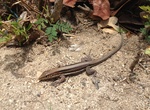
Green Cay National Wildlife Refuge, just north of Saint Croix, U.S. Virgin Islands, preserves habitat for the largest remaining population of endangered Saint Croix ground lizard (Ameiva polops). Much smaller populations of ground lizard live on nearby Protestant Cay and on Ruth Island. Its extirpation from the mainland of St. Croix is generally attributed to the intr... -
Explore Guam National Wildlife Refuge (Ritidian Point)
The Guam National Wildlife Refuge protects Ritidian Point and unused military land in the United States territory of Guam. The focus of much of the efforts involves the suppression of invasive exotics to protect endemic species. The reserve consists of eight mostly non-contiguous units. Ritidian Point is at the far northern point of Guam and is the only unit open to t... -
Explore Hackmatack National Wildlife Refuge, Illinois & Wisconsin
The Hackmatack National Wildlife Refuge is a United States national wildlife refuge that includes noncontiguous properties, especially tallgrass prairie patches, wetland properties, and oak savanna parcels, located in the northwestern region of the Chicago metropolitan area and the southern part of the Milwaukee area. The Hackmatack NWR was officially established when... -
Birding at Hakalau Forest National Wildlife Refuge, Big Island, Hawaii
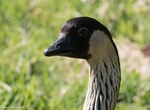
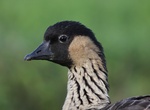
Some of the best birding in Hawaii can be found at Hakalau Forest National Wildlife Refuge, a protected area on the Big Island of Hawaii. Eight of the 14 native bird species occurring at Hakalau are endangered. Thirteen migratory bird species and 20 introduced species, including eight game birds, as well as the endangered ʻopeʻapeʻa (Hawaiian hoary bat, Lasiurus ... -
Explore Hanalei National Wildlife Refuge, Kauaʻi, Hawaii
The Hanalei National Wildlife Refuge is a National Wildlife Refuge on the island of Kauaʻi in Hawaiʻi. It is located within the Hanalei River Valley along the island's northern shore. The Refuge was established on 30 November 1972 for the conservation of endangered plants and animals, especially the Hawaiian stilt, Hawaiian coot, Hawaiian gallinule and Hawaiian d... -
Explore Hanford Reach National Monument, Washington
The Hanford Reach National Monument is a national monument in the U.S. State of Washington. It was created in 2000, mostly from the former security buffer surrounding the Hanford Nuclear Reservation (Hanford Site). The area has been untouched by development or agriculture since 1943. The monument is named after the Hanford Reach, the last non-tidal, free-flowing secti... -
Explore Hart Mountain National Antelope Refuge, Oregon
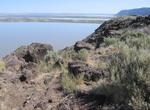
Hart Mountain National Antelope Refuge is a National Wildlife Refuge on Hart Mountain in southeastern Oregon, which protects more than 422 square miles (1,090 km2) and more than 300 species of wildlife, including pronghorn, bighorn sheep, mule deer, sage grouse, and redband trout. The refuge, created in 1936 as a range for remnant herds of pronghorn, spans habitats ra... -
Explore Havasu National Wildlife Refuge (Topock Gorge), Arizona & California
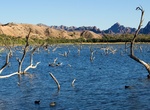
Havasu National Wildlife Refuge is a U.S. National Wildlife Refuge on the lower Colorado River in Arizona and California. It preserves habitat for desert bighorn sheep to the endangered southwestern willow flycatcher, birds and other animals. The refuge protects 30 river miles - 300 miles (480 km) of shoreline - from Needles, California, to Lake Havasu City, Arizona. ... -
Birding at Hopper Mountain National Wildlife Refuge, California
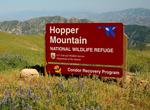
Hopper Mountain National Wildlife Refuge is located in Ventura County, in southern California. It is bordered by the Los Padres National Forest and the Sespe Condor Sanctuary to the north. The 2,471-acre (10.00 km2) refuge was established in 1974 to protect the endangered California condor, its habitat, and other wildlife resources. The refuge is in rugged, mountainou...

Price: $334.68