Give us feedback!
Our philosophy is simple. We want to encourage you to dream. BIG! Then we help you plan your trip, get the most out of it while you're traveling and help you share your experience with friends.
Join Now It's FREE
Dream Packages
See all
Related Categories
- Birding Hot Spots
- Bureau of Land Management (BLM)
- Other US Parks & Sites
- Safari Destinations
- Top Camping Sites
- United States Fish and Wildlife Service (USFWS)
- United States Forest Service (USFS)
- US Historical Parks (NHP)
- US Historic Sites (NHS)
- US National Monuments
- US National Parks
- US National Preserves
- US NPS Units
- US States
Dreams Still To Do
Checked-Off Dreams
Dreams Still To Do
Checked-Off Dreams
Advertisement
Explore US National Wildlife Refuges
-
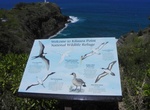
Birding at Kīlauea Point National Wildlife Refuge, Kauai, Hawaii
Kīlauea Point National Wildlife Refuge is a National Wildlife Refuge on the rugged northwest coast of the island of Kauai in Hawaii. This spot has one of Hawaii's largest gatherings of nesting seabirds. The refuge was established in 1985 to preserve and enhance seabird nesting colonies after the property was transferred from the United States Coast Guard. In 1988, the... -
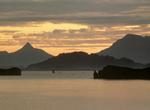
Explore Kodiak National Wildlife Refuge, Alaska
The Kodiak National Wildlife Refuge is a United States National Wildlife Refuge in the Kodiak Archipelago in southwestern Alaska, United States. The Kodiak National Wildlife Refuge includes the southwestern two-thirds of Kodiak Island, Uganik Island, the Red Peaks area of Afognak Island and all of Ban Island in the archipelago. It encompasses 1,990,418 acres. The refu... -
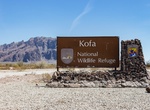
Explore Kofa National Wildlife Refuge, Arizona
The Kofa National Wildlife Refuge is located northeast of Yuma, Arizona, southeast of Quartzsite, Arizona, in the southwestern United States. The refuge was established in 1939 to protect Desert Bighorn Sheep, encompasses over 665,400 acres (2,693 km2) of the Yuma Desert region of the Sonoran Desert. Broad, gently sloping foothills as well as the sharp, needlepoint pe... -
Birding at Kootenai National Wildlife Refuge, Idaho
Kootenai National Wildlife Refuge in Idaho is known for the magnificent tundra swans winter at this refuge. The refuge provides diverse habitats that consist primarily of wetlands with associated uplands, and hardwood/conifer forests. Although the purpose of the refuge is to provide migration habitat for thousands of waterfowl, more than 300 species of vertebrates, in... -
Birding at Koyukuk National Wildlife Refuge, Alaska
The 3,500,000-acre Koyukuk National Wildlife Refuge lies within the floodplain of the Koyukuk River, in a basin that extends from the Yukon River to the Purcell Mountains and the foothills of the Brooks Range. This region of wetlands is home to fish, waterfowl, beaver and moose, and wooded lowlands where bears, wolves, lynx and marten prowl. The 750,000-acre (3,000 km... -
Visit Kure Atoll (Ocean Island), Northwestern Hawaiian Islands
Kure Atoll or Ocean Island is an atoll in the Pacific Ocean 48 nautical miles (89 km; 55 mi) beyond Midway Atoll in the Northwestern Hawaiian Islands. The only land of significant size is called Green Island and is habitat for hundreds of thousands of seabirds. A short, unused and unmaintained runway and a small abandoned Coast Guard station are located on the island.... -
Explore Lacreek National Wildlife Refuge, South Dakota
Lacreek National Wildlife Refuge is a National Wildlife Refuge of the United States located in South Dakota. It covers 16,410 acres (66.4 km2) and is managed by the United States Fish and Wildlife Service. Early conservation work to protect the area was performed by the Civilian Conservation Corps during the 1930s. A combination of wetlands, meadows and small stands o... -
Birding at Laguna Atascosa National Wildlife Refuge, Texas
Laguna Atascosa National Wildlife Refuge is the largest protected area of natural habitat left in the Lower Rio Grande Valley in Texas. It is the southernmost waterfowl refuge in the United States. It also provides habitat for 10 federally endangered or threatened species and has the most bird species documented (411 species) of any national wildlife refuge. The land... -
Visit Laysan Island (Kauō), Northwestern Hawaiian Islands
Laysan (Kauō), located 808 nautical miles (1,496 km; 930 mi) northwest of Honolulu, is one of the Northwestern Hawaiian Islands. It comprises one land mass of 1,016 acres (4.11 km2), about 1 by 1 1⁄2 miles (1.6 by 2.4 km) in size. It is an atoll of sorts, although the land completely surrounds a shallow central lake some 8 feet (2.4 m) above sea level that has a... -
Explore Little Pend Oreille National Wildlife Refuge, Washington
The Little Pend Oreille National Wildlife Refuge is a wildlife preserve, one of the national wildlife refuges operated by the United States Fish and Wildlife Service. The refuge is located east of Colville, Washington, along the west slope of the Selkirk Mountain Range. It lies mostly in eastern Stevens County, with a small part extending eastward into western Pend Or... -
Explore Loess Bluffs National Wildlife Refuge, Missouri
Loess Bluffs National Wildlife Refuge (renamed in January 2017 from Squaw Creek National Wildlife Refuge) is a National Wildlife Refuge in northwestern Missouri, United States, established in 1935 by President Franklin D. Roosevelt as a refuge and breeding ground for migratory birds and other wildlife. The refuge comprises 7,350 acres (30 km2) along the eastern edge o... -
Explore Lone Peak Wilderness, Utah
The Lone Peak Wilderness is a 30,088-acre (121.76 km2) wilderness area located within the Uinta and the Wasatch-Cache National Forest in the U.S. state of Utah. The Lone Peak Wilderness was established in 1978 as part of the Endangered American Wilderness Act and was the only designated wilderness area in Utah until the enactment of the Utah Wilderness Act of 1984. Si... -
Birding at Long Lake National Wildlife Refuge, North Dakota
Long Lake National Wildlife Refuge, located in south-central North Dakota, was established in 1932 as a migratory bird refuge by President Herbert Hoover. The Refuge was listed as a top 10 birding site by Wildbird Magazine. The shallow depths and lengths of meandering shoreline provide vast expanses of habitat that attract migrating and nesting species of waterfowl, s... -
Birding at Lower Klamath National Wildlife Refuge, California and Oregon
The Lower Klamath National Wildlife Refuge (NWR) is located in the Klamath Basin along a portion of the northern California and southern Oregon border near Klamath Falls, Oregon. Significant species include: American bald eagle, Golden eagle, American white pelican, White-faced ibis Snow geese, Ross’ geese, white-frontedgeese, Canada geese, Peregrine falcon, Pin... -
Birding at Lower Rio Grande Valley National Wildlife Refuge, Texas
The Lower Rio Grande Valley National Wildlife Refuge is a 90,788-acre (367.41 km2) National Wildlife Refuge located in southern Texas along the international border between the United States and Mexico. Only 5% of the native landscape remains on the lower Rio Grande and its nearby reaches, yet the diversity within these fragments adds up to an astonishing 1,200 types ...
Price: $334.68