Give us feedback!
Our philosophy is simple. We want to encourage you to dream. BIG! Then we help you plan your trip, get the most out of it while you're traveling and help you share your experience with friends.
Join Now It's FREE
Dream Packages
See all
Related Categories
- Birding Hot Spots
- Bureau of Land Management (BLM)
- Other US Parks & Sites
- Safari Destinations
- Top Camping Sites
- United States Fish and Wildlife Service (USFWS)
- United States Forest Service (USFS)
- US Historical Parks (NHP)
- US Historic Sites (NHS)
- US National Monuments
- US National Parks
- US National Preserves
- US NPS Units
- US States
Dreams Still To Do
Checked-Off Dreams
Dreams Still To Do
Checked-Off Dreams
Advertisement
Explore US National Wildlife Refuges
-
Birding at Horicon National Wildlife Refuge, Wisconsin
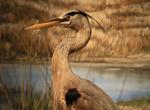
Horicon Marsh is a marsh located in northern Dodge and southern Fond du Lac counties of Wisconsin. It is the site of both a national and state wildlife refuge. The extinct glacial lake is the largest freshwater cattail marsh in the United States. The refuges are known for their many species of birds, especially ducks, great blue herons, and Canada geese (which have be... -
Bird Watching Hulēʻia National Wildlife Refuge, Kauai, Hawaii
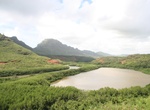
The Hulēʻia National Wildlife Refuge is a National Wildlife Refuge on the island of Kauaʻi in Hawaiʻi. It is adjacent to the Menehune Fish Pond, listed on the National Register of Historic Places, on the southeast side of the island. The Hulēʻia Refuge is approximately 241 acres (98 ha) of bottomlands and wooded slopes along the Hulēʻia River. It was established ... -
Explore Innoko National Wildlife Refuge, Alaska
The Innoko National Wildlife Refuge is a wildlife refuge in western Alaska in the United States. It consists of 3,850,481 acres of which 1,240,000 acres is designated a wilderness area. It is the fifth-largest National Wildlife Refuge in the United States. The refuge is administered from offices in McGrath. The wildlife refuge is in two parts. The northern part of the... -
Birding at Iroquois National Wildlife Refuge, New York
The Iroquois National Wildlife Refuge is a wildlife refuge located in Genesee and Orleans Counties in the western part of New York. The refuge comprises 10,828 acres (43.82 km2) consisting of several large pools (separated by dikes), swamps, meadows, fields, and woodlands. There are four overlooks, and four trails which are open year round. All areas of the refuge, ex... -
Birding at Izembek National Wildlife Refuge, Alaska
The Izembek National Wildlife Refuge is the smallest of the National Wildlife Refuges located in Alaska. It lies on the northwest (Bering Sea) coastal side of central Aleutians East Borough. Most of the refuge (300,000 acres) was designated as Wilderness in 1980 under the Alaska National Interest Lands Conservation Act. The refuge is administered from offices in Cold ... -
Explore James Campbell National Wildlife Refuge, Oahu, Hawaii
James Campbell National Wildlife Refuge is a National Wildlife Refuge on the island of Oʻahu, Hawaii. It was established in 1976, to permanently protect an ecologically-intact unit and to provide habitat for native and migratory fauna and native flora. It established critical habitat for Hawaii's four endangered waterbirds, theʻalae kea (Hawaiian coot, Fulica alai), k... -
Visit Jarvis Island National Monument
Jarvis Island (formerly known as Bunker Island) is an uninhabited 4.5 square kilometer (1.75 sq. mile) coral island located in the South Pacific Ocean about halfway between Hawaii and the Cook Islands. It is an unincorporated, unorganized territory of the United States, administered by the United States Fish and Wildlife Service of the United States Department of the ... -
Explore J. Clark Salyer National Wildlife Refuge, North Dakota
J. Clark Salyer National Wildlife Refuge is located along the Souris River in Bottineau and McHenry Counties in north-central North Dakota. The refuge of 58,693 acres (237.5 km2) extends from the Manitoba border southward for approximately 45 miles (72 km) in an area which was once Glacial Lake Souris. The area is old lake bottom and has extremely flat topography and ... -
Birding at J. N. "Ding" Darling National Wildlife Refuge, Florida
The J. N. "Ding" Darling National Wildlife Refuge is part of the United States National Wildlife Refuge System, located in southwestern Florida, on Sanibel Island in the Gulf of Mexico. It is named for the cartoonist Jay Norwood "Ding" Darling. The 5200 acre (21 km2) refuge was established in 1976, to protect one of the country's largest undeveloped mangrove ecosystem... -
Visit Johnston Atoll National Monument
Johnston Atoll is a 1.03 sq mi (2.7 km2) atoll in the North Pacific Ocean about 750 nmi (860 mi; 1,390 km) west of Hawaii. Johnston Atoll is a National Wildlife Refuge and is closed to public entry. Limited access for management needs is only by Letter of Authorization from the U.S. Air Force and Special Use Permit from the U.S. Fish and Wildlife Service. There are fo... -
Explore Kanuti National Wildlife Refuge, Alaska
Kanuti National Wildlife Refuge is a national wildlife refuge in central Alaska, United States. One of 16 refuges in Alaska, it was established in 1980 when Congress passed The Alaska National Interest Lands Conservation Act (ANILCA). At 1,640,000 acres (6,600 km2), Kanuti Refuge is about the size of the state of Delaware. Sitting atop the Arctic Circle, the refuge is... -
Birding at Karl E. Mundt National Wildlife Refuge, South Dakota
Karl E. Mundt National Wildlife Refuge is located mostly in the southern part of the U.S. state of South Dakota, with a small extension into northern Nebraska, and includes 1,085 acres (4.39 km2). Though the refuge is closed to the public, bird watching is available from the Ft. Randall Dam and a kiosk there provides information for the best times and locations for vi... -
Birding at Kealia Pond National Wildlife Refuge, Maui, Hawaii
Kealia Pond National Wildlife Refuge is a coastal salt marsh along the south-central coast of the Hawaiian Island of Maui. The refuge is located between the towns of Kīhei and Māʻalaea, on both sides of North Kihei Road, Route 31. A new boardwalk and 14-stall parking lot opened on North Kihei Road on September 8, 2009. The area encompasses the bird sanctuary next to S... -
Explore Kenai National Wildlife Refuge, Alaska
The Kenai National Wildlife Refuge is a 1.92 million acre wildlife preserve located on the Kenai Peninsula of Alaska. The refuge was created in 1941 as the Kenai Moose Range, but in 1980 it was changed to its present status by the Alaska National Interest Lands Conservation Act. There is a wide variety of terrain in the refuge, including muskeg and other wetlands, alp... -
Birding at Key West National Wildlife Refuge, Florida
The Key West National Wildlife Refuge is a 189,497 acre National Wildlife Refuge located in Monroe County, Florida, between Key West, Florida and the Dry Tortugas . Only 2,019 acres of land are above sea level, on several keys within the refuge. These keys are unpopulated and are also designated as Wilderness within the Florida Keys Wilderness. The refuge was establis...
Price: $334.68