Give us feedback!


 See all
Our philosophy is simple. We want to encourage you to dream. BIG! Then we help you plan your trip, get the most out of it while you're traveling and help you share your experience with friends.
Join Now It's FREE
Dream Packages
Duration: 9 hours
Price: $111.00
Price: $111.00
Duration: 9 hours
Price: $135.68
Price: $135.68
Duration: 10 hours
Price: $157.00
Price: $157.00
Duration: 3 hours 30 minutes
Price: $247.14
Price: $247.14
Dreams Still To Do
Checked-Off Dreams
Dreams Still To Do
Checked-Off Dreams
Advertisement
Explore Ancient Places & Ruins
-
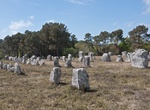
Visit Kerlescan Alignments (Alignements de Kerlescan), Carnac, France
A smaller group of 555 stones, further to the east of the other two sites. It is composed of 13 lines with a total length of about 800 metres (2,600 ft), ranging in height from 80 cm (2 ft 7 in) to 4 m (13 ft).[15] At the extreme west, where the stones are tallest, there is a stone circle which has 39 stones. There may also be another stone circle to the north. -
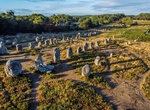
Visit Kermario Alignment (Alignements de Kermario), Carnac, France
This fan-like layout recurs a little further along to the east in theKermario(House of the Dead)alignment. It consists of 1029 stones in ten columns, about 1,300 m (4,300 ft) in length. A stone circle to the east end, where the stones are shorter, was revealed by aerial photography. In 2025, the site was designated as a World Heritage Site by UNESCO as part of Megali... -
Visit Kernavė, Lithuania (UNESCO site)
Kernavė was a medieval capital of the Grand Duchy of Lithuania and today is a tourist attraction and an archeological site. It is located in the Širvintos district municipality located in southeast Lithuania. A Lithuanian state cultural reserve was established in Kernavė in 2003. Kernavė is situated near the bend of the Neris and the Pajauta valley, next to the... -
Visit Khami Ruins National Monument, Zimbabwe (UNESCO site)
Khami is a ruined city located in what is now Zimbabwe. It was once the capital of the Kingdom of Butua. It is located 22 kilometers west of the modern city of Bulawayo, capital of the province of Matabeleland North. Its ruins are now a national monument in Zimbabwe. Khami is also a UNESCO World Heritage Site. It was added to UNESCO's World Heritage List in 1986. The ... -
Visit Khar Balgas (Ordu-Baliq), Mongolia (UNESCO site)
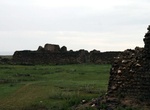
Ordu-Baliq (meaning "city of the court", "city of the army"), also known as Mubalik and Karabalghasun, was the capital of the first Uyghur Empire, built on the site of the former Göktürk imperial capital, 17 km north-to-northeast of the later Mongol capital, Karakorum. Its ruins are known as Kharbalgas in Mongolian, that is, "black city". They form part of t... -
Visit Khirbet Beit Lei, Israel
Khirbet Beit Lei or Beth Loya is an archaeological tell in the Judean lowlands of Israel. It is located about 5.5 km southeast of Beth Guvrin and ten miles west-northwest of Hebron, on a hill 400 m above sea level. An Iron Age II burial cave was discovered to contain an inscription with one of the oldest known appearances in Hebrew of the name "Jerusalem". Khirbet Bei... -
Visit Khirbet ed-Dharih, Jordon
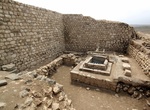
Khirbet ed-Dharih (Arabic: خربة الذريح) is an archaeological site including a Nabataean settlement and religious sanctuary outside of Petra, Jordan. The site is located in southern Jordan, in the city of Tafileh, 100 km north of Petra. The earliest signs of human habitation at the site are from the Neoli... -
Visit Khirbet et-Tannur, Jordan
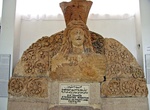
Khirbet et-Tannur (Arabic: خربة التنور) is an ancient Nabataean temple situated on top of Jebel Tannur, in today's Jordan. Based on the cults statues iconography, whether the temple was dedicated to the fertility goddess Atargatis and Zeus-Hadad, or perhaps other gods of their own in that form is not yet certain. The only inscription which mentioned a deity was in ref... -
See Khirokitia (Choirokoitia), Cyprus (UNESCO site)
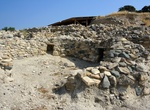
Khirokitia (Choirokoitia) is an archaeological site on the island of Cyprus dating from the Neolithic age. It has been listed as a World Heritage Site by UNESCO since 1998. The site is known as one of the most important and best preserved prehistoric sites of the eastern Mediterranean. Much of its importance lies in the evidence of an organised functional society... -
Visit Khor Rori (Sumhuram), Oman (UNESCO site)
Khor Rori is an Early South Arabian archaeological site near Salalah in the Dhofar region of modern Oman. The small fortified town was founded as an outpost for the kingdom of Hadramawt in modern Yemen around the turn of our era, but the site shows signs of Hadrami settlement back to the third century CE. The settlement was probably abandoned in the seventh century. O... -
See Kilchurn Castle, Scotland
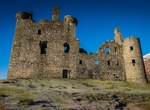
Kilchurn Castle is a ruined 15th and 17th century structure on a rocky peninsula at the northeastern end of Loch Awe, in Argyll and Bute, Scotland. Access to the Castle is sometimes restricted by higher-than-usual levels of water in the Loch, at which times the site effectively becomes a temporary island. It was the ancestral home of the Campbells of Glen Orchy, who l... -
Visit Kildrummy Castle, Aberdeenshire, Scotland
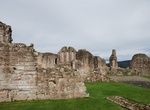
Kildrummy Castle is a ruined castle near Kildrummy, in Aberdeenshire, Scotland. Though ruined, it is one of the most extensive castles dating from the 13th century to survive in eastern Scotland, and was the seat of the Earls of Mar. It is owned today by Historic Scotland and open to the public. Kildrummy Castle is "shield-shaped" in plan with a number of independent ... -
Visit Killarney National Park, Ireland (UNESCO site)
Killarney National Park is located beside the town of Killarney, County Kerry, Ireland. It was the first national park established in Ireland, created when Muckross Estate was donated to the Irish state in 1932. It has Ireland's only native herd of Red Deer and the most extensive covering of native forest remaining in Ireland. The park is of high ecological value beca... -
Visit Kin Kletso, Chaco Culture National Historical Park, New Mexico
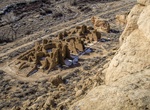
Kin Kletso is a Chacoan Anasazi great house and notable archaeological site located in Chaco Culture National Historical Park, located 25 miles southwest of Nageezi, New Mexico, U.S.. It was a medium-sized great house located 0.5 miles (0.8 m) west of Pueblo Bonito; it shows strong evidence of construction and occupation by Pueblo peoples who migrated to Chaco from th... -
Visit Kinloss Abbey, Moray, Scotland
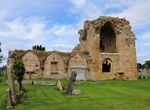
Kinloss Abbey is a Cistercian abbey at Kinloss in the county of Moray, Scotland. The abbey was founded in 1150 by King David I and was first colonised by monks from Melrose Abbey. It received its Papal Bull from Pope Alexander III in 1174, and later came under the protection of the Bishop of Moray in 1187. The abbey went on to become one of the largest and wealthiest ...

Price: $104.91