Give us feedback!


 See all
Our philosophy is simple. We want to encourage you to dream. BIG! Then we help you plan your trip, get the most out of it while you're traveling and help you share your experience with friends.
Join Now It's FREE
Dream Packages
Duration: 2 days
Price: $331.50
Price: $331.50
Duration: 11 hours
Price: $208.42
Price: $208.42
Duration: 12 hours
Price: $124.49
Price: $124.49
Duration: 4 hours
Price: $520.24
Price: $520.24
Dreams Still To Do
Checked-Off Dreams
Dreams Still To Do
Checked-Off Dreams
Advertisement
Explore Ancient Places & Ruins
-
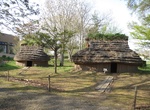
Visit Kitakogane Site, Hokkaidō, Japan (UNESCO Site)
The Jomon culture developed approximately 15,000 years ago characterized by the use of pottery across the Japanese Archipelago, including Hokkaido. A lot of Jomon archaeological sites have been found in Hokkaido, and we can learn about the life and society of the Jomon people through these sites. -
Visit Kition, Larnaca, Cyprus
Kition was an ancient Phoenician and Greek city-kingdom on the southern coast of Cyprus (in present-day Larnaca), one of the Ten city-kingdoms of Cyprus. The name of the city comes from the Phoenician 𐤊𐤕𐤉 (KTY, pronounced Kitiya). This name was borrowed into Ancient Greek as Kítion (Κίτιον) and thence into Latin as Citium.[better&... -
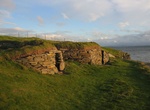
Visit Knap Of Howar, Scotland
At Knap of Howar on the island of Papa Westray in Orkney, Scotland, a Neolithic farmstead may be the oldest preserved stone house in northern Europe. Radiocarbon dating shows that it was occupied from 3700 BC to 2800 BC, earlier than the similar houses in the settlement at Skara Brae on the Orkney Mainland. The farmstead consists of two adjacent rounded rectangular th... -
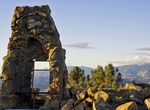
Explore Knapp's Castle, Santa Barbara, California
Knapp's Castle is a landmark ruined mansion in the Santa Ynez Mountains near Santa Barbara, California. Located near East Camino Cielo in the Los Padres National Forest, the ridge-top site has a panoramic view of Lake Cachuma and the Santa Ynez Valley. It is a popular destination for hikers and photographers. George Owen Knapp, founder of Union Carbide, built Knapp's ... -
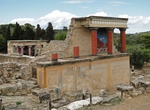
Visit Knossos Palace, Crete, Greece
Knossos or Knossos Palace is the largest Bronze Age archaeological site on Crete and probably the ceremonial and political centre of the Minoan civilization and culture. The palace appears as a maze of workrooms, living spaces, and store rooms close to a central square. Detailed images of Cretan life in the late Bronze Age are provided by images on the walls of this p... -
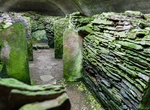
Explore Knowe of Yarso Chambered Cairn, Orkney, Scotland
Knowe of Yarso chambered cairn is a Neolithic burial monument located on the island of Rousay in Orkney, Scotland. The site was excavated in the 1930s, and uncovered human and animal bones as well as pottery sherds, flint and bone tools, and arrowheads. The tomb, dating to the period between 3500 and 2500 BC, is a stalled chambered cairn, similar to Midhowe and Blackh... -
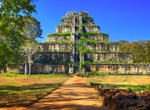
Visit Koh Ker, Cambodia (UNESCO Site)
Koh Ker is a remote archaeological site in northern Cambodia about 120 kilometres (75 mi) away from Siem Reap and the ancient site of Angkor. It is a very jungle filled region that is sparsely populated. More than 180 sanctuaries were found in a protected area of 81 square kilometres (31 sq mi). Only about two dozen monuments can be visited by tourists because most of... -
See Kokino, North Macedonia
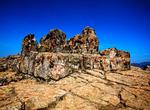
Kokino is an important archaeological site and a megalithic observatory discovered in 2001 by archeologist Jovica Stankovski in the northeastern Republic of Macedonia, approximately 30 km from the town of Kumanovo, near the village of Staro Nagoričane. It is situated 1030 m above sea level on the Tatikjev Kamen Summit and covers an area of a 100-meter radius. The site... -
Visit Komakino Site, Aomori, Japan (UNESCO Site)
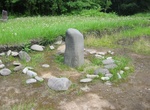
The Komakino Site (小牧野遺跡,Komakino iseki) is an archaeological site located in the city of Aomori, Aomori Prefecture, in the Tōhoku region of northern Japan containing the ruins of a late Jōmon period (approx. 2000 – 1500 BC) settlement. The remains were designated a National Historic Site in 1995 by the Japanese government. The site is located a short distance (... -
See Kondoa Rock-Art Sites, Tanzania (UNESCO site)
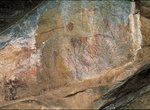
The Kondoa rock art sites are a series of caves carved into the side of a hill looking out over the steppe, c. nine kilometres off the main highway from Kondoa to Arusha, about 20 km north of Kondoa, in Tanzania. The caves contain paintings, some of which are believed by the Tanzania Antiquities Department to date back more than 1500 years. The paintings depict elonga... -
Visit Korazim (Chorazin) National Park, Sea of Galilee, Israel
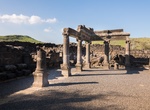
Chorazin was an ancient village in the Korazim Plateau in the Galilee, two and a half miles from Capernaum on a hill above the northern shore of the Sea of Galilee. Chorazin, along with Bethsaida and Capernaum, was named in the gospels of Matthew and Luke as "cities" (more likely just villages) in which Jesus performed mighty works. However, because these towns reject... -
Visit Korekawa Site, Hachinohe, Japan (UNESCO Site)
The Korekawa Site (是川遺跡,Korekawa iseki) is an archaeological site in the city of Hachinohe, Aomori Prefecture, in the Tōhoku region of northern Japan containing the ruins of a middle to late Jōmon period (3000-1000 BC) settlement. The remains were designated a National Historic Site in 1957 by the Japanese government. It is also referred to as the "Korekawa Stone Age ... -
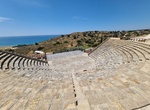
Visit Kourion, Cyprus
Kourion (Curias) was a city in Cyprus, which endured from antiquity until the early Middle Ages. Kourion is situated on the south shores of the island to the west of the river Lycus (now called Kouris), 16 M. P. from Amathus. (Peut. Tab.), and was recorded by numerous ancient authors including Ptolemy (v. 14. § 2), Stephanus of Byzantium, Hierocles, and Pliny the... -
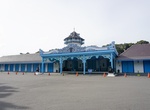
Visit Kraton Surakarta, Java, Indonesia
Kraton Surakarta, established in 1745, used to be a hub of an empire and now is a ruined palace. The main building to visit is the Sasono Sewoko museum. Its exhibits contain a variety of bronze figures, antiques, weapons and many other objects which were used by royalties. It’s good to visit with a guide, English speaking available, as the descriptions are limit... -
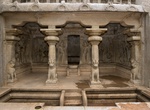
Visit Krishna Cave Temple, India (UNESCO Site)
Krishna Cave Temple (also known as Mandapa of Krishna and Krishna Mandapam) is a monument at Mahabalipuram, on the Coromandel Coast of the Bay of Bengal, in the Kancheepuram district of the state of Tamil Nadu, India. It is an artificial rock-cut mandapa, and one of the Cave Temples of Mahabalipuram dedicated to Lord Krishna. Part of the Group of Monuments at Mahabali...
Price: $135.68