Give us feedback!


 See all
Our philosophy is simple. We want to encourage you to dream. BIG! Then we help you plan your trip, get the most out of it while you're traveling and help you share your experience with friends.
Join Now It's FREE
Dream Packages
Duration: 2 days
Price: $213.74
Price: $213.74
Duration: 2 days
Price: $335.27
Price: $335.27
Duration: 4 hours 30 minutes
Price: $33.00
Price: $33.00
Duration: 5 days
Price: $707.35
Price: $707.35
Dreams Still To Do
Checked-Off Dreams
Dreams Still To Do
Checked-Off Dreams
Advertisement
Explore Ancient Places & Ruins
-
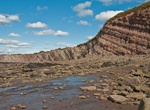
See Joggins Fossil Cliffs, Nova Scotia, Canada (UNESCO site)
Joggins is a Canadian rural community located in western Cumberland County, Nova Scotia. On July 7, 2008 a 15 km length of the coast comprising the Joggins Fossil Cliffs was officially inscribed on the World Heritage List. Joggins is famous for its record of fossils dating to the Pennsylvanian "Coal Age" of earth history, approximately 310 million years ago. The drama... -
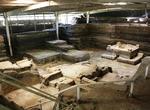
Visit Joya de Cerén, El Salvador (UNESCO site)
Joya de Cerén (Jewel of Cerén) is an archaeological site in El Salvador featuring a pre-Columbian Maya farming village preserved remarkably intact under layers of volcanic ash. It is often referred to as the "Pompeii of the Americas" in comparison to the famous Ancient Roman ruins. A small farming community inhabited as early as 900 BC, Cerén was ... -
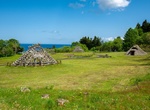
Visit Kakinoshima Site, Hakodate, Oshima Subprefecture, Japan (UNESCO Site)
The Kakinoshima Site (垣ノ島遺跡,Kakinoshima iseki) is an archaeological site consisting of a series of large shell middens and the remains of an adjacent settlement from the Jōmon period. The site is in what is now part of the city of Hakodate in Oshima Subprefecture on the island of Hokkaido in northern Japan. It has been protected by the central government as a Historic... -
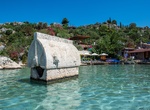
See Kaleköy Lycian Thomb, Demre/Antalya, Türkiye
This is a sunken Lycian tombs from the ancient city of Simena that sits off the coast of the fishing village of Kalekoy in Turkey. -
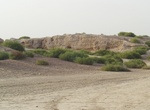
Visit Kalibangan, India
Kalibangān is a town located on the left or southern banks of the Ghaggar (Ghaggar-Hakra River), identified by some scholars with Sarasvati River in Tehsil Pilibangān, between Suratgarh and Hanumāngarh in Hanumangarh district, Rajasthan, India 205 km. from Bikaner. It is also identified as being established in the triangle of land at the confluence of Drishadvati and ... -
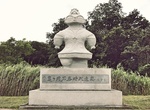
Visit Kamegaoka Stone Age Site, Tsugaru, Japan (UNESCO Site)
The Kamegaoka Site (亀ヶ岡石器時代遺跡,Kamegaoka sekki-jidai iseki) is an archaeological site in what is now part of the city of Tsugaru, Aomori Prefecture, in the Tōhoku region of northern Japan, containing the ruins of a Jōmon period settlement. The remains were designated a National Historic Site in 1944 by the Japanese government. It is also referred to as the "Kamegaoka S... -
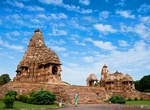
Visit Kandariya Mahadeva Temple, India (UNESCO site)
The Kaṇḍāriyā Mahādeva Temple is the largest and most ornate Hindu temple in the medieval temple group found at Khajuraho in Madhya Pradesh, India. It is considered one of the best examples of temples preserved from the medieval period in India. Khajuraho was once the religious capital of the Chandela Rajputs and today is one of the most popular tourist destinations i... -
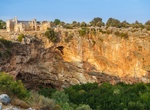
Explore Kanlıdivane, Mersin Province, Turkey
Kanlıdivane (ancientCanytelis, Greek: Κανυτελής) is an ancient city situated around a big sinkhole in Mersin Province, Turkey. Kanlıdivane is in the rural area of Erdemli district, which is a part of Mersin Province at 36°31′32″N 34°10′45″E / 36.52556°N 34.17917°E / 36.52556; 34.1... -
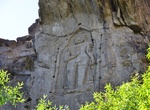
See Kargah Buddha (Buddha De Yasheni), Gilgit, Gilgit−Baltistan, Pakistan
Kargah Buddha is an archaeological site located about 6 miles (9.7 km) outside of Gilgit, Gilgit−Baltistan, Pakistan. It is a carved image of a large standing Buddha, some 50 ft (15 m) high, in the cliff-face in Kargah Nala. The carving, which is in a style also found in Baltistan, is estimated to date back to the 7th century. The image is surrounded by the hole... -
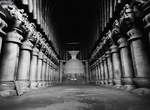
Visit Karla Caves, Karla, Lonavala, Maharashtra, India
The Karla Caves, Karli Caves, Karle Caves or Karla Cells, are a complex of ancient Buddhist Indian rock-cut caves at Karli near Lonavala, Maharashtra. It is just 10.9 Kilometers away from Lonavala. Other caves in the area are Bhaja Caves, Patan Buddhist Cave, Bedse Caves and Nasik Caves. The shrines were developed over the period from the 2nd century BCE to the 5th ce... -
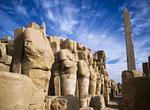
Visit Karnak Temple, Luxor, Egypt (UNESCO site)
The Karnak Temple Complex —usually called Karnak — comprises a vast mix of decayed temples, chapels, pylons, and other buildings. Building at the complex began in the reign of Sesostris I in the Middle Kingdom and continued into the Ptolemaic period, although most of the extant buildings date from the New Kingdom. The area around Karnak was the ancient Egy... -
Explore Kbal Spean, Siem Reap, Cambodia
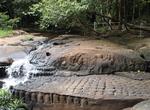
Kbal Spean ("Bridge Head") is an Angkorian era archaeological site on the southwest slopes of the Kulen Hills to the northeast of Angkor in Siem Reap District, Siem Reap Province, Cambodia. It is situated along a 50 metres (160 ft) stretch of the Stung Kbal Spean River, 25 kilometres (16 mi) from the main Angkor group of monuments. The site consists of a series of sto... -
Hike to Keet Seel Cliff Dwellings (Broken Pottery), Navajo National Monument
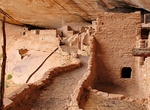
Keet Seel is one of the best preserved ancestral pueblo villages in the Southwest. The site is located 8.5 miles from the Visitor Center. The hike is rugged, strenuous and begins at elevation 7300 feet (2225.04 m) above sea level. Allow at least 4-6 hours hiking time each way, 30 minutes to rest and have lunch, and about one hour to tour Keet Seel. The trail is marked... -
Visit Kenmare Stone Circle, Kenmare, Ireland
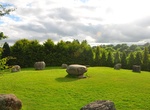
Kenmare Stone Circle is one of the largest stone circles in the south-west of Ireland is close to the town, and shows occupation in the area going back to the Bronze Age (2,200–500 B.C), when it was constructed. The circle has 15 stones around the circumference with a boulder dolmen in the centre. -
Visit Kerkuane, Tunisia (UNESCO site)
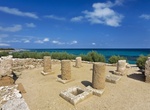
Kerkouane (Kerkuane) is a Punic city in northeastern Tunisia, near Cape Bon. This Phoenician city was probably abandoned during the First Punic War (c. 250 B.C.), and as a result was not rebuilt by the Romans. It had existed for almost 400 years. Excavations of the town have revealed ruins from the 4th and 3rd Centuries BC. Around the site where the layout is cle...
Price: $575.00