Give us feedback!


 See all
Our philosophy is simple. We want to encourage you to dream. BIG! Then we help you plan your trip, get the most out of it while you're traveling and help you share your experience with friends.
Join Now It's FREE
Dream Packages
Duration: 14 hours
Price: $341.00
Price: $341.00
Duration: 12 hours
Price: $267.70
Price: $267.70
Duration: 11 hours
Price: $208.42
Price: $208.42
Duration: 3 days
Price: $618.62
Price: $618.62
Dreams Still To Do
Checked-Off Dreams
Dreams Still To Do
Checked-Off Dreams
Advertisement
Explore Ancient Places & Ruins
-
See Standing Stone at Carragh Bhàn & Ruins of Finlaggan, Islay, Scotland
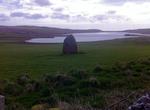
Finlaggan is a historic site on Eilean Mòr in Loch Finlaggan. Loch, island, and castle lie around two km to the northwest of Ballygrant on Islay. Near Finlaggan is a standing stone at Carragh Bhàn, said to mark the grave of Godred Crovan, King of the Isles Finlaggan was the seat of the Lords of the Isles and of Clan Donald. Two of the three islands that ... -
Visit Standing Stones of Stenness, Scotland (UNESCO site)
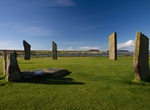
The Standing Stones of Stenness form an impressive Neolithic monument on the mainland of Orkney, Scotland. Various traditions associated with the stones survived into the modern era and they form part of the Heart of Neolithic Orkney World Heritage Site. They are looked after by Historic Scotland. The surviving stones are sited on a promontory at the south bank o... -
See Stanton Drew Stone Circles, England
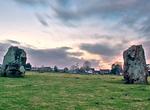
The Stanton Drew stone is just outside the village of Stanton Drew, Somerset. The largest stone circle is the Great Circle, 113 m in diameter and the second largest stone circle in Britain (after Avebury). The Great Circle probably consisted of 30 stones, of which 27 survive today, and was surrounded by the ditch (approximately 135m outer diameter — now filled i... -
Explore Stanydale Temple, Shetland, Scotland
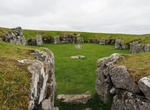
Stanydale Temple is a Neolithic site on Mainland, Shetland, Scotland. It is located in a field to the south of the modern village of Stanydale, roughly 21 miles (34 km) by road northwest of Lerwick, to the northeast of the village of Gruting. Once a roofed building, all that remains is a large, walled enclosure. There is uncertainty about the original purpose of the b... -
Explore Stari Grad Plain, Hvar Island, Croatia (UNESCO site)
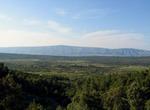
The Stari Grad Plain on the island of Hvar is an agricultural landscape that was set up by the ancient Greek colonists in the 4th century BC, and remains in use today. The plain is generally still in its original form. The ancient layout has been preserved by careful maintenance of the stone walls over 24 centuries, along with the stone shelters (known locally as trim... -
Visit St Bridget's Kirk, Dalgety Bay, Fife, Scotland
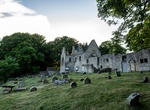
St. Bridget's Kirk is a ruined church on the outskirts of Dalgety Bay, Fife, Scotland. It is a shell of a medieval church, dating back at least as far as 1178, and was altered in the 17th century for Protestant worship. It has been a ruin since the 19th century. The church was part of the old village of Dalgety, and the ruins are the only surviving feature of it. It w... -
See St Cadfan's Church & Cadfan Stone, Tywyn, Wales
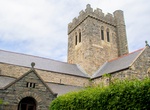
St Cadfan's Church (Welsh:Eglwys Cadfan) is situated in Tywyn in the county of Gwynedd, formerly Merionethshire, Wales. The church is noted for its Romanesque architecture and for housing the Cadfan Stone, a stone cross dating from ninth century or earlier which is inscribed with the oldest known written Welsh. Brut y Tywysogionstates that the church was sacked by Vik... -
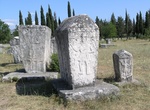
Visit Stećak Necropolis Radimlja, Stolac, Bosnia and Herzegovina
Radimlja (Serbian Cyrillic: Радимља) is a stećak necropolis located near Stolac, Bosnia and Herzegovina. It is located in Vidovo polje, 3 km west of Stolac, on the Čapljina-Stolac road. The Radimlja necropolis is one of the most valuable monuments of the medieval period in Bosnia and Herzegovina. It is protected by UNESCO and designated as a part of the World Heritage... -
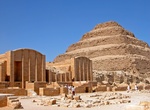
Visit Step Pyramid of Djoser, Saqqara, Egypt
The Pyramid of Djoser (Zoser), or step pyramid (kbhw-ntrwin Egyptian) is an archeological remain in the Saqqara necropolis, Egypt, northwest of the city of Memphis. It was built during the 27th century BC for the burial of Pharaoh Djoser by Imhotep, his vizier. It is the central feature of a vast mortuary complex in an enormous courtyard surrounded by ceremonial struc... -
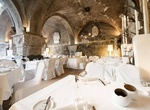
Dine at Stiftskeller St. Peter, Salzburg, Austria
Stiftskeller St. Peter is a restaurant within the monastery walls of St. Peter's Archabbey, Salzburg, Austria. It is claimed to be the oldest inn in Central Europe because of a documented mention of it by the scholar Alcuin in 803 AD. Stiftskeller St. Peter is believed to be one of the oldest continuously operating restaurants in the world, and the oldest in Europe. -
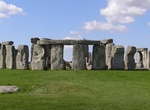
Visit Stonehenge, England (UNESCO site)
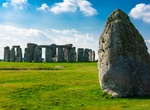
Stonehenge is a prehistoric monument located in England and is one of the most famous sites in the world. Stonehenge is composed of earthworks surrounding a circular setting of large standing stones. It is at the centre of the most dense complex of Neolithic and Bronze Age monuments in England, including several hundred burial mounds. It's located in the county of Wil... -
See Stonehenge Altar Stone, England
The Altar Stone is a recumbent central megalith at Stonehenge in England, dating to Stonehenge phase 3i, around 2600 BCE. It is identified as Stone 80 in scholarly articles. Its name probably comes from a comment by Inigo Jones who wrote: ‘... whether it might be an Altar or no I leave to the judgment of others’. The Altar Stone is made of a purplish-green... -
See Stonehenge Cursus, Stonehenge, England
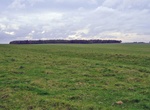
The Stonehenge Cursus (sometimes known as the Greater Cursus) is a large Neolithic cursus monument on Salisbury plain, near to Stonehenge in Wiltshire, England. It is roughly 3 kilometres (1.9 mi) long and between 100 metres (330 ft) and 150 metres (490 ft) wide. Excavations in 2007 dated the construction of the earthwork to between 3630 and 3375 BCE, ... -
See Stonehenge Station Stones, England
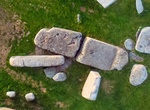
The Station Stones are elements of the prehistoric monument of Stonehenge. Originally there were four stones, resembling the four corners of a rectangle that straddles the inner sarsen circle, set just inside Stonehenge's surrounding bank. Two stood on earth mounds at opposing corners, one corner broadly in the north of the site and one in the south. The mounds are ca... -
See Stone Labyrinths of Bolshoi Zayatsky Island, Russia
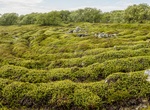
The stone labyrinths of Bolshoi Zayatsky Island are a group of 13 or 14 labyrinths on Bolshoi Zayatsky Island, one of the Solovetsky Islands in Arkhangelsk Oblast, Russia. As well as 13 or 14 labyrinths, there are more than 850 heaps of boulders on Bolshoi Zayatsky Island, plus numerous other stone settings such as a stone symbol with radial spokes, possibly represent...
Price: $337.00