Give us feedback!


 See all
Our philosophy is simple. We want to encourage you to dream. BIG! Then we help you plan your trip, get the most out of it while you're traveling and help you share your experience with friends.
Join Now It's FREE
Dream Packages
Duration: 12 hours
Price: $160.26
Price: $160.26
Duration: 11 hours
Price: $208.42
Price: $208.42
Duration: 10 hours
Price: $133.00
Price: $133.00
Duration: 2 days
Price: $213.74
Price: $213.74
Dreams Still To Do
Checked-Off Dreams
Dreams Still To Do
Checked-Off Dreams
Advertisement
Explore Ancient Places & Ruins
-
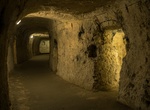
Explore St. Paul's Catacombs, Rabat, Malta
St. Paul's Catacombs are some of the most prominent features of Malta’s early Christianity archaeology. The archaeological clearing of the site has revealed an extensive system of underground galleries and tombs dating from the third to the eighth centuries CE. The site was first fully investigated in 1894 by Dr. Antonio Annetto Caruana. It is now managed by Her... -
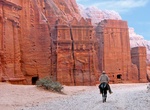
Walk Street of Façades, Petra, Jordon
The Street of Facades starts at the Treasury and is lined with tall, impressive tombs, with large facades or false faces on their fronts. This street eventually leads down into the heart of the old city. -
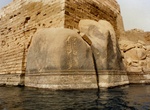
Visit St Simeon Monastery, Aswan, Egypt
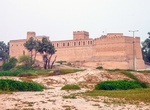
St Simeon's Monastery is located opposite the southern tip of Elephantine Island. This ancient, abandoned fortress monastery mostly built during the 7th century and located near Aswan. The monastery was given the name St Simeon by archaeologists and travelers, but earlier Arabic and Coptic sources called it Anba Hatre (Hidra, Hadri, Hadra), after an anchorite who was... -
Visit Subashi Lost City, China (UNESCO Site)
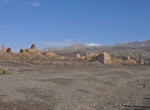
Subashi is a lost city located near Kucha in the Taklamakan Desert, on the ancient Silk Road, in the Xinjiang Uighur Autonomous Region of China. The city was partly excavated by the Japanese archaeologue Count Otani. A sarira, a Buddhist relic box of the 6th-7th century, discovered in Subashi shows Central Asian men in long tunics, reminiscent of other friezes which h... -
Visit Suburban Baths, Pompeii, Italy
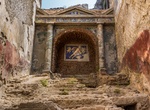
The Suburban Baths (ItalianTerme Suburbane) are a building in Pompeii, Italy, a town in the Italian region of Campania that was buried by the eruption of Mount Vesuvius in 79 AD, which consequently preserved it. The Suburban Baths were publicly owned, as were also the Stabian, Forum, and Central baths in the city. They were built in the early empire, possibly under th... -
Visit Sukuh Temple, Java, Indonesia
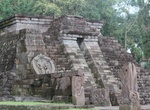
Sukuh Temple is a 15th-century Javanese-Hindu temple (candi) that is located on the western slope of Mount Lawu (elevation 910 metres (2,990 ft)) on the border between Central and East Java provinces. Sukuh temple has a distinctive thematic reliefs from other candi where life before birth and sexual education are its main theme. Its main monument is a simple pyramid s... -
See Su Nuraxi (Barumini), Sardinia, Italy (UNESCO site)
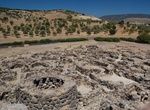
Su Nuraxi is a nuragic archaeological site in Barumini, Sardinia, Italy. It was inscribed on the UNESCO list of World Heritage Sites in 1997 as Su Nuraxi di Barumini. The complex is centered around a three-story tower built around the 16th century BC. At this site Italian archaeologist Giovanni Lilliu discovered a fortified village that at times had been covered by gr... -
Explore Susa, Iran (UNESCO Site)
Susa was an ancient city of the Elamite, First Persian Empire and Parthian empires of Iran. It is located in the lower Zagros Mountains about 250 km (160 mi) east of the Tigris River, between the Karkheh and Dez Rivers. The modern Iranian town of Shush is located at the site of ancient Susa. Shush is the administrative capital of the Shush County of Iran's Khuzestan p... -
Visit Sutz-Lattrigen–Rütte, Switzerland (UNESCO site)
Sutz-Lattrigen is a municipality in the Biel/Bienne administrative district in the canton of Bern in Switzerland. It is home to a number of Neolithic and Bronze Age lake shore archeological sites, including one that is part of a UNESCO World Heritage Site. It is home to the Sutz-Lattrigen–Rütte prehistoric pile-dwelling (or stilt house) settlement that is p... -
Visit Tabun Cave, Mount Carmel, Israel (UNESCO site)
The Tabun Cave is an excavated cave located at Mount Carmel, Israel, which was occupied intermittently during the Lower and Middle Paleolithic ages (500,000 to around 40,000 years ago). In the course of this period, deposits of sand, silt and clay of up to 25 meters accumulated in the cave. Excavation suggests that it features one of the longest sequences of human occ... -
Visit Ta' Cenc Dolmen, Gozo, Malta
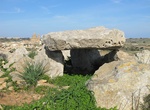
Ta' Cenc is the junction point of two alignments on Gozo. It overlooks the Xewkiga Church (The third largest dome in Christiandom and itself built over a dolmen), behind which lies the Ggantija/ Xarghra complex. The three form an alignment across the island of Gozo. It also forms an alignment to the Qala Menhir through the Tal-Qighan cluster of megaliths. -
See Tadrart Acacus Rock-Art Sites, Libya (UNESCO site)
The Acacus Mountains or Tadrart Acacus form a mountain range in the desert of western Libya, part of the Sahara. They are situated east of the Libyan city of Ghat and stretch north from the Algerian border about 100 km. Tadrart means 'mountain' in the native language of the area (Tamahaq language). The area has a particularly rich array of prehistoric rock art. The Ac... -
Explore Tak'alik Ab'aj, Guatemala (UNESCO Site)
Tak'alik Ab'aj is a pre-Columbian archaeological site in Guatemala. It was formerly known as Abaj Takalik; its ancient name may have been Kooja. It is one of several Mesoamerican sites with both Olmec and Maya features. The site flourished in the Preclassic and Classic periods, from the 9th century BC through to at least the 10th century AD, and was an important centr... -
See Ta Keo Temple, Angkor, Cambodia
Ta Keo is a temple-mountain in Angkor (Cambodia), possibly the first to be built entirely of sandstone by Khmers. Ta Keo had to be the state temple of Jayavarman V, son of Rajendravarman, who had built Pre Rup. Like Pre Rup, it has five sanctuary towers arranged in a quincunx, built on the uppermost level of five-tier pyramid consisting of overlapping terraces (a step... -
Visit Takht-e Soleyman, Iran (UNESCO site)
Taxte Soleymān ("Throne of Solomon") is an archaeological site in West Azarbaijan, Iran. It lies midway between Urmia and Hamadan, very near the present-day town of Takab, and 400 km (250 miles) west of Tehran. The originally fortified site, which is located on a crater rim, was recognized as a World Heritage Site in July 2003. The citadel includes the remains of a Zo...


Price: $111.00