Give us feedback!
Our philosophy is simple. We want to encourage you to dream. BIG! Then we help you plan your trip, get the most out of it while you're traveling and help you share your experience with friends.
Join Now It's FREE
Dreams Still To Do
Checked-Off Dreams
Dreams Still To Do
Checked-Off Dreams
Advertisement
Explore Landmarks (Natural)
-
Hear The Taos Hum
The Taos hum is a mysterious low-frequency humming, rumbling, or droning noise that can only be heard by 2-11% of the population. The essential element that defines the Hum is what is perceived as a persistent low-frequency sound, often described as being comparable to that of a distant diesel engine idling, or to some similar low-pitched sound for which obvious sourc... -
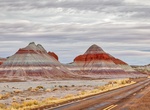
See The Teepees at Petrified Forest National Park, Arizona
The Teepees at Petrified Forest National Park are a few tall, cone-shaped hills striped with almost perfect layers of reds, pinks, blues, greys, purples, and white. -
See The Telescope Tree, Mariposa Grove, Yosemite National Park, California
The Telescope tree is a giant sequoia tree that has become completely hollow from repeated fires through the decades. Despite that, the tree is still living, as giant sequoias do not require a whole trunk to survive. It is possible to walk inside the tree and, from there, see the sky. This condition leaves the tree weakened and makes it more difficult for it to withst... -
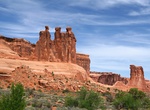
See The Three Gossips, Arches National Park
The Three Gossips is a mid-sized sandstone tower in Arches National Park. -
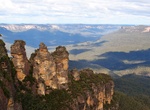
See The Three Sisters, Blue Mountains, Australia
The Three Sisters is a rock formation in the Blue Mountains are close to the town of Katoomba and are one of the Blue Mountains' best known sites, towering above the Jamison Valley. Their names are Meehni (922 m), Wimlah (918 m), and Gunnedoo (906 m). From nearby Echo Point, a bushwalking trail leads to the Three Sisters and down to the valley floor via more than 800 ... -
See The Three Sisters, Goblin Valley State Park, Utah
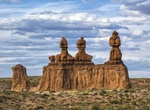
The Three Sisters is the most iconic of all goblin formations within the park, and is found on many of the souvenir items available in the visitor center. Most visitors snap a photograph of it as they drive toward the observation point. For those wishing for a closer look, an unmarked but easy-to-follow trail does exist. Simply pull off into one of the nearby parking ... -
See The Three Sisters, Red Hill Marina County Park, Salton Sea, California
The Three Sisters (one has become the falling down drunk sister) islocated in Red Hill Marina County Park, Salton Sea, California. -
See The Thumb, Monument Valley, Arizona
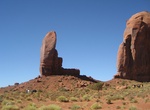
The Thumb is a protruding rock at the southeast corner of Camel Butte in Monument Valley, Arizona -
See The Thumb, San Rafael Swell, Utah
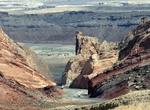
Rock formation along I-70 in eastern end of the San Rafael Swell west of Green River, Utah. -
Kayak or Swim The Tunnel, Amalfi Coast, Italy
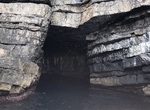
Kayak or Swim "The Tunnel" just west of Grand Hotel Tritone. -
See The Twelve Apostles, Port Campbell National Park, Australia
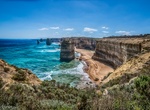
The Twelve Apostles is a collection of limestone stacks off the shore of the Port Campbell National Park, by the Great Ocean Road in Victoria, Australia. Their proximity to one another has made the site a popular tourist attraction. The Twelve Apostles is a collection of eight miocene limestone rock stacks jutting from the water in Port Campbell National Park, between... -
Hike to The Wainstones, North York Moors National Park, England
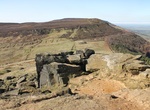
The Wainstones are impressive sandstone crags that are the largest such group in the North York Moors. Great place to see the sun go down on the Summer Solstice. -
See The Wain Stones (Kissing Rocks), Glossop, England
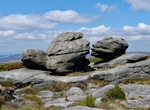
At the right angle they look like they're kissing! But only from the right angle. Just off the Pennine Way near Bleaklow Head. These rocks were christened "The Kiss" by A W Wainwright. -
Explore The Wairarapa, New Zealand
The Wairarapa (/ˌwaɪrəˈræpə/; Māori pronunciation: [ˈwaiɾaɾapa]), a geographical region of New Zealand, lies in the south-eastern corner of the North Island, east of metropolitan Wellington and south-west of the Hawke's Bay Region. It is lightly populated, having several rural service towns, with Masterton being the la... -
Explore The Whangie, Kilpatrick Hills, Scotland
The Kilpatrick Hills are a part of the Clyde Plateau Lavas. These are about 340 million years old. Basaltic types of rocks (lavas, tuffs and agglomerates) predominate here. These are produced by denudation of the successive flows. The Whangie in the north of the Kilpatricks is of particular interest to geologists and casual walkers alike. It consists of a slice of th...