Give us feedback!
Our philosophy is simple. We want to encourage you to dream. BIG! Then we help you plan your trip, get the most out of it while you're traveling and help you share your experience with friends.
Join Now It's FREE
Dreams Still To Do
Checked-Off Dreams
Dreams Still To Do
Checked-Off Dreams
Advertisement
Explore Landmarks (Natural)
-
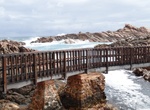
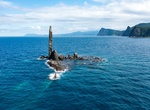
See Canal Rocks, Western Australia
Canal Rocks is a series of granite rocks in the Indian Ocean just off the coast situated approximately 4 kilometres (2 mi) south of Yallingup in the South West region of Western Australia. The Noongar name for this place is Winjee Sam. The rock formation takes its name from the narrow channel between the rocks that has formed from the coastal waters eroding the granit... -
See Canary Island Pine Tree (Heritage Tree #14), Coronado, California
Located in the rear yard of 1517 Ynez Place, was designated a Heritage Tree on May 20, 2021, the first Pinus Canariensis so designated in the City. Native to the outer Canary Islands in the Atlantic Ocean, it is a subtropical evergreen pine. This majestic tree stands about eighty feet tall, the approximate maximum height for this species and is visible from as far awa... -
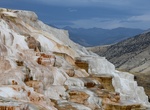
See Canary Spring, Mammoth Hot Springs, Yellowstone National Park, Wyoming
This spring occasionally goes dormant for brief periods of time. Vibrant pinks and neons are sometimes seen. -
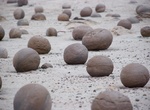
See Cancha de Bochas (Bowls Pitch), Ischigualasto Provincial Park, Argentina
Cancha de bochas (Bowls Pitch) are round stones were formed below the ground and uncovered as the dusty surface eroded in Ischigualasto Provincial Park, Argentina. -
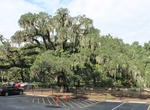
See Candler Oak Tree, Savannah, Georgia
The Candler Oak Tree is located in Savannah, Georgia, United States, and is estimated to have been growing since the 1700s, making it one of the oldest living landmarks in the area. It is 54 feet (16.5 meters) tall, has a circumference of 17 ft (5.2 m) and a 63-inch (160 cm) diameter. Its average crown spread is 110 ft (34 m). The largest tree in Georgia is located of... -
See Candle Rock, Yoichi, Hokkaido, Japan
Tall cooled lava spindle resembling a melting candle, standing 500 meters from the coast. -
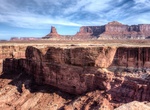
See Candlestick Tower, Canyonlands National Park, Utah
Candlestick Tower is a isolated pinnacle of Wingate sandstone surrounded by open plains, north of Soda Springs Basin in Canyonlands National Park. -
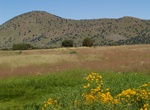
Explore Canelo Hills Cienega Reserve, Sonoita, Arizona
The Canelo Hills Cienega Reserve, is a nature preserve southeast of Sonoita, Arizona on the east side of the Canelo Hills. The area's 260 acres (110 ha) are a mix of rare cienega wetland and black oak and Arizona fescue fields. The preserve is notable for the extremely rare Canelo ladies tresses orchid (Spiranthes delitescens) and the Gila chub and Gila sucker that gr... -
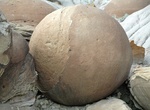
Visit Cannonball Concretions Pullout, Theodore Roosevelt National Park, North Dakota
Cannonball Concretions Pullout is located along the North Unit Scenic Drive in Theodore Roosevelt National Park. This boulder is known as a "concretion". The concretions are formed within sedementary rocks such as shale or sandstone. They form as minerals are deposited around a core. As the surrounding rocks erode, the "cannon balls" become exposed. -
Off-road to Cannonball Wash & Diablo Formation, California
Off-road to the aptly named Cannonball Wash where an amazing collection of large and small, sometimes-round, sometimes very oddly-shaped concretions . -
Visit Cañón De Guadalupe, Baja California
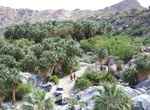
Just 50 miles from the California border crossing, Guadalupe Canyon Oasis Hot Springs and Nature Reserve has often been described as a paradise or utopia, owing to its surreal and heavenly environment. Neither words or photographs alone, however, can describe the inspiring beauty of this secluded oasis. Enjoy the desert sunset and sunrise, green palm trees and the sul... -
Hike Cañon de Guadalupe (Guadalupe Canyon), Baja California
This paradise is a lush oasis located within the Sierra de Juarez, boasting mineral hot springs, natural swimming pools, and palm trees. Each campsite has its own natural hot springs pool to enjoy. There’s beautiful hiking in the area with waterfalls and natural pools to explore as well as rock climbing and cave painting sites. When to Visit: The campsites and h... -
Off-road & Hike to Cañon de la Zorra (Fox Canyon), Baja California Sur, Mexico
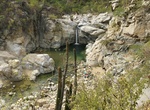
Just outside of the small town of Santiago on the East Cape, nestled in the lush biosphere reserve of the Sierra de la Laguna, are the natural pools and waterfall of Cañon de la Zorra. The centerpiece of the canyon is an impressive 10-meter (33-foot) waterfall that cascades into natural pools below. It’s a great spot for swimming and sunbathing on the roc... -
Visit Canyons de Furnas, Minas Gerais, Brazil
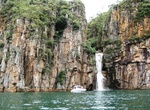
Canyons de Furnas are a beautiful, natural place with crystal clear water. You can rent a kayak or swim in the river, admire waterfalls and landscape. -
Explore Canyons of the Escalante, Utah
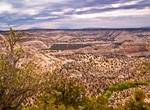
The Canyons of the Escalante is a collective name for the erosional landforms created by the Escalante River and its tributaries, the Escalante River Basin. Located in southern Utah in the western United States, these sandstone features include high vertical canyon walls, water pockets, narrow slot canyons, domes, pedestals, arches, and natural bridges. This area, ext...