Give us feedback!


 See all
Our philosophy is simple. We want to encourage you to dream. BIG! Then we help you plan your trip, get the most out of it while you're traveling and help you share your experience with friends.
Join Now It's FREE
Dream Packages
Duration: 5 days
Price: $918.22
Price: $918.22
Duration: 11 hours
Price: $208.42
Price: $208.42
Duration: 11 hours
Price: $208.42
Price: $208.42
Duration: 1 hour 30 minutes
Price: $116.91
Price: $116.91
Dreams Still To Do
Checked-Off Dreams
Dreams Still To Do
Checked-Off Dreams
Advertisement
Explore Man-Made Sites
-
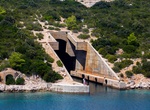
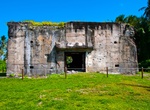
See Rogacic Submarine Shelter, Vis Island, Croatia
Explore the ex-military bunker for ships & Submarine in Rogacic, Vis island, Croatia. -
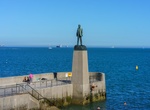
See Roger Casement Statue, Dún Laoghaire, Dublin, Ireland
Roger Casement Statue is located next to Dún Laoghaire Baths. It was created by sculptor Mr Mark Richards FRSS following an open competition. Roger David Casement (1 September 1864 – 3 August 1916), known as Sir Roger Casement, CMG, between 1911 and 1916, was a diplomat and Irish nationalist executed by the United Kingdom for treason during World War I. -
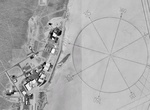
See Rogers Dry Lake Compass Rose (Edwards Air Force Base), California
Rogers Dry Lake is an endorheic desert salt pan in the Mojave Desert of Kern County, California. It is also famous for the world's largest compass rose painted into the lake. It was designated a National Historic Landmark in 1985. A compass rose, sometimes called a windrose, or Rose of the Winds, is a figure on a compass, map, nautical chart, or monument used to displ... -
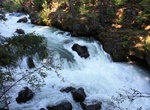
See Rogue River Lava Tube (Natural Bridge), Oregon
Also just down river from Union Creek is Rogue Gorge and Natural Bridge. See the Rogue River carve its way through narrow basalt canyons and lava tubes at these two geologic interpretive waysides less than one mile apart. The Rogue Gorge Overlook and Interpretive Site provides access to the Upper Rogue River National Recreation Trail and interpretation of the geologi... -
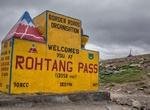
Visit Rohtang Pass, Leh–Manali Highway, India
One of the passes on famous Manali Leh highway located in Ladakh. -
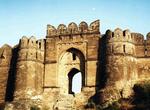
Visit Rohtas Fort, Pakistan (UNESCO site)
Rohtas Fort is a garrison fort built by the great Afghan king Sher Shah Suri. This fort is about 4 km in circumference and the first example of the successful amalgamation of Pashtun and Hindu architecture in the Indian Subcontinent. Qila Rohtas was designated a World Heritage Site in 1997. "Rohtas Fort is an exceptional example of the Muslim military architecture of ... -
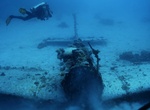
Dive Roi-Namur Airplane Graveyard, Marshall Islands
There are thought to be more than 150 planes are thought to lie at the bed of the ocean off Roi-Namur island in the Marshall Islands. Roi-Namur Airplane Graveyard is a boat accessible salt water dive site with a maximum depth is 121-130ft (37-40m). The planes were pushed into the sea in perfect condition after the after Pacific Campaign of World War Two ended in 194... -
See Roi-Namur WWII Bunkers, Kwajalein Atoll, Marshall Islands
Roi-Namur is the northernmost island in the atoll, located some distance north of Kwajalein. Japanese bunkers and buildings from World War II are in good condition and preserved. Roi and Namur were originally separate islets that were joined by a causeway built predominately by Korean conscripted laborers working under the Japanese military. -
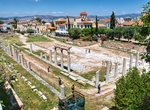
Visit Roman Agora, Athens, Greece
The Roman Agora at Athens is located to the north of the Acropolis and to the east of the Ancient Agora. The original Agora was encroached upon and obstructed by a series of Roman buildings, beginning with the imperial family's gift to the Athenians of a large odeion (concert hall). The Odeon of Agrippa was built by him in around 15 BC, and measured 51.4 by 43.2 metre... -
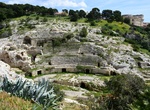
Visit Roman Amphitheatre of Cagliari, Cagliari, Sardinia, Italy
The Roman Amphitheatre of Cagliari is an ancient Roman amphitheatre, located in the city of Cagliari, southern Sardinia, Italy. The structure, built in the 2nd century AD, was half carved in the rock, while the rest was built in local white limestone, with a façade surpassing 20 m in height. The building axes measured about 93x80, those of the arena about ... -
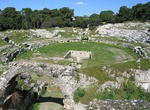
Visit Roman Amphitheatre of Syracuse, Sicily, Italy
The Roman amphitheatre of Syracuse is one of the best preserved structures in the city of Syracuse, Sicily, from the early Imperial period. The amphitheatre is located in the ancient suburb of Neapolis, in what is now an archaeological park, near the Greek theatre and the Altar of Hieron. The amphitheatre is on a different orientation to these other structures and pro... -
Visit Roman Amphitheatre (Patras), Greece
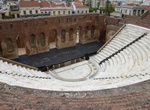
The Roman Amphitheatre, near the Roman Odeon, in Ifestou street, dating from the 1st century AD, at a period of the biggest development of Roman Patras. Its area has been only partially excavated. -
Visit Roman and Medieval Aqueducts of Patras, Greece
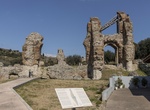
The Roman and Medieval Aqueducts of Patras (Greek: Ρωμαϊκό και Μεσαιωνικό Υδραγωγείο Πάτρας) is an archaeological site in the city of Patras, West Greece. The Roman aqueduct is a major work of the R... -
Visit Roman Aqueduct of Mória, Lesbos, Greece
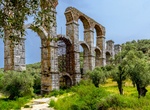
The Roman Aqueduct in Moria is located on Lesvos Island, Greece. The impressive Roman Aqueduct rises to 600 meters to the west of Moria, a Lesvian village at 6 km from Mytilene Town. -
See Roman Baths, Sanssouci Park, Potsdam
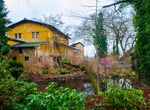
The Roman Baths (German:die Römischen Bäder), situated northeast of the Charlottenhof Palace in the Sanssouci Park in Potsdam, reflect theItaliensehnsucht("Sehnsucht/longing for Italy") of its creator Frederick William IV of Prussia. Various classical Roman and antique Italian styles were melded into an architectural ensemble, created between 1829 and 1840. ...
Price: $118.81