Give us feedback!
Our philosophy is simple. We want to encourage you to dream. BIG! Then we help you plan your trip, get the most out of it while you're traveling and help you share your experience with friends.
Join Now It's FREE
Related Categories
Dreams Still To Do
Checked-Off Dreams
Dreams Still To Do
Checked-Off Dreams
Advertisement
Explore UNESCO Sites
-
Visit Acropolis of Athens & Parthenon, Greece (UNESCO site)
The Acropolis of Athens or Citadel of Athens is the best known acropolis in the world. Although there are many other acropoleis in Greece, the significance of the Acropolis of Athens is such that it is commonly known as The Acropolis without qualification. The Acropolis was formally proclaimed as the pre-eminent monument on the European Cultural Heritage list of monum... -
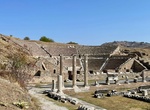
Visit Acropolis of Pergamon, Turkey (UNESCO Site)
Pergamon was an ancient Greek city in modern-day Turkey, in Aeolis, today located 16 miles (26 km) from the Aegean Sea on a promontory on the north side of the river Caicus (modern day Bakırçay), that became the capital of the Kingdom of Pergamon during the Hellenistic period, under the Attalid dynasty, 281–133 BC. Pergamon is cited in the book of Revelat... -
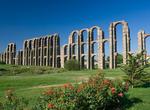
See Acueducto de los Milagros (Miraculous Aqueduct), Mérida, Spain (UNESCO site)
The Aqueduct of the Miracles is a Roman aqueduct in the Roman colonia of Emerita Augusta –present-day Mérida, Spain–, capital of the Roman province of Lusitania. It was built during the first century AD to supply water from the Proserpina Dam into the city. After the fall of the Roman Empire, the aqueduct fell into decay and today it is in ruins wit... -
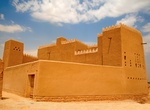
Visit Ad-Dir'iyah, Saudi Arabia (UNESCO site)
Al-Diriyah (Ad-Dir'iyah, Ad-Dar'iyah or Dir'aiyah) is a town in Saudi Arabia located on the northwestern outskirts of the Saudi capital, Riyadh. Diriyah was the original home of the Saudi royal family, and served as the capital of the first Saudi dynasty from 1744 to 1818. The Turaif district in Diriyah was declared a UNESCO World Heritage Site in 2010. The old city's... -
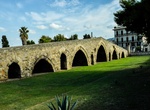
See Admiral's Bridge (Ponte dell'Ammiraglio), Palermo, Sicily, Italy
The Admiral's Bridge (Italian: Ponte dell'Ammiraglio) is a medieval bridge of Palermo, located in Piazza Scaffa. It was built over the Oreto River during the era of the Norman Sicily by theammiratus ammiratorumGeorge of Antioch. In 2015, it became a UNESCO World Heritage Site as part of a series of nine civil and religious structures inscribed as Arab-Norman Palermo a... -
See Aflaj Irrigation Systems of Oman (Omani Falajs), (UNESCO site)
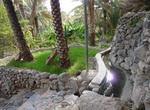
An Aflaj (qanāt) is a water management system used to provide a reliable supply of water for human settlements and irrigation in hot, arid and semi-arid climates. In Oman from the Iron Age Period (found in Salut, Bat and other sites) a system of underground aqueducts called Falaj were constructed, a series of well-like vertical shafts, connected by gently sloping hori... -
Visit Agadez, Niger (UNESCO Site)
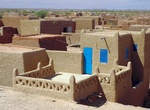
Agadez is a historic city in Aïr region of Northern Niger. Founded in the 11th century, Agadez was an important stop for caravans crossing the Saharan Desert for centuries. Agadez was held by the Mali empire during part of the 14th century, captured by the Songhai empire in 1515, and controlled by Bornu in the 17th century. It remained a trade center until t... -
Visit Agen Cathedral, France (UNESCO site)
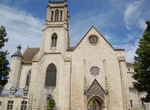
Agen Cathedral (Cathédrale Saint-Caprais d'Agen) is a Roman Catholic cathedral built in the 12th century as a church, a UNESCO World Heritage Site in Agen, Lot-et-Garonne, Aquitaine, France. The cathedral gained historic monument status in 1863. Situated on one of four pilgrims' ways towards Santiago de Compostela, Spain, its World Heritage Site status falls un... -
Explore Aggersborg, Denmark
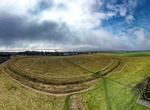
Aggersborg is the largest of Denmark's former Viking ring fortress, and one of the largest archaeological sites in Denmark. It is located near Aggersund on the north side of the Limfjord. It consists of a circular rampart surrounded by a ditch. Four main roads arranged in a cross connects the fortress center with the rampart's outer ring. The roads were tunneled under... -
Visit Agios Ioannis (St. John) Lampadistis Monastery, Kalopanagiotis, Cyprus (UNESCO site)
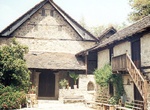
Agios Ioannis (St. John) Lampadistis Monastery is located in Kalopanagiotis, Cyprus. The church is one of 10 that have been designated as a UNESCO World Heritage Site in the Troödos Mountains of central Cyprus. -
See Agra Fort, India (UNESCO site)
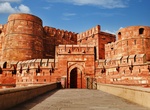
Agra Fort is a UNESCO World Heritage site located in Agra, India. It is about 2.5 km northwest of its more famous sister monument, the Taj Mahal. The fort can be more accurately described as a walled city. It is the most important fort in India. The great Mugals, Humayun, Akbar, Jehangir, Shah Jahan and Aurangzeb lived here, and the country was governed from here. It ... -
Explore Agumbe Reserved Forest, India (UNESCO Site)
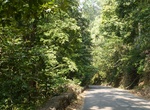
Agumbe is a small village located in Shimoga district, Thirthahalli taluk in the Malnad region of Karnataka, India. It is sometimes called "The Cherrapunji of the South" after Cherrapunji, in Northeast India. Agumbe is associated with rainforest conservation efforts, documentation of medicinal plants, tourism (trekking and photography), power generation through hydroe... -
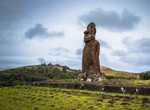
See Moais at Ahu Ature Huki, Eastern Island, Chile
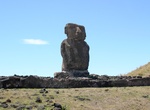
Ahu Ature Huki is a single moai located at Anakena Beach on Easter Island. -
See Ahu Huri A Urenga, Easter Island, Chile
Ahu Huri A Urenga is a single statue that has a remarkably strange characteristic - it has four hands. It has been dubbed "The Astronomer" for being aligned to the sunrise at winter solstice - June 21st. -
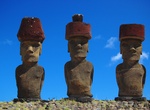
See Moais at Ahu Nau Nau, Easter Island, Chile
Ahu Nao-Nao has seven moais, two of which have deteriorated. It's located at Anakena Beach on Easter Island.