Give us feedback!
Our philosophy is simple. We want to encourage you to dream. BIG! Then we help you plan your trip, get the most out of it while you're traveling and help you share your experience with friends.
Join Now It's FREE
Related Categories
Dreams Still To Do
Checked-Off Dreams
Dreams Still To Do
Checked-Off Dreams
Advertisement
Explore UNESCO Sites
-
Visit Al-Faw, Saudi Arabia
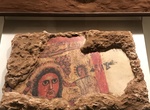
Lying at a strategic point of the ancient trade routes of the Arabian Peninsula, the property was abruptly abandoned around the 5th century CE. Nearly 12,000 archaeological remains have been found, spanning from prehistoric times to the Late pre-Islamic era, testifying to the successive occupation of three different populations and their adaptation to the evolving env... -
Visit Algiers, Algeria (UNESCO site)
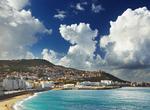
Algiers is the capital and largest city of Algeria. Called El-Bahdja or alternatively Alger la Blanche ("Algiers the White") for the glistening white of its buildings as seen rising up from the sea, Algiers is situated on the west side of a bay of the Mediterranean Sea. The city name is derived (via French Alger and Catalan Alguère) from the Arabic word al-ja... -
Visit Alhambra, Granada, Spain (UNESCO Site)
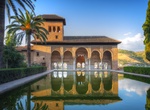
The Alhambra ( "the red one"), the complete form of which was Calat Alhambra ("the red fortress"), is a palace and fortress complex located in the Granada, Andalusia, Spain. It was constructed during the mid 14th century by the Moorish rulers of the Emirate of Granada in al-Andalus, occupying the top of the hill of the Assabica on the southeastern border of the city o... -
Explore Al-Hasa Oasis, Saudi Arabia (UNESCO Site)
Al-Hasa is the largest oasis in Saudia Arabia and all of Asia (encompasses 30,000 acres (12,000 hectares)) and has around 3 million date palms. The oasis is located about 60 km inland from the Persian Gulf. The area is also known as Al-Ahsa. Al-Hasa has been inhabited since prehistoric times, due to its abundance of water in an otherwise arid region. Natural fresh-... -
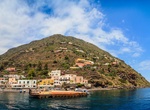
Explore Alicudi Island, Italy (UNESCO site)
Alicudi is the westernmost of the eight islands that make up the Aeolian archipelago. Today there are around 120 inhabitants, who mostly live off fishing or the small agriculture of the island. There is only one restaurant on the island, and the menu depends greatly on what fish the local fishermen have caught, or what food supplies the hydrofoil brings. The island wa... -
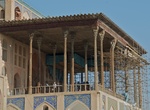
See Ālī Qāpū Palace, Isfahan, Iran
Ali Qapu (Persian: Āli Qāpu - عالی قاپو) is a grand palace in Isfahan, Iran. It is located on the western side of the Naqsh e Jahan Square, opposite to Sheikh Lotfollah Mosque, and had been originally designed as a vast portal. It is forty-eight meters high and there are six floors, each accessible by a difficult spiral staircase. In the sixth floor, M... -
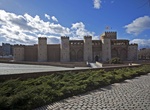
Visit Aljafería Palace, Zaragoza, Aragon, Spain (UNESCO site)
The Aljafería Palace (Palacio de la Aljafería) is a fortified medieval Islamic palace built during the second half of the 11th century in the Taifa of Zaragoza of Al-Andalus, present day Zaragoza, Spain. It was the residence of the Banu Hud dynasty during the era of Abu Jaffar Al-Muqtadir after abolishing Banu Tujibi of Kindah dynasty. The palace reflect... -
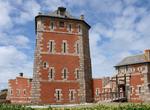
See All Fortifications of Vauban, France (UNESCO sites)
Fortifications of Vauban consists of 12 groups of fortified buildings and sites along the western, northern and eastern borders of France. They were designed by Vauban (1633–1707), and were added in 2008 to the list of UNESCO World Heritage Sites. Numerous other places were fortified by Vauban (see main article for details). The following are the list of the sit... -
Visit Almadén Mining Site, Spain (UNESCO site)
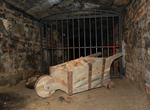
Almadén, Spain, is a town and municipality in the province of Ciudad Real, within the autonomous community of Castile-La Mancha. Almadén is approximately 200 km south of Madrid in the Sierra Morena. The name Almadén is from the Arabic word al-ma‘din, meaning 'the mine'. Almadén is home to the world's greatest reserves of cinnabar, a m... -
Visit Al Maghtas (Bethany Beyond the Jordan), Jordan (UNESCO Site)
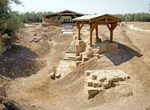
Al Maghtas, meaning "baptism", or "immersion" in Arabic, is a place in Jordan on the Jordan River, located 10 kilometres southeast of Jericho. It is where most modern scholars and archaeologists believe the baptism of Jesus took place, corresponding with the directions given in Matthew 3:13-17, Mark 1:9-11, Luke 3:21-22 and John 1:28. John 1:28:These things took place... -
Visit Alpenquai, Grosser Hafner & Kleiner Hafner, Switzerland (UNESCO site)
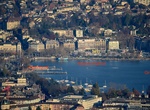
Alpenquai, Grossner Hafner and Kleiner Hafner are 3 of the 111 serial sites of the UNESCO World Heritage Site Prehistoric pile dwellings around the Alps, of which are 56 located in Switzerland. Alpenquai in the city of Zürich is one of the most important Late Bronze Age lakeside settlements in Central Europe: its huge size and its almost uninterrupted occupation ... -
See Al Qal'a of Beni Hammad Fort, Algeria (UNESCO site)
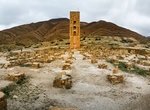
Beni Hammad Fort, also called Al Qal'a of Beni Hammad is a ruined, fortified palatine city in Algeria. It served as the first capital of the Hammadid dynasty. It is located in the mountains northeast of M'Sila, at an elevation of 1,418 meters, and receives abundant water from the surrounding mountains. Beni Hammad Fort is near the town of Maadid (aka Maadhid), about 2... -
Visit Al-Salt, Jordan (UNESCO Site)
Al-Salt, also known as Salt, is an ancient trading city and administrative centre in west-central Jordan. It is on the old main highway leading from Amman to Jerusalem. Situated in the Balqa highland, about 790–1,100 metres above sea level, the city is built in the crook of three hills, close to the Jordan Valley. One of the three hills, Jabal al-Qal'a, is the s... -
Visit Alsnö Hus, Åland Islands (UNESCO site)
Alsnö hus (Swedish for "Alsnö House") are the ruins of an old castle and a palace at the Hovgården settlement archaeological site. It is located on Adelsö island (formerly called Alsnö), of Lake Mälaren in central-eastern Sweden. The ruins are part of the combined Birka and Hovgården UNESCO World Heritage Site. The ruin is next to ... -
Explore Altai Mountains, Russia (UNESCO site)
The Altai Mountains are a mountain range in Central Asia, where Russia, China, Mongolia and Kazakhstan come together, and where the rivers Irtysh and Ob have their sources. The Altai Mountains are known as the original locus of the speakers of Turkic as well as other members of the proposed Altaic language group. The northwest end of the range is at 52° N and...