Give us feedback!
Our philosophy is simple. We want to encourage you to dream. BIG! Then we help you plan your trip, get the most out of it while you're traveling and help you share your experience with friends.
Join Now It's FREE
Related Categories
Dreams Still To Do
Checked-Off Dreams
Dreams Still To Do
Checked-Off Dreams
Advertisement
Explore UNESCO Sites
-
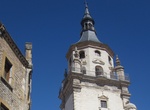
Visit Cathedral of Santa María de Vitoria, Spain (UNESCO site)
The Cathedral of Santa María de Vitoria (Catedral de Santa María de Vitoria, Cathedrale de Vitoria-Gasteiz) is a cathedral located in Vitoria, Spain. It was declaredBien de Interés Culturalin 1931. The Cathedral of Santa María rises majestically in the city's old part. It was built in the late 13th century and all throughout the 14th centur... -
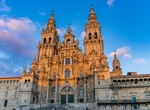
See Cathedral of Santiago de Compostela, Spain (UNESCO site)
Santiago de Compostela Cathedral (Catedral de Santiago de Compostela) is a Roman Catholic cathedral of the archdiocese of Santiago de Compostela in Galicia, Spain. The cathedral is the reputed burial-place of Saint James the Greater, one of the apostles of Jesus Christ. It is the destination of the Way of St. James, a major historical pilgrimage route since the Early ... -
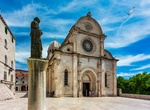
See Cathedral of St James in Šibenik, Croatia (UNESCO site)
The Cathedral of St. James in Šibenik, Croatia is a triple-nave basilica with three apses and a dome (32 m high inside) in the city of Šibenik, Croatia. It is the church of the Catholic Church in Croatia, and the see of the Šibenik diocese. It is also the most important architectural monument of the Renaissance in the entire country. Since 2000, t... -
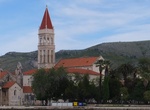
See Cathedral of St. Lawrence (Trogir Cathedral), Trogir, Croatia
The Cathedral of St. Lawrence is a Roman Catholic triple-naved basilica constructed in Romanesque-Gothic in Trogir, Croatia. Since its construction lasted several centuries, it illustrates all the styles that succeeded one another in Dalmatia. It serves now as the most imposing monument in the city of Trogir. It was built on the foundations of an Early Christian cathe... -
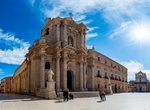
See Cathedral of Syracuse, Sicily, Italy (UNESCO site)
The Cathedral of Syracuse (Duomo di Siracusa), formally the Cattedrale metropolitana della Natività di Maria Santissima, is an ancient Catholic church in Syracuse, Sicily, the seat of the Roman Catholic Archdiocese of Siracusa. The cathedral stands in the city's historic core on Ortygia Island. The cathedral stands as a major element of the historic core of Syr... -
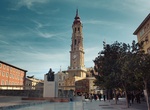
See Cathedral of the Savior of Zaragoza (La Seo), Aragon, Spain (UNESCO site)
The Cathedral of the Savior or La Seo de Zaragoza is a Roman Catholic cathedral in Zaragoza, in Aragon, Spain. It is part of the World Heritage SiteMudéjar Architecture of Aragon. The cathedral is located on the Plaza de la Seo and is commonly known as La Seo (Spanish for "see") to distinguish it from the nearbyEl Pilar, whose name (pillar) is a reference to an... -
Visit Cathedral of Trier, Rhineland-Palatinate, Germany (UNESCO Site)
The High Cathedral of Saint Peter in Trier is a Roman Catholic church in Trier, Rhineland-Palatinate, Germany. It is the oldest cathedral in the country. The edifice is notable for its extremely long life span under multiple different eras each contributing some elements to its design, including the center of the main chapel being made of Roman brick laid under the di... -
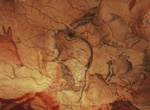
Visit Cave of Altamira, Spain (UNESCO site)
The Cave of Altamira (/ˌæltəˈmɪərə/AL-tə-MEER-ə; Spanish:Cueva de Altamira[ˈkweβa ðe altaˈmiɾa]) is a cave complex, located near the historic town of Santillana del Mar in Cantabria, Spain. It is renowned for prehistoric cave art featuring charcoal drawings and polychrome paintings of contemporary local fauna and human hands. The earliest paintings were... -
Visit Cave of Altamira & Paleolithic Cave Art of Northern Spain, Spain (UNESCO site)
Cave of Altamira and Paleolithic Cave Art of Northern Spain is the name under which are grouped 18 caves located in different regions of northern Spain to represent the apogee of Paleolithic cave art developed in Europe between 35,000 and 11,000 D.C. Chief among these caves is the Cave of Altamira, located within the town of Santillana del Mar in Cantabria. It remains... -
Visit Cave of Altxerri, Gipuzkoa, Spain (UNESCO site)
The Cave of Altxerri (in Spanish "Cueva de Altxerri", and in Basque Altxerriko leizea or Altxerriko koba) is located in the municipality of Aya (Gipuzkoa) in the Basque Country (Spain). The original grotto preserves rock paintings and engravings which have been dated from the end of the Upper Magdalenian period, within the Upper Paleolithic; the pictures situated in a... -
Visit Cave of Chufín, Spain (UNESCO site)
The cave of Chufín is located in the town of Riclones in Rionansa (Cantabria), Spain. Situated at the confluence of the Lamasón and Nansa rivers, several caves ornamented with rock art pock the steep slopes above the water. Chufín is one of the caves included in UNESCO’s list of World Heritage sites under the entry Cave of Altamira and Paleo... -
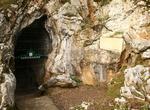
Explore Cave of the Apocalypse, Patmos Island, Greece (UNESCO sites)
The Cave of the Apocalypse on the Greek island of Patmos is located about halfway up the mountain on the island. Look for the tuen off along the road between the villages of Chora and Skala. This cave is believed to mark the spot where John of Patmos received his visions that he recorded in the Book of Revelation. In 1999, UNESCO declared the cave a joint World Heri... -
Explore Cavernas do Peruaçu National Park, Minas Gerais, Brazil (UNESCO site)
Cavernas do Peruaçu National Park (Portuguese: Parque Nacional Cavernas do Peruaçu) is a national park in the state of Minas Gerais, Brazil. It is noted for its large limestone caves. In 2025, the park was designated as a World Heritage Site by UNESCO. The Cavernas do Peruaçu National Park, with an area of 56,448 hectares (139,490 acres), was crea... -
Explore Caves and Ice Age Art, Swabian Jura (UNESCO Site)
Modern humans first arrived in Europe 43,000 years ago during the last ice age. One of the areas where they took up residence was the Swabian Jura in southern Germany. Excavated from the 1860s, six caves have revealed items dating from 43,000 to 33,000 years ago. Among them are carved figurines of animals (including cave lions, mammoths, horses and cattle), musical in... -
Visit Caves del Monte Castillo, Spain (UNESCO site)
The Caves of Monte Castillo, located in the Cantabrian town of Puente Viesgo, contain one of the most important Paleolithic sites in the region. The complex of karstic caves is on the slopes of Monte Castillo, a hill south of Puente Viesgo, with an elevation of 354 m. It includes four out of the eighteen caves listed as World Heritage of UNESCO since July 2008 under t...